
Historical · U.S. House · Kansas · District 4
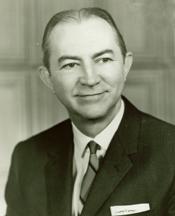
Garner Shriver
Former U.S. Representative · Kansas District 4 · 1961–1977 · Republican
Garner Shriver represented Kansas's District 4 in the United States House of Representatives (1961–1977) for the Republican party. The page below collects sourced biographical facts, term history, committee roles, and provenance for Shriver.
Bioguide ID: S000388
Key facts
- Full name
- Garner Shriver
- State
- Kansas
- District
- District 4
- Party
- Republican
- House service
- 1961–1977
- First House term
- 1961
- Status
- Left office
- Current term ends
- —
- Born
- 1912
- Bioguide ID
- S000388
- Committee assignments
- —
- Dataset version
- 1.20260605
Biographical narrative
896 words · sourced from the Wikipedia REST extract
Garner E. Shriver was a prominent U.S. Representative from Kansas, serving in the House of Representatives for a total of eight terms from 1961 until 1977. A member of the Republican Party, Shriver's political career was marked by his commitment to public service and his involvement in various legislative matters. He was born on July 6, 1912, in Towanda, Kansas, and spent much of his life in the state, contributing to its political landscape both at the state and federal levels. Following his departure from Congress, he continued to engage in public service through various roles, including legal counsel for the Senate Veterans' Affairs Committee.
Early life and career
Garner Edward Shriver was born in Towanda, Kansas, where he began his education in the local public schools. In 1925, his family relocated to Wichita, Kansas, which would become a significant location in his life and career. Shriver pursued higher education at the University of Wichita, where he earned a Bachelor of Arts degree in 1934. He later engaged in postgraduate studies at the University of Southern California in 1936, further enhancing his academic credentials.
Shriver's legal education began at Washburn Law School, where he obtained his Bachelor of Laws (LL.B.) in 1940. He continued his legal studies and earned his Juris Doctor (J.D.) degree in 1970. His early career included working for a drug company in Wichita from 1934 to 1936, followed by a brief stint as a teacher at South Haven High School in 1936 and 1937. This diverse professional background provided him with a unique perspective that would later inform his legislative work.
In February 1940, Shriver was admitted to the bar in Wichita, marking the beginning of his legal career. His service to the nation commenced during World War II when he enlisted in the United States Navy. Shriver served as both an enlisted man and an officer from 1943 to 1946, demonstrating his commitment to public service during a critical time in American history.
After the war, Shriver transitioned to a political career, beginning with his election to the Kansas House of Representatives, where he served from 1947 to 1951. His political journey continued as he was elected to the Kansas Senate, serving from 1953 until 1960. These early experiences in state politics laid the groundwork for his subsequent election to the U.S. House of Representatives.
House tenure
Garner E. Shriver was elected to the U.S. House of Representatives as a Republican in 1960, beginning his first term on January 3, 1961. He was re-elected for seven additional terms, serving until January 3, 1977. Throughout his tenure, Shriver represented Kansas's 4th congressional district, which encompasses a significant portion of the state's population and economic activity.
During his time in Congress, Shriver participated in various legislative initiatives and was involved in the political discourse of the era. His electoral success can be attributed to his ability to connect with constituents and address their concerns. In 1974, he won re-election in a competitive three-way race, securing approximately 49 percent of the vote. However, his political career faced challenges, and he was ultimately defeated in his bid for re-election in 1976 by Dan Glickman, losing by a narrow margin of three percentage points.
Shriver's congressional service was characterized by his engagement with key issues of the time, reflecting the broader political landscape of the 1960s and 1970s. His experience in the state legislature provided him with a solid foundation for understanding the complexities of federal governance and the needs of his constituents.
Legislative focus and committees
Throughout his time in the House, Garner E. Shriver was involved in various legislative matters, although specific details regarding his committee assignments and the bills he supported are not provided in the available reference material. His background in law and experience in state politics likely influenced his legislative priorities and approach to governance.
After concluding his service in the House, Shriver continued his commitment to public service by taking on roles related to veterans' affairs. From March 1977 until 1980, he served as the minority staff director and legal counsel for the Senate Veterans' Affairs Committee. This position allowed him to leverage his legal expertise and experience in public service to advocate for the needs of veterans and their families.
In 1981, Shriver transitioned to the role of general counsel for the Senate Veterans' Affairs Committee, continuing his work in this critical area until 1982. His involvement in veterans' affairs demonstrated his ongoing dedication to serving those who had served the nation, reflecting a consistent theme throughout his career.
Following his tenure in the Senate, Shriver returned to his roots in law, resuming the practice of law in Wichita, Kansas. He remained a resident of the city until his passing on March 1, 1998. In recognition of his contributions to the community and public service, a post office in Wichita was named in his honor, serving as a lasting tribute to his legacy.
Garner E. Shriver's life and career exemplify a commitment to public service and the legislative process. His journey from local education and law to the halls of Congress reflects the diverse experiences that shaped his approach to governance and his dedication to the people of Kansas. Through his various roles, he contributed to the political landscape of the state and the nation, leaving a mark that is remembered in the communities he served.
Notable legislation
Sponsored and co-sponsored legislation for Garner Shriver is pending operator curation. The biographical narrative above carries the same provenance trail until per-bill rows are written.
Sources
- [1]https://en.wikipedia.org/wiki/Garner_E._ShriverWikipedia · retrieved 2026-06-05
Notable quotes
Sourced quotes for Garner Shriver are pending operator curation. Narrative-scope provenance remains attached below.
Sources
- [1]https://en.wikipedia.org/wiki/Garner_E._ShriverWikipedia · retrieved 2026-06-05
Key positions
Curated policy positions for Garner Shriver are pending operator review. The biographical narrative above carries the same provenance trail until per-topic positions are written.
Sources
- [1]https://en.wikipedia.org/wiki/Garner_E._ShriverWikipedia · retrieved 2026-06-05
Terms served
- 1961–1963U.S. House · Term 1 · Republican
- 1963–1965U.S. House · Term 2 · Republican
- 1965–1967U.S. House · Term 3 · Republican
- 1967–1969U.S. House · Term 4 · Republican
- 1969–1971U.S. House · Term 5 · Republican
- 1971–1973U.S. House · Term 6 · Republican
- 1973–1975U.S. House · Term 7 · Republican
- 1975–1977U.S. House · Term 8 · Republican
Sources & provenance
Every attributable claim above carries a per-section [N] marker that resolves to the corresponding URL below. Each entry records the upstream provider, the canonical URL, and the timestamp at which the source was retrieved by the ingest pipeline.
Key facts
- https://bioguide.congress.gov/search/bio/S000388bioguide · retrieved 2026-06-05
- https://www.govtrack.us/congress/members/409882govtrack · retrieved 2026-06-05
Biographical narrative
- https://en.wikipedia.org/wiki/Garner_E._Shriverwikipedia · retrieved 2026-06-05
Find your representative
Every U.S. state elects representatives by district. Browse Kansas’s delegation, the full former-representative roster, or explore the role and term length.
Related on The Candidate
- Preceded by Edward ReesEarlier holder of the Kansas District 4 House seat · Republican.Open
- Succeeded by Daniel GlickmanLater holder of the Kansas District 4 House seat · Democratic.Open
- Abel WilderFormer U.S. Representative · Kansas District 1 · RepublicanOpen
- Albert ColeFormer U.S. Representative · Kansas District 1 · RepublicanOpen
- Case BroderickFormer U.S. Representative · Kansas District 1 · RepublicanOpen
- Daniel Anthony Jr.Former U.S. Representative · Kansas District 1 · RepublicanOpen