
Historical · U.S. House · Kentucky · District 1
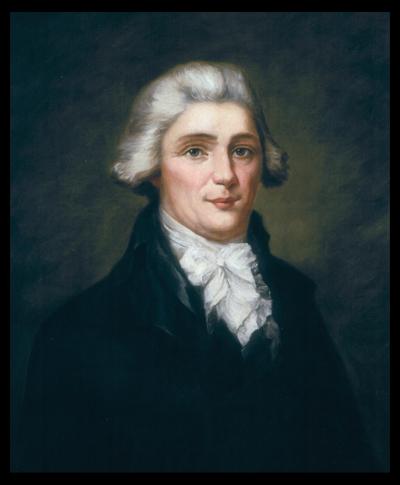
Christopher Greenup
Former U.S. Representative · Kentucky District 1 · 1791–1797 · Republican
Christopher Greenup represented Kentucky's District 1 in the United States House of Representatives (1791–1797) for the Republican party. The page below collects sourced biographical facts, term history, committee roles, and provenance for Greenup.
Bioguide ID: G000434
Key facts
- Full name
- Christopher Greenup
- State
- Kentucky
- District
- District 1
- Party
- Republican
- House service
- 1791–1797
- First House term
- 1791
- Status
- Left office
- Current term ends
- —
- Born
- —
- Bioguide ID
- G000434
- Committee assignments
- —
- Dataset version
- 1.20260606
Biographical narrative
895 words · sourced from the Wikipedia REST extract
Christopher Greenup was an American politician who served as a U.S. Representative for Kentucky's 1st congressional district and was also the third governor of Kentucky. His political career spanned several years during the late 18th and early 19th centuries, marked by significant contributions to the early governance of Kentucky. Greenup's tenure included participation in the Revolutionary War, involvement in the establishment of Kentucky as a state, and a notable legislative career in both the U.S. Congress and the Kentucky General Assembly.
Early life and career
Christopher Greenup was likely born around 1750 in Fairfax County, Virginia. His early education took place in local schools, where he developed skills in surveying and law, studying under Colonel Charles Binns in Charles City County, Virginia. Greenup's military service began during the American Revolutionary War, where he initially served as a lieutenant in Grayson's Additional Continental Regiment. His military career included participation in significant battles, and he later held the rank of colonel in the Virginia militia.
Following the war, Greenup played a crucial role in the settlement of the trans-Appalachian regions, particularly in what is now Lincoln County, Kentucky. He was involved in land speculation and served as a surveyor, which laid the groundwork for his future political career. In 1782, he was admitted to practice law in the county court, further establishing his professional credentials.
Greenup's political involvement began in earnest after the creation of Kentucky County in 1783. He became a trustee of Transylvania Seminary, which later evolved into Transylvania University. His political career took off when he was elected to represent Fayette County in the Virginia House of Delegates in 1785. During his term, he worked on a committee with notable figures to propose the division of the area that would become Kentucky and was instrumental in the creation of new counties.
In addition to his legislative duties, Greenup was active in various civic organizations. He was a founding member of the Danville Political Club and joined the Kentucky Society for Promoting Useful Knowledge in 1787, alongside future prominent figures in Kentucky's governance. His commitment to infrastructure development was evident in his involvement with the Kentucky River Company, which aimed to improve transportation and trade routes in the region.
In his personal life, Greenup married Mary Catherine Pope in 1787, and the couple had two children. His early career was characterized by a blend of legal practice, land development, and active participation in the political landscape of early Kentucky.
House tenure
Greenup's political career advanced significantly when Kentucky was admitted to the Union in 1792. He moved to Frankfort and was appointed as an elector for the state's senators and governor, reflecting his influence and standing in the community. He was subsequently elected to the first Kentucky Senate and appointed to the court of oyer and terminer, although he quickly resigned to accept a seat in the U.S. House of Representatives.
As one of Kentucky's first two representatives, Greenup served in the U.S. House from November 9, 1792, until March 3, 1797. His three consecutive terms in Congress were part of the formative years of the U.S. government, during which he contributed to the establishment of legislative processes and representation for the newly formed state. His experience in both state and federal politics provided him with a unique perspective on governance and the needs of his constituents.
After his tenure in the House, Greenup continued to be active in Kentucky politics. He was elected to the Kentucky House of Representatives in 1798, representing Mercer County. His legislative experience was further complemented by his role as clerk of the state senate from 1799 to 1802, where he played a vital role in the administration of legislative affairs.
Legislative focus and committees
During his time in the U.S. House of Representatives, Greenup's legislative focus was shaped by the needs of his constituents and the emerging issues of the time. While specific details of the bills he sponsored or supported are not extensively documented, his involvement in the early legislative processes was crucial in shaping the governance of Kentucky and the broader United States.
Greenup's political career was not without controversy. He faced accusations related to the Burr Conspiracy, which suggested he had sought to align Kentucky with Spain. However, he successfully rebutted these charges, which could have undermined his political standing. This incident highlighted the complexities of political life during a time of significant change and uncertainty in the young nation.
After his time in the U.S. House, Greenup's political aspirations continued. He was a candidate for governor of Kentucky in 1800 but finished second in a competitive race. His popularity remained high, and he was appointed as a judge of the circuit court in 1802. However, he chose to resign from this position to pursue another gubernatorial campaign, which he ultimately won unopposed.
Greenup's legacy includes not only his contributions to the early governance of Kentucky but also his role in the establishment of key institutions and infrastructure in the state. His name is commemorated in Greenup County, Kentucky, which reflects his lasting impact on the region.
Christopher Greenup passed away on April 27, 1818, leaving behind a legacy as a foundational figure in Kentucky's political history. His career encompassed significant developments in both state and national governance, and his contributions continue to be recognized in the historical narrative of the United States.
Notable legislation
Sponsored and co-sponsored legislation for Christopher Greenup is pending operator curation. The biographical narrative above carries the same provenance trail until per-bill rows are written.
Sources
- [1]https://en.wikipedia.org/wiki/Christopher_GreenupWikipedia · retrieved 2026-06-06
Notable quotes
Sourced quotes for Christopher Greenup are pending operator curation. Narrative-scope provenance remains attached below.
Sources
- [1]https://en.wikipedia.org/wiki/Christopher_GreenupWikipedia · retrieved 2026-06-06
Key positions
Curated policy positions for Christopher Greenup are pending operator review. The biographical narrative above carries the same provenance trail until per-topic positions are written.
Sources
- [1]https://en.wikipedia.org/wiki/Christopher_GreenupWikipedia · retrieved 2026-06-06
Terms served
- 1791–1793U.S. House · Term 1 · Republican
- 1793–1795U.S. House · Term 2 · Republican
- 1795–1797U.S. House · Term 3 · Republican
Sources & provenance
Every attributable claim above carries a per-section [N] marker that resolves to the corresponding URL below. Each entry records the upstream provider, the canonical URL, and the timestamp at which the source was retrieved by the ingest pipeline.
Key facts
- https://bioguide.congress.gov/search/bio/G000434bioguide · retrieved 2026-06-06
- https://www.govtrack.us/congress/members/404782govtrack · retrieved 2026-06-06
Biographical narrative
- https://en.wikipedia.org/wiki/Christopher_Greenupwikipedia · retrieved 2026-06-06
Find your representative
Every U.S. state elects representatives by district. Browse Kentucky’s delegation, the full former-representative roster, or explore the role and term length.
Related on The Candidate
- Succeeded by Matthew LyonLater holder of the Kentucky District 1 House seat · Republican.Open
- Andrew BooneFormer U.S. Representative · Kentucky District 1 · DemocraticOpen
- Carroll Hubbard Jr.Former U.S. Representative · Kentucky District 1 · DemocraticOpen
- Charles WheelerFormer U.S. Representative · Kentucky District 1 · DemocraticOpen
- Chittenden LyonFormer U.S. Representative · Kentucky District 1 · JacksonOpen
- Republican PartyFederal candidates and office holders on the Republican line.Open