
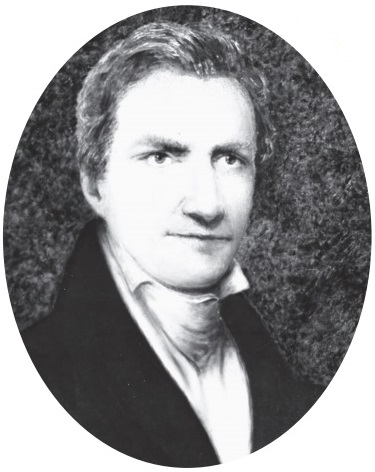
Historical · U.S. House · Kentucky · District 1
Matthew Lyon
Former U.S. Representative · Kentucky District 1 · 1797–1811 · Republican
Matthew Lyon represented Kentucky's District 1 in the United States House of Representatives (1797–1811) for the Republican party. The page below collects sourced biographical facts, term history, committee roles, and provenance for Lyon.
Bioguide ID: L000545
Key facts
- Full name
- Matthew Lyon
- State
- Kentucky
- District
- District 1
- Party
- Republican
- House service
- 1797–1811
- First House term
- 1797
- Status
- Left office
- Current term ends
- —
- Born
- 1749
- Bioguide ID
- L000545
- Committee assignments
- —
- Dataset version
- 1.20260606
Biographical narrative
911 words · sourced from the Wikipedia REST extract
Matthew Lyon was an Irish-born American politician, printer, farmer, and soldier who served as a United States Representative for Kentucky's 1st congressional district. A member of the Democratic-Republican Party, Lyon had a notable and tumultuous political career that included serving in Congress from 1797 to 1801 and again from 1803 to 1811. His time in office was marked by significant events, including a physical altercation with a fellow Congressman and a controversial conviction under the Sedition Act, which ultimately enhanced his reputation within his party as a champion of free speech.
Early life and career
Matthew Lyon was born on July 14, 1749, in County Wicklow, Ireland. He received his early education in Dublin before emigrating to the American colonies in 1764 as a redemptioner, a form of indentured servant. Upon arriving in Connecticut, Lyon worked for local farmers and merchants to pay off his debt. Over time, he managed to secure his freedom and continued his education through self-study. By 1768, he had completed his indenture and became a free man.
Lyon's early life in Connecticut allowed him to connect with individuals who would later become some of the first settlers in Vermont. In 1774, he moved to Wallingford, Vermont, where he engaged in farming and organized a local militia company. His military career began in earnest during the Revolutionary War, where he served under notable leaders such as Colonel Seth Warner and General Horatio Gates. Lyon's service included a role as an adjutant in Warner's regiment and later as a second lieutenant in the Green Mountain Boys. He participated in significant battles, including the Battle of Bennington and the Battle of Saratoga, eventually rising to the rank of captain and later colonel in the Vermont militia.
In addition to his military service, Lyon was involved in Vermont's governance. He served on the Council of Safety, was a paymaster general for the Vermont Militia, and held various positions within the state government, including deputy secretary to the governor and assistant to the state treasurer. His political career began in earnest when he was elected to the Vermont House of Representatives, where he served multiple terms from 1779 to 1783 and again from 1787 to 1796. Lyon was also instrumental in founding the town of Fair Haven, Vermont, in 1783, where he operated several mills and a printing office, contributing to the local economy and community.
House tenure
Lyon's congressional career began with his election to the Fifth Congress in 1797, where he represented Vermont. He served in this capacity until 1801, after which he did not seek re-election. Following a brief hiatus from Congress, he returned to serve Kentucky's 1st congressional district from 1803 until 1811. His tenure in the House was characterized by a series of controversies and notable incidents that shaped his legacy.
One of the most infamous events during Lyon's congressional career was his altercation with fellow Congressman Roger Griswold. The incident occurred during a session of the House on January 30, 1798, when tensions escalated between the two men, who belonged to opposing political parties. Lyon, a Democratic-Republican, was accused of ignoring Griswold's attempts to engage him in conversation. After Griswold insulted Lyon, the situation deteriorated into a physical confrontation, resulting in Lyon spitting in Griswold's face. This altercation led to investigations into both men's conduct, marking one of the early instances of personal conflict within the House of Representatives.
In addition to his confrontational style, Lyon's political career was further complicated by his conviction under the Sedition Act. He was charged with violating this law, which was enacted to suppress dissent and criticism of the federal government. Lyon's incarceration during this period did not hinder his political ambitions; he successfully won re-election while in jail, a testament to his popularity among his constituents and his status as a martyr for free speech within the Democratic-Republican Party.
Legislative focus and committees
Throughout his time in Congress, Lyon was an active participant in legislative discussions and debates, focusing on issues that resonated with his constituents and the broader Democratic-Republican agenda. His political philosophy aligned with the party's emphasis on agrarian interests, states' rights, and a limited federal government. Lyon's background as a farmer and soldier informed his views on various policies, and he often advocated for the rights of the common man.
Lyon's legislative contributions included participation in discussions on economic policies, military matters, and civil liberties. His experiences as a soldier during the Revolutionary War and his role in local governance provided him with a unique perspective on the needs and concerns of his constituents. He was known for his willingness to engage in heated debates, reflecting the contentious political climate of the time.
In addition to his legislative work, Lyon served on various committees during his tenure in the House, where he contributed to shaping policy and addressing the needs of his district. His involvement in these committees allowed him to influence key decisions and advocate for the interests of his constituents, particularly those related to agriculture and local governance.
Lyon's political career came to an end when he completed his final term in Congress in 1811. After leaving office, he continued to be involved in local affairs and maintained his status as a prominent figure in Kentucky and Vermont. He passed away on August 1, 1822, leaving behind a complex legacy marked by his contributions to early American politics, his advocacy for free speech, and his tumultuous interactions with fellow lawmakers.
Notable legislation
Sponsored and co-sponsored legislation for Matthew Lyon is pending operator curation. The biographical narrative above carries the same provenance trail until per-bill rows are written.
Sources
- [1]https://en.wikipedia.org/wiki/Matthew_LyonWikipedia · retrieved 2026-06-06
Notable quotes
Sourced quotes for Matthew Lyon are pending operator curation. Narrative-scope provenance remains attached below.
Sources
- [1]https://en.wikipedia.org/wiki/Matthew_LyonWikipedia · retrieved 2026-06-06
Key positions
Curated policy positions for Matthew Lyon are pending operator review. The biographical narrative above carries the same provenance trail until per-topic positions are written.
Sources
- [1]https://en.wikipedia.org/wiki/Matthew_LyonWikipedia · retrieved 2026-06-06
Terms served
- 1797–1799U.S. House · Term 1 · Republican
- 1799–1801U.S. House · Term 2 · Republican
- 1803–1805U.S. House · Term 3 · Republican
- 1805–1807U.S. House · Term 4 · Republican
- 1807–1809U.S. House · Term 5 · Republican
- 1809–1811U.S. House · Term 6 · Republican
Sources & provenance
Every attributable claim above carries a per-section [N] marker that resolves to the corresponding URL below. Each entry records the upstream provider, the canonical URL, and the timestamp at which the source was retrieved by the ingest pipeline.
Key facts
- https://bioguide.congress.gov/search/bio/L000545bioguide · retrieved 2026-06-06
- https://www.govtrack.us/congress/members/407029govtrack · retrieved 2026-06-06
Biographical narrative
- https://en.wikipedia.org/wiki/Matthew_Lyonwikipedia · retrieved 2026-06-06
Find your representative
Every U.S. state elects representatives by district. Browse Kentucky’s delegation, the full former-representative roster, or explore the role and term length.
Related on The Candidate
- Preceded by Christopher GreenupEarlier holder of the Kentucky District 1 House seat · Republican.Open
- Succeeded by Thomas FletcherLater holder of the Kentucky District 1 House seat · Republican.Open
- Andrew BooneFormer U.S. Representative · Kentucky District 1 · DemocraticOpen
- Carroll Hubbard Jr.Former U.S. Representative · Kentucky District 1 · DemocraticOpen
- Charles WheelerFormer U.S. Representative · Kentucky District 1 · DemocraticOpen
- Chittenden LyonFormer U.S. Representative · Kentucky District 1 · JacksonOpen