
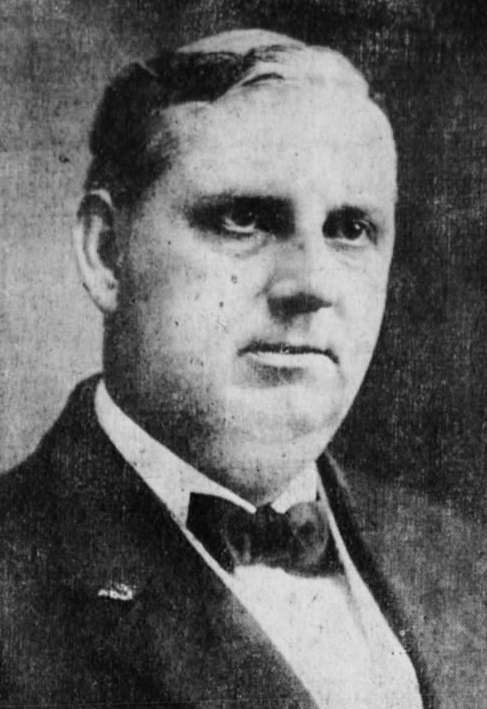
Historical · U.S. House · Kentucky · District 10
Andrew Kirk
Former U.S. Representative · Kentucky District 10 · 1925–1927 · Republican
Andrew Kirk represented Kentucky's District 10 in the United States House of Representatives (1925–1927) for the Republican party. The page below collects sourced biographical facts, term history, committee roles, and provenance for Kirk.
Bioguide ID: K000234
Key facts
- Full name
- Andrew Kirk
- State
- Kentucky
- District
- District 10
- Party
- Republican
- House service
- 1925–1927
- First House term
- 1925
- Status
- Left office
- Current term ends
- —
- Born
- 1866
- Bioguide ID
- K000234
- Committee assignments
- —
- Dataset version
- 1.20260606
Biographical narrative
808 words · sourced from the Wikipedia REST extract
Andrew Kirk was an American lawyer and politician who served as a U.S. Representative for Kentucky's 10th congressional district during the mid-1920s. A member of the Republican Party, he held office for a brief period, from 1926 to 1927, following his election to fill a vacancy. His political career was marked by his legal background and his involvement in various judicial roles prior to his congressional service. After leaving Congress, he continued his legal practice until his death in 1933.
Early life and career
Andrew Jackson Kirk was born on March 19, 1866, near Warfield, Kentucky. Growing up in a rural environment, he attended local common schools, which provided him with a foundational education. His pursuit of higher education led him to Valparaiso University in Indiana, where he graduated from the law department in 1890. This achievement marked the beginning of his professional journey in law, as he was admitted to the bar in the same year and commenced his legal practice in Inez, Kentucky.
Kirk's early career was characterized by a series of significant legal and political roles within Kentucky. From 1894 to 1898, he served as the county attorney for Martin County, where he gained valuable experience in the legal system and local governance. Following this role, he was appointed as the commonwealth attorney for the twenty-fourth judicial district of Kentucky, a position he held from 1898 to 1904. This role involved prosecuting criminal cases and representing the state in legal matters, further solidifying his reputation as a capable attorney.
In 1904, Kirk transitioned to a judicial role when he was elected as the circuit judge for the same judicial district. He served in this capacity until 1916, during which time he presided over a variety of cases, contributing to the development of the legal landscape in Kentucky. After his tenure as circuit judge, he returned to private legal practice in Jenkins, Letcher County, and later in Paintsville, Kentucky, in 1918. His extensive experience in law and governance laid a strong foundation for his subsequent foray into national politics.
House tenure
Kirk's entry into national politics came when he was elected as a Republican to the Sixty-ninth Congress. He filled a vacancy created by the resignation of John W. Langley, a previous representative from Kentucky. Kirk's term in the House of Representatives began on February 13, 1926, and concluded on March 3, 1927. His time in Congress was relatively short, as he served for just over a year. During this period, he participated in the legislative process and engaged with various issues pertinent to his constituents and the nation.
Despite his election to Congress, Kirk faced challenges in securing a longer tenure in office. In the 1926 election, he sought renomination but was ultimately defeated by the wife of his predecessor, John W. Langley. This loss marked the end of his congressional career, as he did not return to the House following his initial term. The political landscape of the time was competitive, and Kirk's inability to retain his seat reflects the dynamics of electoral politics during the 1920s.
Legislative focus and committees
While specific details regarding the legislative focus and committee assignments during Kirk's time in Congress are not provided, it can be inferred that his background as a lawyer and judge likely influenced his approach to legislation. Members of Congress often draw upon their professional experiences when addressing legal and policy issues, and Kirk's extensive legal background would have equipped him with insights into the complexities of lawmaking.
As a representative from Kentucky, Kirk would have been involved in discussions and decisions that affected his constituents, particularly those related to legal matters, judicial reform, and local governance. His experience as a circuit judge may have informed his perspectives on issues such as criminal justice, civil rights, and the administration of justice, which were significant topics of discussion during the 1920s.
After his congressional tenure, Kirk returned to the practice of law in Paintsville, Kentucky, where he continued to engage with the legal community. He remained active in the legal field and was a Republican candidate for nomination as circuit judge at the time of his death on May 25, 1933. His commitment to public service and the legal profession was evident throughout his life, culminating in his interment at Kirk Cemetery near Inez, Kentucky.
In summary, Andrew Kirk's career encompassed a range of roles within the legal and political spheres of Kentucky. His journey from local attorney to U.S. Representative illustrates the pathways through which individuals can engage in public service. Although his time in Congress was brief, his contributions to the legal system and his involvement in local governance reflect a dedication to the principles of law and justice. His legacy is preserved through his legal work and the impact he had on his community and the state of Kentucky.
Notable legislation
Sponsored and co-sponsored legislation for Andrew Kirk is pending operator curation. The biographical narrative above carries the same provenance trail until per-bill rows are written.
Sources
- [1]https://en.wikipedia.org/wiki/Andrew_Jackson_KirkWikipedia · retrieved 2026-06-06
Notable quotes
Sourced quotes for Andrew Kirk are pending operator curation. Narrative-scope provenance remains attached below.
Sources
- [1]https://en.wikipedia.org/wiki/Andrew_Jackson_KirkWikipedia · retrieved 2026-06-06
Key positions
Curated policy positions for Andrew Kirk are pending operator review. The biographical narrative above carries the same provenance trail until per-topic positions are written.
Sources
- [1]https://en.wikipedia.org/wiki/Andrew_Jackson_KirkWikipedia · retrieved 2026-06-06
Terms served
- 1925–1927U.S. House · Term 1 · Republican
Sources & provenance
Every attributable claim above carries a per-section [N] marker that resolves to the corresponding URL below. Each entry records the upstream provider, the canonical URL, and the timestamp at which the source was retrieved by the ingest pipeline.
Key facts
- https://bioguide.congress.gov/search/bio/K000234bioguide · retrieved 2026-06-06
- https://www.govtrack.us/congress/members/406393govtrack · retrieved 2026-06-06
Biographical narrative
- https://en.wikipedia.org/wiki/Andrew_Jackson_Kirkwikipedia · retrieved 2026-06-06
Find your representative
Every U.S. state elects representatives by district. Browse Kentucky’s delegation, the full former-representative roster, or explore the role and term length.
Related on The Candidate
- Preceded by Francis HopkinsEarlier holder of the Kentucky District 10 House seat · Democratic.Open
- Succeeded by Katherine LangleyLater holder of the Kentucky District 10 House seat · Republican.Open
- Andrew BooneFormer U.S. Representative · Kentucky District 1 · DemocraticOpen
- Carroll Hubbard Jr.Former U.S. Representative · Kentucky District 1 · DemocraticOpen
- Charles WheelerFormer U.S. Representative · Kentucky District 1 · DemocraticOpen
- Chittenden LyonFormer U.S. Representative · Kentucky District 1 · JacksonOpen