
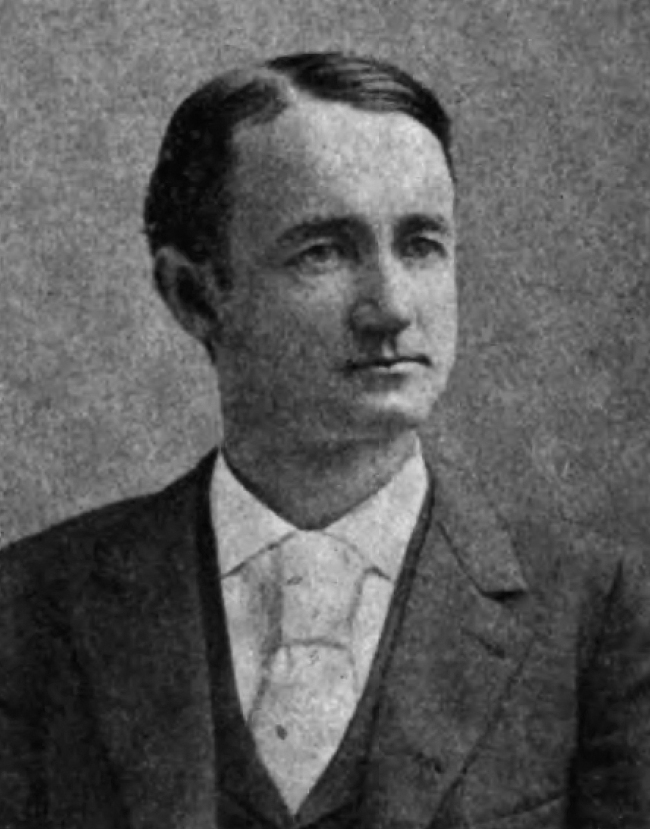
Historical · U.S. House · Kentucky · District 10
Joseph Kendall
Former U.S. Representative · Kentucky District 10 · 1891–1897 · Democratic
Joseph Kendall represented Kentucky's District 10 in the United States House of Representatives (1891–1897) for the Democratic party. The page below collects sourced biographical facts, term history, committee roles, and provenance for Kendall.
Bioguide ID: K000095
Key facts
- Full name
- Joseph Kendall
- State
- Kentucky
- District
- District 10
- Party
- Democratic
- House service
- 1891–1897
- First House term
- 1891
- Status
- Left office
- Current term ends
- —
- Born
- 1863
- Bioguide ID
- K000095
- Committee assignments
- —
- Dataset version
- 1.20260606
Biographical narrative
881 words · sourced from the Wikipedia REST extract
Joseph Kendall was an American lawyer and politician who served as a U.S. Representative for Kentucky's 10th congressional district during the late 19th century. A member of the Democratic Party, he held office for two non-consecutive terms, first from 1892 to 1893 and then from 1895 to 1897. His political career was marked by his appointment to fill a vacancy left by his father, John Wilkerson Kendall, who had previously served in Congress. After his congressional tenure, Kendall returned to his legal practice and engaged in agricultural activities until his death in 1933.
Early life and career
Joseph Kendall was born on May 12, 1863, in West Liberty, Kentucky. He was the son of John Wilkerson Kendall, a prominent figure in Kentucky politics, which likely influenced Joseph's eventual political ambitions. His early education was provided through a combination of private tutoring and attendance at local public schools, which laid the foundation for his future academic and professional pursuits.
Kendall's higher education began at the State College of Kentucky, which is now known as the University of Kentucky. He later attended the University of Michigan at Ann Arbor, where he furthered his studies. His education was instrumental in preparing him for a career in law. Demonstrating an early aptitude for the legal profession, he was examined by the Kentucky Court of Appeals and admitted to practice law before reaching the legal age typically required for such a profession. This early entry into law allowed him to establish a career in Prestonsburg, Kentucky, where he settled and began his practice.
In addition to his legal work, Kendall was involved in politics from an early age. He served as the Clerk of the House of Representatives during the Forty-ninth and Fiftieth Congresses, gaining valuable experience in the legislative process and the workings of Congress. This role likely provided him with insights and connections that would later benefit his own political career.
House tenure
Kendall's congressional career began when he was elected as a Democrat to the Fifty-second Congress to fill the vacancy caused by the death of his father, John W. Kendall, who had served as a U.S. Representative. Joseph Kendall took office on April 21, 1892, and served until March 3, 1893. His election was significant as it continued the Kendall family's political legacy in Kentucky. However, due to health issues, he chose not to seek renomination in 1892, which marked a brief pause in his political career.
After a gap, Kendall returned to Congress when he was elected to the Fifty-fourth Congress, serving from March 4, 1895, until February 18, 1897. His second term was characterized by a challenging political landscape, and he faced a contested election that ultimately led to his successor, Nathan T. Hopkins. Kendall's time in Congress was marked by the complexities of the political environment of the late 19th century, a period that included significant economic changes and social issues.
During his time in the House, Kendall was involved in various legislative activities, although specific details about the bills he supported or opposed are not documented in the available records. His service coincided with a time of considerable transformation in the United States, as the nation grappled with issues such as industrialization, labor rights, and economic policy.
Legislative focus and committees
While specific details regarding Kendall's legislative focus and committee assignments are not extensively documented, it is known that he was active in the political sphere during a period of significant change in American society. The late 19th century was characterized by rapid industrial growth, urbanization, and the emergence of new social movements. As a member of the Democratic Party, Kendall likely aligned with the party's platform, which during this era often emphasized agrarian interests, opposition to monopolies, and support for the working class.
Kendall's background as a lawyer may have influenced his approach to legislation, particularly in matters related to legal reform and civil rights. His experience as Clerk of the House of Representatives would have provided him with a comprehensive understanding of legislative procedures and the importance of effective governance.
After his congressional service, Kendall remained engaged in public life. He was a delegate to Democratic State conventions from 1884 until 1933, indicating his continued involvement in the political landscape of Kentucky and his commitment to the Democratic Party. This long-standing participation in state politics reflects his dedication to the party and its principles, as well as his desire to influence the political direction of his state.
In addition to his political activities, Kendall returned to practicing law in West Liberty, Kentucky, where he continued to contribute to his community through legal services. He also engaged in agricultural pursuits near Boonsboro, Kentucky, reflecting a connection to the land and the agricultural heritage of the region. This dual focus on law and agriculture illustrates the diverse interests and skills that Kendall possessed.
Joseph Kendall passed away on November 5, 1933, in West Liberty, Kentucky. His contributions to both the legal profession and the political landscape of Kentucky are remembered as part of the state's rich history. He was interred in Barber Cemetery, where he rests alongside other notable figures from the region. His life and career exemplify the interconnectedness of family legacy, legal practice, and public service in American politics during a transformative era.
Notable legislation
Sponsored and co-sponsored legislation for Joseph Kendall is pending operator curation. The biographical narrative above carries the same provenance trail until per-bill rows are written.
Sources
- [1]https://en.wikipedia.org/wiki/Joseph_M._KendallWikipedia · retrieved 2026-06-06
Notable quotes
Sourced quotes for Joseph Kendall are pending operator curation. Narrative-scope provenance remains attached below.
Sources
- [1]https://en.wikipedia.org/wiki/Joseph_M._KendallWikipedia · retrieved 2026-06-06
Key positions
Curated policy positions for Joseph Kendall are pending operator review. The biographical narrative above carries the same provenance trail until per-topic positions are written.
Sources
- [1]https://en.wikipedia.org/wiki/Joseph_M._KendallWikipedia · retrieved 2026-06-06
Terms served
- 1891–1893U.S. House · Term 1 · Democratic
- 1895–1897U.S. House · Term 2 · Democratic
Sources & provenance
Every attributable claim above carries a per-section [N] marker that resolves to the corresponding URL below. Each entry records the upstream provider, the canonical URL, and the timestamp at which the source was retrieved by the ingest pipeline.
Key facts
- https://bioguide.congress.gov/search/bio/K000095bioguide · retrieved 2026-06-06
- https://www.govtrack.us/congress/members/406263govtrack · retrieved 2026-06-06
Biographical narrative
- https://en.wikipedia.org/wiki/Joseph_M._Kendallwikipedia · retrieved 2026-06-06
Find your representative
Every U.S. state elects representatives by district. Browse Kentucky’s delegation, the full former-representative roster, or explore the role and term length.
Related on The Candidate
- Preceded by William TaulbeeEarlier holder of the Kentucky District 10 House seat · Democratic.Open
- Succeeded by Thomas FitzpatrickLater holder of the Kentucky District 10 House seat · Democratic.Open
- Andrew BooneFormer U.S. Representative · Kentucky District 1 · DemocraticOpen
- Carroll Hubbard Jr.Former U.S. Representative · Kentucky District 1 · DemocraticOpen
- Charles WheelerFormer U.S. Representative · Kentucky District 1 · DemocraticOpen
- Chittenden LyonFormer U.S. Representative · Kentucky District 1 · JacksonOpen