
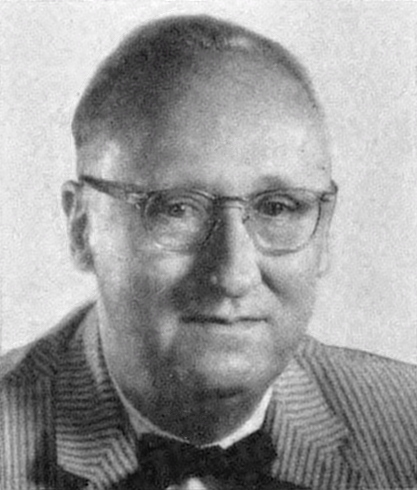
Historical · U.S. House · Kentucky · District 3
Charles Farnsley
Former U.S. Representative · Kentucky District 3 · 1965–1967 · Democratic
Charles Farnsley represented Kentucky's District 3 in the United States House of Representatives (1965–1967) for the Democratic party. The page below collects sourced biographical facts, term history, committee roles, and provenance for Farnsley.
Bioguide ID: F000023
Key facts
- Full name
- Charles Farnsley
- State
- Kentucky
- District
- District 3
- Party
- Democratic
- House service
- 1965–1967
- First House term
- 1965
- Status
- Left office
- Current term ends
- —
- Born
- 1907
- Bioguide ID
- F000023
- Committee assignments
- —
- Dataset version
- 1.20260605
Biographical narrative
889 words · sourced from the Wikipedia REST extract
Charles Farnsley was an American attorney and politician who served as a U.S. Representative for Kentucky's 3rd congressional district from 1965 to 1967. A member of the Democratic Party, Farnsley is also known for his tenure as the mayor of Louisville, Kentucky, from 1948 to 1953. His political career was marked by his support for the arts, education, and progressive social policies, as well as his distinctive personality that garnered both admiration and criticism from his constituents and peers.
Early life and career
Charles Farnsley was born on March 28, 1907, in Louisville, Kentucky, into a family with a notable political background. His father was elected as a judge in 1932, and his uncle was involved in local Democratic politics as a distiller. Farnsley attended Male High School and later enrolled at the University of Louisville, where he struggled academically but ultimately graduated with a law degree in 1930. Following his graduation, he joined his father's law firm, marking the beginning of his professional career.
Farnsley was actively involved in political movements early in his career. He emerged as a leader in the campaign to repeal Prohibition and was a delegate to Kentucky's convention for the passage of the 21st Amendment. In 1932, he was endorsed by the state's Democratic leaders as a candidate for the House of Representatives in statewide elections. However, he narrowly lost in a contentious primary, finishing just 2,000 votes short. This election was characterized by a split in the Louisville vote, as Farnsley and another candidate, E. Leland Taylor, both vied for support against the established Democratic political machine led by Michael J. “Micky” Brennan.
Farnsley faced further electoral challenges, losing another primary for Congress in 1934. However, he successfully secured a seat in the Kentucky State House in 1935, where he served two terms. During his time in the State House, he was known for his support of distilling interests and maintained close ties to Louisville's Democratic machine. His tenure included a request for a direct line to Brennan to facilitate quick decision-making on legislative matters.
In 1940, Farnsley sought the Democratic nomination for the U.S. Senate, running against Happy Chandler. He advocated for increased American aid to Britain and criticized Chandler's isolationist stance. Despite his efforts, Farnsley lost the nomination and expressed regret for being a political nuisance to voters. His political career was interrupted by World War II, during which he was declared ineligible for military service due to a pre-existing health issue. During the war, he pursued further education, earning a degree in political science and completing graduate work in public administration at several prestigious universities. His academic pursuits included exploring Enlightenment thought and its connections to various philosophical traditions.
House tenure
Farnsley's political career took a significant turn when he won a seat in the U.S. House of Representatives in the 1964 elections, representing Jefferson County. He secured approximately 53.8% of the vote, defeating the incumbent Republican, Marion M. "Gene" Snyder. Farnsley's election to Congress came during a period of significant political change in the United States, and he aligned himself with the more liberal faction of the Democratic Party. Throughout his single term in office, which lasted from 1965 to 1967, he was a strong supporter of President Lyndon B. Johnson and the Great Society initiatives aimed at addressing social issues and promoting civil rights.
During his time in Congress, Farnsley was known for his progressive stance on various issues, including civil rights. He voted in favor of the Voting Rights Act of 1965, which aimed to eliminate barriers to voting for African Americans. Despite his active participation in legislative matters, Farnsley did not seek re-election after his term ended, choosing to return to private life rather than pursue further political ambitions.
Legislative focus and committees
Farnsley's legislative focus during his time in Congress reflected his commitment to progressive values and social justice. As a member of the Democratic Party, he aligned himself with the broader goals of the Great Society, which sought to address poverty, racial injustice, and other social issues through government intervention and support. His support for landmark legislation, such as the Voting Rights Act, underscored his dedication to civil rights and equality.
While specific details regarding the committees on which Farnsley served during his congressional tenure are not available, his alignment with the Democratic leadership and his advocacy for progressive policies suggest that he was likely involved in discussions and initiatives related to social welfare, education, and civil rights. His background as a former mayor and his experiences in local government may have informed his legislative priorities, particularly regarding urban issues and community development.
After leaving Congress, Farnsley continued to engage in civic activities, including efforts to promote tourism in the Ohio Valley. His post-congressional career reflected his ongoing interest in community development and public service, although specific details about his later endeavors are limited.
Farnsley's life and career were characterized by a commitment to public service, innovative ideas, and a willingness to engage with the community. His contributions to Louisville as mayor and his brief tenure in Congress highlight his role in shaping local and national policies during a transformative period in American history. He passed away on June 19, 1990, leaving behind a legacy of public service and civic engagement that continues to be recognized in Kentucky and beyond.
Notable legislation
Sponsored and co-sponsored legislation for Charles Farnsley is pending operator curation. The biographical narrative above carries the same provenance trail until per-bill rows are written.
Sources
- [1]https://en.wikipedia.org/wiki/Charles_R._FarnsleyWikipedia · retrieved 2026-06-05
Notable quotes
Sourced quotes for Charles Farnsley are pending operator curation. Narrative-scope provenance remains attached below.
Sources
- [1]https://en.wikipedia.org/wiki/Charles_R._FarnsleyWikipedia · retrieved 2026-06-05
Key positions
Curated policy positions for Charles Farnsley are pending operator review. The biographical narrative above carries the same provenance trail until per-topic positions are written.
Sources
- [1]https://en.wikipedia.org/wiki/Charles_R._FarnsleyWikipedia · retrieved 2026-06-05
Terms served
- 1965–1967U.S. House · Term 1 · Democratic
Sources & provenance
Every attributable claim above carries a per-section [N] marker that resolves to the corresponding URL below. Each entry records the upstream provider, the canonical URL, and the timestamp at which the source was retrieved by the ingest pipeline.
Key facts
- https://bioguide.congress.gov/search/bio/F000023bioguide · retrieved 2026-06-05
- https://www.govtrack.us/congress/members/403985govtrack · retrieved 2026-06-05
Biographical narrative
- https://en.wikipedia.org/wiki/Charles_R._Farnsleywikipedia · retrieved 2026-06-05
Find your representative
Every U.S. state elects representatives by district. Browse Kentucky’s delegation, the full former-representative roster, or explore the role and term length.
Related on The Candidate
- Preceded by Frank BurkeEarlier holder of the Kentucky District 3 House seat · Democratic.Open
- Succeeded by William CowgerLater holder of the Kentucky District 3 House seat · Republican.Open
- Andrew BooneFormer U.S. Representative · Kentucky District 1 · DemocraticOpen
- Carroll Hubbard Jr.Former U.S. Representative · Kentucky District 1 · DemocraticOpen
- Charles WheelerFormer U.S. Representative · Kentucky District 1 · DemocraticOpen
- Chittenden LyonFormer U.S. Representative · Kentucky District 1 · JacksonOpen