
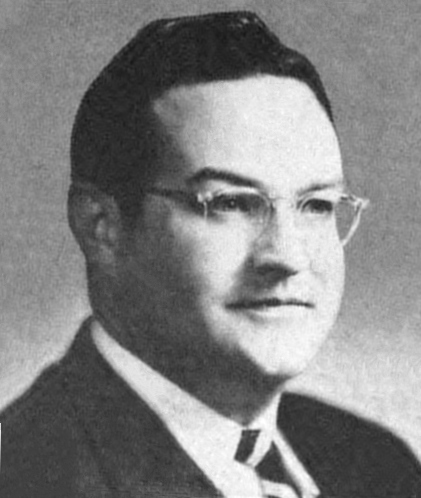
Historical · U.S. House · Kentucky · District 3
Frank Burke
Former U.S. Representative · Kentucky District 3 · 1959–1963 · Democratic
Frank Burke represented Kentucky's District 3 in the United States House of Representatives (1959–1963) for the Democratic party. The page below collects sourced biographical facts, term history, committee roles, and provenance for Burke.
Bioguide ID: B001090
Key facts
- Full name
- Frank Burke
- State
- Kentucky
- District
- District 3
- Party
- Democratic
- House service
- 1959–1963
- First House term
- 1959
- Status
- Left office
- Current term ends
- —
- Born
- 1920
- Bioguide ID
- B001090
- Committee assignments
- —
- Dataset version
- 1.20260605
Biographical narrative
973 words · sourced from the Wikipedia REST extract
Frank Burke was an American politician who served as a Democratic member of the United States House of Representatives from Kentucky's 3rd congressional district from 1959 to 1963. He was born on June 1, 1920, in Louisville, Kentucky, and had a diverse career that included roles in local government and law. Following his congressional tenure, Burke served as the mayor of Louisville from 1969 to 1973, where he focused on various urban issues. His political career was marked by a commitment to public service and community development.
Early life and career
Frank Burke was born and raised in Louisville, Kentucky, where he received his early education in parochial schools. He graduated from St. Xavier High School, a well-regarded institution in the area, which laid the groundwork for his future academic pursuits. After completing high school, Burke attended the University of Southern California for a period before transferring to Xavier University, where he earned his undergraduate degree. He later obtained a law degree from the University of Louisville, which equipped him with the legal knowledge necessary for his future career in public service.
Burke began his professional journey in the legal field, practicing law in Louisville starting in 1948. His legal career was preceded by his service in the United States Army during World War II, where he gained valuable experience and a sense of discipline that would later inform his public service. Following the war, Burke returned to Louisville and quickly became involved in local government. He held several appointed positions under Mayor Charles R. Farnsley, including serving as the assistant city attorney in 1950 and 1951. His roles also included director of public safety in 1952 and executive assistant to the mayor in both 1952 and 1953. These positions allowed him to gain insight into municipal operations and the challenges faced by urban communities.
Burke's early political career began in earnest when he was elected to the Kentucky House of Representatives in 1957. He successfully defeated the incumbent Democratic representative, Edward Bridgers, in the primary election, marking his entry into the political arena. This victory set the stage for his subsequent campaign for the United States House of Representatives.
House tenure
In 1958, Frank Burke was elected to the United States House of Representatives, representing Kentucky's 3rd District, which includes Louisville. He won the election by defeating the incumbent Republican, John M. Robsion, Jr., which was a significant accomplishment given the political landscape of the time. Burke's tenure in the House began on January 3, 1959, and he was re-elected in 1960, serving until January 3, 1963. His re-election campaign was competitive, and he won by a narrow margin of 221 votes, demonstrating the close political dynamics in his district.
During his time in Congress, Burke was known for his support of civil rights legislation. He voted in favor of the Civil Rights Act of 1960, which aimed to address racial discrimination and protect voting rights. This legislative focus reflected the broader national movement toward civil rights during the late 1950s and early 1960s. However, Burke's congressional career came to an end after he was defeated in a close re-election race in 1962 by Republican Gene Snyder. The election results showed Snyder receiving 93,627 votes compared to Burke's 91,062, highlighting the competitive nature of politics in Kentucky at that time.
Legislative focus and committees
Throughout his congressional tenure, Frank Burke was involved in various legislative initiatives that aimed to address the needs of his constituents and the broader American public. His support for civil rights legislation was a significant aspect of his legislative focus, aligning with the national discourse on equality and justice during the era. Burke's votes and participation in debates reflected a commitment to advancing civil rights, which was a critical issue in American society at that time.
In addition to his civil rights advocacy, Burke's legislative priorities included urban development and public safety, issues that were particularly relevant to his constituents in Louisville. His background in law and local government provided him with a unique perspective on the challenges faced by urban areas, such as crime reduction and infrastructure improvement. Burke's experience as director of public safety in Louisville likely informed his approach to these issues at the federal level.
After concluding his congressional service, Burke continued to engage in public life and local governance. He was elected as the mayor of Louisville in 1969, a position he held until 1973. His election came at a time when the city had been under Republican control for several years, and his victory marked a significant shift in the political landscape of Louisville. As mayor, Burke prioritized public safety, urban development, and community services. He implemented measures to increase the size of the police force, improve street lighting, and enhance garbage collection services. These initiatives contributed to a decrease in crime rates during his administration, reflecting his commitment to improving the quality of life for Louisville residents.
Burke also focused on infrastructure projects, including the construction of the Louisville Belvedere, which aimed to enhance the city's public spaces and promote community engagement. Additionally, he established a retirement system for city employees, demonstrating his commitment to the welfare of municipal workers. Burke's administration was marked by efforts to integrate the city's workforce, reflecting the broader societal changes occurring during the civil rights movement.
Following his tenure as mayor, Frank Burke returned to the legal profession, practicing law with the firm Wyatt, Tarrant & Combs until 2005. His long career in law and public service underscored his dedication to the community and the principles of justice and equity. Burke passed away on June 29, 2007, leaving behind a legacy of public service and commitment to the people of Kentucky. His contributions to local and national politics continue to be recognized as part of the rich tapestry of American political history.
Notable legislation
Sponsored and co-sponsored legislation for Frank Burke is pending operator curation. The biographical narrative above carries the same provenance trail until per-bill rows are written.
Sources
- [1]https://en.wikipedia.org/wiki/Frank_W._BurkeWikipedia · retrieved 2026-06-05
Notable quotes
Sourced quotes for Frank Burke are pending operator curation. Narrative-scope provenance remains attached below.
Sources
- [1]https://en.wikipedia.org/wiki/Frank_W._BurkeWikipedia · retrieved 2026-06-05
Key positions
Curated policy positions for Frank Burke are pending operator review. The biographical narrative above carries the same provenance trail until per-topic positions are written.
Sources
- [1]https://en.wikipedia.org/wiki/Frank_W._BurkeWikipedia · retrieved 2026-06-05
Terms served
- 1959–1961U.S. House · Term 1 · Democratic
- 1961–1963U.S. House · Term 2 · Democratic
Sources & provenance
Every attributable claim above carries a per-section [N] marker that resolves to the corresponding URL below. Each entry records the upstream provider, the canonical URL, and the timestamp at which the source was retrieved by the ingest pipeline.
Key facts
- https://bioguide.congress.gov/search/bio/B001090bioguide · retrieved 2026-06-05
- https://www.govtrack.us/congress/members/402036govtrack · retrieved 2026-06-05
Biographical narrative
- https://en.wikipedia.org/wiki/Frank_W._Burkewikipedia · retrieved 2026-06-05
Find your representative
Every U.S. state elects representatives by district. Browse Kentucky’s delegation, the full former-representative roster, or explore the role and term length.
Related on The Candidate
- Preceded by John Robsion Jr.Earlier holder of the Kentucky District 3 House seat · Republican.Open
- Succeeded by Charles FarnsleyLater holder of the Kentucky District 3 House seat · Democratic.Open
- Andrew BooneFormer U.S. Representative · Kentucky District 1 · DemocraticOpen
- Carroll Hubbard Jr.Former U.S. Representative · Kentucky District 1 · DemocraticOpen
- Charles WheelerFormer U.S. Representative · Kentucky District 1 · DemocraticOpen
- Chittenden LyonFormer U.S. Representative · Kentucky District 1 · JacksonOpen