
Historical · U.S. House · Kentucky · District 7
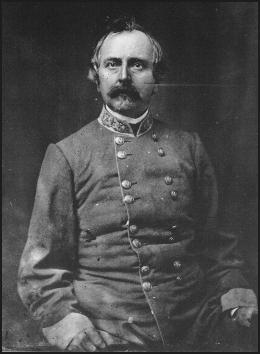
William Preston
Former U.S. Representative · Kentucky District 7 · 1851–1855 · Whig
William Preston represented Kentucky's District 7 in the United States House of Representatives (1851–1855) for the Whig party. The page below collects sourced biographical facts, term history, committee roles, and provenance for Preston.
Bioguide ID: P000517
Key facts
- Full name
- William Preston
- State
- Kentucky
- District
- District 7
- Party
- Whig
- House service
- 1851–1855
- First House term
- 1851
- Status
- Left office
- Current term ends
- —
- Born
- 1816
- Bioguide ID
- P000517
- Committee assignments
- —
- Dataset version
- 1.20260606
Biographical narrative
1,011 words · sourced from the Wikipedia REST extract
William Preston was an American lawyer and politician who served as a U.S. Representative from Kentucky's 7th congressional district during the early 1850s. A member of the Whig Party, he held office during a tumultuous period in American history, which included the lead-up to the Civil War. In addition to his political career, Preston was also a brigadier general in the Confederate Army and served as an ambassador. His life and career reflect the complexities of American society in the 19th century, particularly in the context of Kentucky's unique position during the Civil War.
Early life and career
William Preston was born on October 16, 1816, in Louisville, Kentucky. He was the grandson of Colonel William Preston, a prominent figure in Kentucky's early history, and the namesake of Prestonville, Kentucky. His family had deep roots in the region, with his uncle, Francis Preston, also being a notable figure. The Preston family was well-connected, and his sister, Henrietta, married Albert Sidney Johnston, who would later become a significant Confederate general.
Preston pursued his education with diligence, beginning his studies at St. Joseph's College in Kentucky. He later attended Yale College in 1835, where he continued to develop his academic interests. After completing his undergraduate studies, he enrolled in the law department at Harvard University, graduating in 1838. Following his graduation, he was admitted to the bar and began practicing law in Louisville in 1839. His legal career laid the foundation for his subsequent political endeavors, as he became well-acquainted with the legal and political landscape of Kentucky.
Preston's military career began when he served as a lieutenant colonel in the 4th Kentucky Volunteers during the Mexican-American War from 1847 to 1848. His military service not only provided him with leadership experience but also enhanced his reputation in Kentucky. After returning from the war, he became actively involved in state politics. In 1849, he was a delegate to the State constitutional convention, which was a significant event in shaping Kentucky's governance. The following year, he was elected to the Kentucky House of Representatives, where he began to establish himself as a political leader.
In 1851, Preston transitioned to the Kentucky State Senate, serving until 1853. His time in the state legislature allowed him to engage with various issues facing Kentucky and to build relationships with other political leaders. His involvement in state politics set the stage for his election to the U.S. House of Representatives.
House tenure
William Preston's congressional career began when he was elected as a Whig to the Thirty-second Congress to fill a vacancy caused by the resignation of Humphrey Marshall. He took office on December 6, 1852. During his time in the House, he was reelected to the Thirty-third Congress, serving until March 3, 1855. His tenure in Congress was marked by the political tensions of the era, particularly regarding issues related to slavery and states' rights, which would ultimately culminate in the Civil War.
While in Congress, Preston participated in the legislative process during a critical period in American history. The Whig Party, which he represented, was facing internal divisions and challenges from the rising Democratic Party and the newly formed Republican Party. The political landscape was shifting, and Preston's role in Congress was influenced by these developments. He sought to navigate the complexities of national politics while representing the interests of his constituents in Kentucky.
Despite his efforts, Preston's bid for a third term in 1854 was unsuccessful. After leaving Congress, he continued to be involved in public service, demonstrating his commitment to his state and the nation. In 1858, President James Buchanan appointed him as Envoy Extraordinary and Minister Plenipotentiary to Spain, a position that further highlighted his diplomatic skills and political acumen. However, he resigned from this ambassadorship in 1861 as the nation faced the impending conflict of the Civil War.
Legislative focus and committees
During his time in the House of Representatives, William Preston was involved in various legislative matters that reflected the concerns of his constituents and the broader national issues of the time. His work in Congress occurred during a period characterized by intense debates over slavery, territorial expansion, and states' rights. While specific details regarding the bills he sponsored or supported are not documented, it can be inferred that his legislative focus aligned with the interests of the Whig Party, which was generally opposed to the expansion of slavery into new territories.
Preston's background as a lawyer likely influenced his approach to legislation, as he would have been familiar with legal principles and the intricacies of governance. His experience in the Kentucky State Senate and the House of Representatives provided him with insights into the legislative process, enabling him to contribute effectively to discussions and debates.
In addition to his legislative responsibilities, Preston's political career was marked by his involvement in the military during the Civil War. Although Kentucky did not secede from the Union, Preston aligned himself with the Confederate cause. He was appointed as a commissioner by the provisional government of Kentucky to negotiate with the Confederate States government for Kentucky's admission into the Confederacy. This decision reflected the divided loyalties within the state and the complexities of Preston's political identity.
Following his military service, Preston returned to public life and continued to engage with the political landscape of Kentucky. He served again in the Kentucky State House of Representatives in 1868 and 1869, demonstrating his ongoing commitment to public service and the governance of his home state.
William Preston's life and career encapsulate the challenges and complexities of American politics in the 19th century. His experiences as a lawyer, politician, and military leader provide insight into the shifting dynamics of the era, particularly in the context of Kentucky's unique position during the Civil War. His legacy reflects the intricate interplay of personal ambition, regional loyalty, and national conflict that characterized this tumultuous period in American history. Preston passed away on September 21, 1887, in Louisville, Kentucky, and was interred in Cave Hill Cemetery, leaving behind a multifaceted legacy as a public servant and military leader.
Notable legislation
Sponsored and co-sponsored legislation for William Preston is pending operator curation. The biographical narrative above carries the same provenance trail until per-bill rows are written.
Sources
- [1]https://en.wikipedia.org/wiki/William_Preston_(Kentucky_soldier)Wikipedia · retrieved 2026-06-06
Notable quotes
Sourced quotes for William Preston are pending operator curation. Narrative-scope provenance remains attached below.
Sources
- [1]https://en.wikipedia.org/wiki/William_Preston_(Kentucky_soldier)Wikipedia · retrieved 2026-06-06
Key positions
Curated policy positions for William Preston are pending operator review. The biographical narrative above carries the same provenance trail until per-topic positions are written.
Sources
- [1]https://en.wikipedia.org/wiki/William_Preston_(Kentucky_soldier)Wikipedia · retrieved 2026-06-06
Terms served
- 1851–1853U.S. House · Term 1 · Whig
- 1853–1855U.S. House · Term 2 · Whig
Sources & provenance
Every attributable claim above carries a per-section [N] marker that resolves to the corresponding URL below. Each entry records the upstream provider, the canonical URL, and the timestamp at which the source was retrieved by the ingest pipeline.
Key facts
- https://bioguide.congress.gov/search/bio/P000517bioguide · retrieved 2026-06-06
- https://www.govtrack.us/congress/members/408902govtrack · retrieved 2026-06-06
Biographical narrative
- https://en.wikipedia.org/wiki/William_Preston_(Kentucky_soldier)wikipedia · retrieved 2026-06-06
Find your representative
Every U.S. state elects representatives by district. Browse Kentucky’s delegation, the full former-representative roster, or explore the role and term length.
Related on The Candidate
- Preceded by William DuncanEarlier holder of the Kentucky District 7 House seat · Whig.Open
- Succeeded by Brutus ClayLater holder of the Kentucky District 7 House seat · Unionist.Open
- Andrew BooneFormer U.S. Representative · Kentucky District 1 · DemocraticOpen
- Carroll Hubbard Jr.Former U.S. Representative · Kentucky District 1 · DemocraticOpen
- Charles WheelerFormer U.S. Representative · Kentucky District 1 · DemocraticOpen
- Chittenden LyonFormer U.S. Representative · Kentucky District 1 · JacksonOpen