
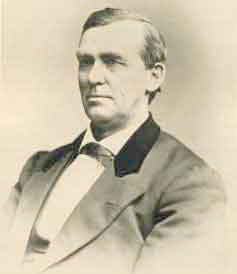
Historical · U.S. House · Kentucky · District 8
Milton Durham
Former U.S. Representative · Kentucky District 8 · 1873–1879 · Democratic
Milton Durham represented Kentucky's District 8 in the United States House of Representatives (1873–1879) for the Democratic party. The page below collects sourced biographical facts, term history, committee roles, and provenance for Durham.
Bioguide ID: D000572
Key facts
- Full name
- Milton Durham
- State
- Kentucky
- District
- District 8
- Party
- Democratic
- House service
- 1873–1879
- First House term
- 1873
- Status
- Left office
- Current term ends
- —
- Born
- 1824
- Bioguide ID
- D000572
- Committee assignments
- —
- Dataset version
- 1.20260606
Biographical narrative
979 words · sourced from the Wikipedia REST extract
Milton Durham was a U.S. Representative from Kentucky, serving in the House of Representatives during the 1870s. A member of the Democratic Party, he represented Kentucky's Eighth Congressional District for three terms, from 1873 until 1879. In addition to his legislative work, Durham held various positions in public service, including a significant role as the First Comptroller of the Treasury under President Grover Cleveland. His career spanned law, politics, and banking, reflecting a commitment to public service and financial oversight.
Early life and career
Milton Jameson Durham was born on May 16, 1824, near Perryville in Mercer County, Kentucky, which is now part of Boyle County. He was the son of Benjamin and Margaret Robinson Durham. His family had a notable religious background; his grandfather, John Durham, was instrumental in establishing the first Methodist church west of the Allegheny Mountains. This heritage influenced Durham's upbringing, as he and his descendants were active members of the Methodist Episcopal Church, South.
Durham received his early education in local common schools before pursuing higher education. In January 1841, he enrolled at Indiana Asbury University, now known as DePauw University, in Greencastle, Indiana. He graduated with honors in 1844. Following his graduation, he returned to Perryville, where he taught in local schools while studying law under the guidance of Joshua Fry Bell. He later attended the University of Louisville School of Law, graduating in March 1850. After being admitted to the bar that same year, Durham began his legal practice in Danville, Kentucky.
In addition to his legal career, Durham was involved in public service. He served on the Board of Commissioners for the Kentucky Deaf and Dumb Asylum in Danville for several years. His personal life included a marriage to Martha J. Mitchell on June 18, 1850. The couple had five children: Louis H., Benjamin J., James Wesley, Robert M., and Ora B. (who later married a Morris). Tragically, Martha passed away in 1879. In 1886, Durham remarried, this time to Margaret Letcher Carter.
Durham's political career began in earnest in 1861 when he was appointed as a circuit judge for the eighth judicial district by Governor Beriah Magoffin. He served in this capacity until 1862 but chose not to continue on the bench thereafter.
House tenure
In 1872, Durham was elected to the U.S. House of Representatives, representing Kentucky's heavily Democratic Eighth District. His election marked the beginning of his congressional career, which lasted from March 4, 1873, to March 3, 1879. During his time in the House, he served in the Forty-third, Forty-fourth, and Forty-fifth Congresses. His election victory was notable, as he defeated Republican candidate William O. Bradley by a narrow margin.
Throughout his congressional tenure, Durham was actively involved in several key committees. He served on the House Committees on Banking and Currency, Coinage, and Weights and Measures. Additionally, he chaired the House Committees on Appropriations and the Revision of the Laws. His work included participation in investigations into significant financial matters, such as the failure of the First Bank of the United States and alleged fraud in the Western Judicial District of Arkansas. He also investigated the accounts of the Bureau of Engraving and Printing and the condition of the Freedman's Savings and Trust Company. In response to the issues surrounding the Freedman's Savings and Trust, Durham sponsored legislation aimed at securing the company's assets.
Durham's legislative contributions included notable speeches on important topics of the time, such as the Civil Rights Act of 1871 and the resumption of specie payments. His efforts in Congress were marked by a focus on financial oversight and the welfare of the constituents he represented.
In 1878, Durham sought re-election but faced a challenge from Philip B. Thompson, Jr. at the Democratic nominating convention. He was narrowly defeated, which ended his congressional career. Following his departure from the House, Durham returned to his law practice in Danville. In 1884, he attempted to regain his seat in the Eighth District but was unsuccessful in the Democratic primary, finishing behind both Thompson and former Governor James B. McCreary.
Legislative focus and committees
During his time in the House of Representatives, Milton Durham's legislative focus was primarily on financial matters, reflecting his background in law and banking. His involvement in various committees allowed him to influence significant financial legislation and oversight. As a member of the Committee on Banking and Currency, he contributed to discussions and decisions that shaped the financial landscape of the nation during a period of economic transition.
Durham's role as chair of the Committee on Appropriations was particularly noteworthy, as this committee is responsible for determining the allocation of federal funds. His leadership in this capacity underscored his commitment to fiscal responsibility and effective governance. Additionally, his work on the Committee on the Revision of the Laws involved reviewing and updating existing legislation, ensuring that laws remained relevant and effective.
His participation in investigations into financial misconduct and the management of federal institutions demonstrated his dedication to accountability in government. The inquiries he was involved in, particularly regarding the Freedman's Savings and Trust Company, highlighted his concern for the financial security of vulnerable populations, including freed slaves and their families.
After his congressional service, Durham's career continued in public service when he was appointed as the First Comptroller of the Treasury by President Grover Cleveland in 1885. This position allowed him to further influence financial policy at the federal level until the office was discontinued in 1889.
In summary, Milton Durham's career was characterized by a strong commitment to public service, financial oversight, and legislative leadership. His contributions to the U.S. House of Representatives and subsequent roles in government reflect a lifetime dedicated to the principles of governance and fiscal responsibility. He passed away on February 12, 1911, leaving behind a legacy of public service and commitment to the financial well-being of his constituents and the nation.
Notable legislation
Sponsored and co-sponsored legislation for Milton Durham is pending operator curation. The biographical narrative above carries the same provenance trail until per-bill rows are written.
Sources
- [1]https://en.wikipedia.org/wiki/Milton_J._DurhamWikipedia · retrieved 2026-06-06
Notable quotes
Sourced quotes for Milton Durham are pending operator curation. Narrative-scope provenance remains attached below.
Sources
- [1]https://en.wikipedia.org/wiki/Milton_J._DurhamWikipedia · retrieved 2026-06-06
Key positions
Curated policy positions for Milton Durham are pending operator review. The biographical narrative above carries the same provenance trail until per-topic positions are written.
Sources
- [1]https://en.wikipedia.org/wiki/Milton_J._DurhamWikipedia · retrieved 2026-06-06
Terms served
- 1873–1875U.S. House · Term 1 · Democratic
- 1875–1877U.S. House · Term 2 · Democratic
- 1877–1879U.S. House · Term 3 · Democratic
Sources & provenance
Every attributable claim above carries a per-section [N] marker that resolves to the corresponding URL below. Each entry records the upstream provider, the canonical URL, and the timestamp at which the source was retrieved by the ingest pipeline.
Key facts
- https://bioguide.congress.gov/search/bio/D000572bioguide · retrieved 2026-06-06
- https://www.govtrack.us/congress/members/403675govtrack · retrieved 2026-06-06
Biographical narrative
- https://en.wikipedia.org/wiki/Milton_J._Durhamwikipedia · retrieved 2026-06-06
Find your representative
Every U.S. state elects representatives by district. Browse Kentucky’s delegation, the full former-representative roster, or explore the role and term length.
Related on The Candidate
- Preceded by William RandallEarlier holder of the Kentucky District 8 House seat · Unconditional Unionist.Open
- Succeeded by Philip Thompson Jr.Later holder of the Kentucky District 8 House seat · Democratic.Open
- Andrew BooneFormer U.S. Representative · Kentucky District 1 · DemocraticOpen
- Carroll Hubbard Jr.Former U.S. Representative · Kentucky District 1 · DemocraticOpen
- Charles WheelerFormer U.S. Representative · Kentucky District 1 · DemocraticOpen
- Chittenden LyonFormer U.S. Representative · Kentucky District 1 · JacksonOpen