
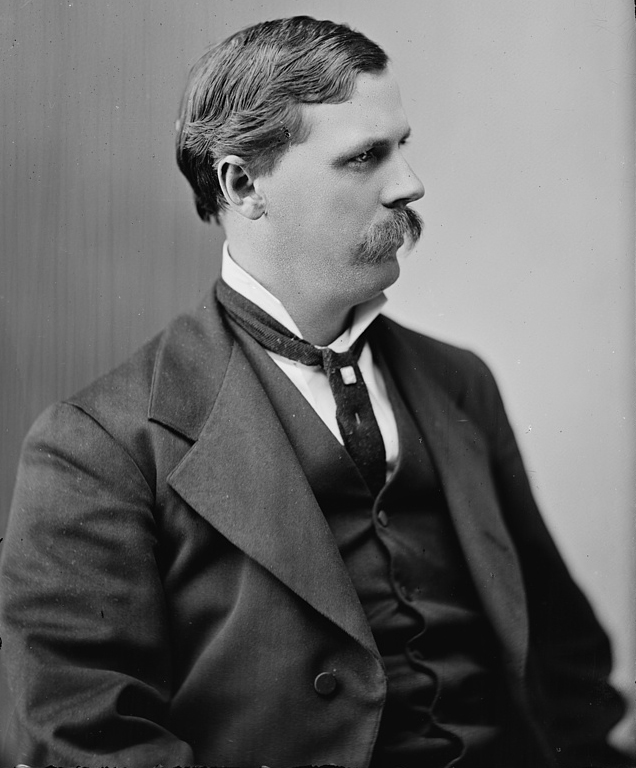
Historical · U.S. House · Kentucky · District 8
Philip Thompson Jr.
Former U.S. Representative · Kentucky District 8 · 1879–1885 · Democratic
Philip Thompson Jr. represented Kentucky's District 8 in the United States House of Representatives (1879–1885) for the Democratic party. The page below collects sourced biographical facts, term history, committee roles, and provenance for Jr..
Bioguide ID: T000212
Key facts
- Full name
- Philip Thompson Jr.
- State
- Kentucky
- District
- District 8
- Party
- Democratic
- House service
- 1879–1885
- First House term
- 1879
- Status
- Left office
- Current term ends
- —
- Born
- 1845
- Bioguide ID
- T000212
- Committee assignments
- —
- Dataset version
- 1.20260606
Biographical narrative
1,031 words · sourced from the Wikipedia REST extract
Philip Thompson Jr. was a notable figure in American politics during the late 19th century, serving as a U.S. Representative from Kentucky. A member of the Democratic Party, Thompson's congressional career spanned three terms from 1879 to 1885. His life and career were marked by significant events, including his military service during the Civil War, his legal career, and a personal tragedy that garnered public attention. Thompson's contributions to his community and the nation were shaped by his experiences and the political landscape of his time.
Early life and career
Philip Thompson Jr. was born on October 15, 1845, in Harrodsburg, Kentucky. He was part of a politically active family, being the nephew of John Burton Thompson Sr., who was also involved in politics. Growing up in Harrodsburg, Thompson received his early education in the common schools of the area before attending the University of Kentucky in Lexington. His educational background laid the groundwork for his future endeavors in law and politics.
At the age of sixteen, Thompson and his twin brother, John Burton Thompson Jr., enlisted in the Confederate States Army during the Civil War. Their service in the war was a formative experience that influenced their perspectives and future careers. After the war, Thompson returned to his studies and pursued a legal education. He was admitted to the bar in 1866, marking the beginning of his legal career in Harrodsburg.
Thompson quickly became involved in local governance, serving as the city attorney of Harrodsburg from 1867 to 1869. His legal expertise and commitment to public service led to his appointment as the Commonwealth attorney for the thirteenth judicial district of Kentucky in 1869. He was subsequently elected to this position and served until 1874. His reelection in 1874 demonstrated his popularity and effectiveness in office, allowing him to continue serving until 1878. During this time, he built a reputation as a competent attorney and a dedicated public servant, which would later support his transition into national politics.
House tenure
In 1878, Philip Thompson Jr. transitioned from state to national politics when he was elected to the U.S. House of Representatives. He began his first term on March 4, 1879, representing Kentucky's 8th congressional district. Thompson was a member of the Democratic Party, which was the dominant political force in the South during this period following the Civil War. His election to Congress came during a time of significant political and social change in the United States, as the nation was grappling with the aftermath of the war and the challenges of Reconstruction.
Thompson served three consecutive terms in the House, participating in the Forty-sixth, Forty-seventh, and Forty-eighth Congresses. His tenure in Congress lasted until March 3, 1885. Throughout his time in office, Thompson was involved in various legislative activities and discussions that reflected the concerns of his constituents and the broader national issues of the day.
During the Forty-eighth Congress, he held the position of chairman of the Committee on Expenditures in the Department of War. This role placed him in a significant position within the House, as he was responsible for overseeing expenditures related to military affairs, a critical area of concern for the nation at the time. His leadership in this committee allowed him to influence discussions on military funding and resource allocation, which were vital to the post-war recovery and the modernization of the U.S. military.
Thompson's congressional career was marked by his engagement with various issues affecting his district and the nation. He worked to represent the interests of his constituents, advocating for policies that aligned with the Democratic Party's platform. His legislative activities were reflective of the political dynamics of the era, characterized by debates over economic policies, civil rights, and the role of the federal government in the lives of citizens.
Legislative focus and committees
Throughout his time in the House of Representatives, Philip Thompson Jr. focused on issues pertinent to his constituents in Kentucky and the broader national context. As a member of the Democratic Party, he aligned himself with the party's priorities, which included advocating for states' rights, economic development, and social issues relevant to the post-Civil War South.
Thompson's role as chairman of the Committee on Expenditures in the Department of War during the Forty-eighth Congress was particularly significant. In this capacity, he was responsible for scrutinizing the financial practices of the War Department, ensuring that taxpayer funds were used appropriately and effectively. His leadership in this committee allowed him to engage with military officials and other lawmakers on matters related to defense spending and military readiness, which were critical issues as the nation sought to rebuild and modernize its armed forces after the Civil War.
In addition to his committee work, Thompson's legislative focus included issues that directly impacted his constituents in Kentucky. He was involved in discussions surrounding economic policies that aimed to promote growth and stability in the region. This was particularly important during a time when many Southern states were struggling to recover from the economic devastation of the war.
Thompson's personal life also intersected with his public career in ways that drew attention. In 1883, he was involved in a tragic incident when he fatally shot his wife's alleged lover, an event that became a significant point of public interest. This incident, while deeply personal, also had implications for his political career and public perception.
After serving three terms in Congress, Thompson's political career came to an end in 1885. Following his departure from the House, he moved to New York City, where he resumed his legal practice. His post-congressional life allowed him to continue contributing to the legal field and engaging with the community in a different capacity.
Philip Thompson Jr. passed away on December 15, 1909, in Washington, D.C. His remains were interred in Spring Hill Cemetery in Harrodsburg, Kentucky, where he had spent much of his life. Thompson's legacy as a U.S. Representative reflects the complexities of his time, encompassing his military service, legal career, and the challenges he faced both personally and politically. His contributions to Kentucky and the nation during a transformative period in American history remain a part of the historical narrative of the U.S. Congress.
Notable legislation
Sponsored and co-sponsored legislation for Philip Thompson Jr. is pending operator curation. The biographical narrative above carries the same provenance trail until per-bill rows are written.
Sources
- [1]https://en.wikipedia.org/wiki/Philip_B._Thompson_Jr.Wikipedia · retrieved 2026-06-06
Notable quotes
Sourced quotes for Philip Thompson Jr. are pending operator curation. Narrative-scope provenance remains attached below.
Sources
- [1]https://en.wikipedia.org/wiki/Philip_B._Thompson_Jr.Wikipedia · retrieved 2026-06-06
Key positions
Curated policy positions for Philip Thompson Jr. are pending operator review. The biographical narrative above carries the same provenance trail until per-topic positions are written.
Sources
- [1]https://en.wikipedia.org/wiki/Philip_B._Thompson_Jr.Wikipedia · retrieved 2026-06-06
Terms served
- 1879–1881U.S. House · Term 1 · Democratic
- 1881–1883U.S. House · Term 2 · Democratic
- 1883–1885U.S. House · Term 3 · Democratic
Sources & provenance
Every attributable claim above carries a per-section [N] marker that resolves to the corresponding URL below. Each entry records the upstream provider, the canonical URL, and the timestamp at which the source was retrieved by the ingest pipeline.
Key facts
- https://bioguide.congress.gov/search/bio/T000212bioguide · retrieved 2026-06-06
- https://www.govtrack.us/congress/members/410791govtrack · retrieved 2026-06-06
Biographical narrative
- https://en.wikipedia.org/wiki/Philip_B._Thompson_Jr.wikipedia · retrieved 2026-06-06
Find your representative
Every U.S. state elects representatives by district. Browse Kentucky’s delegation, the full former-representative roster, or explore the role and term length.
Related on The Candidate
- Preceded by Milton DurhamEarlier holder of the Kentucky District 8 House seat · Democratic.Open
- Succeeded by George DavisonLater holder of the Kentucky District 8 House seat · Republican.Open
- Andrew BooneFormer U.S. Representative · Kentucky District 1 · DemocraticOpen
- Carroll Hubbard Jr.Former U.S. Representative · Kentucky District 1 · DemocraticOpen
- Charles WheelerFormer U.S. Representative · Kentucky District 1 · DemocraticOpen
- Chittenden LyonFormer U.S. Representative · Kentucky District 1 · JacksonOpen