
Historical · U.S. House · Louisiana · District 1
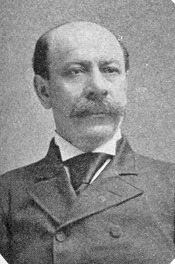
Adolph Meyer
Former U.S. Representative · Louisiana District 1 · 1891–1909 · Democratic
Adolph Meyer represented Louisiana's District 1 in the United States House of Representatives (1891–1909) for the Democratic party. The page below collects sourced biographical facts, term history, committee roles, and provenance for Meyer.
Bioguide ID: M000679
Key facts
- Full name
- Adolph Meyer
- State
- Louisiana
- District
- District 1
- Party
- Democratic
- House service
- 1891–1909
- First House term
- 1891
- Status
- Left office
- Current term ends
- —
- Born
- 1842
- Bioguide ID
- M000679
- Committee assignments
- —
- Dataset version
- 1.20260606
Biographical narrative
953 words · sourced from the Wikipedia REST extract
Adolph Meyer was a prominent American politician and a member of the Democratic Party who served as a U.S. Representative for Louisiana's 1st congressional district. His political career spanned nearly two decades, during which he was elected to nine consecutive terms in the House of Representatives. Born on October 19, 1842, in Natchez, Mississippi, Meyer was a Confederate veteran of the Civil War and had a diverse background as a planter and banker. His tenure in Congress lasted from 1891 until his death in 1908, marking him as a significant figure in Louisiana's political landscape during that era.
Early life and career
Adolph Meyer was born into a Jewish family of German descent in Natchez, Mississippi. The specifics of his early life, including his education and formative experiences, are not extensively documented. However, it is known that he grew up in a region that was deeply affected by the socio-economic conditions of the antebellum South. This background likely influenced his later career as a planter and banker.
During the American Civil War, Meyer served in the Confederate Army, where he held the position of assistant adjutant general on the staff of Brigadier General John Stuart Williams from Kentucky. His military service was a significant aspect of his life, and he attained the rank of assistant adjutant general, which would have involved various administrative and logistical responsibilities within the military structure. After the war, he continued to engage in military affairs by serving in the Louisiana National Guard, where he achieved the rank of brigadier general in 1881. This military background may have contributed to his leadership skills and public service ethos.
In addition to his military career, Meyer was involved in agriculture and finance. He worked as a planter in Mississippi, which would have provided him with insights into the agricultural economy of the South, particularly during the Reconstruction era. Later, he transitioned to banking in New Orleans, where he likely gained experience in financial matters and economic development. This combination of military, agricultural, and financial experience would later inform his political career and legislative priorities.
House tenure
Adolph Meyer was first elected to the U.S. House of Representatives in 1890, beginning his first term in 1891. Over the course of his political career, he was re-elected to serve a total of nine consecutive terms, reflecting a sustained level of support from his constituents in Louisiana's 1st congressional district. His tenure in Congress was marked by a commitment to representing the interests of his district and the state of Louisiana.
Meyer served in the House during a period of significant change in American politics and society. The late 19th and early 20th centuries were characterized by rapid industrialization, urbanization, and shifts in social dynamics, particularly in the South. As a member of the Democratic Party, Meyer aligned himself with the prevailing political sentiments of his constituents, which often included a focus on states' rights and local governance.
Throughout his congressional career, Meyer participated in various legislative activities and discussions that shaped the direction of national policy. His long service in the House allowed him to build relationships with other lawmakers and to influence the legislative process. Meyer remained in office until his death on March 8, 1908, at the age of 65. His passing marked the end of a significant chapter in Louisiana's congressional representation, as he had been a consistent figure in the House for nearly two decades.
Legislative focus and committees
During his time in Congress, Adolph Meyer was involved in a range of legislative issues that were pertinent to his constituents and the broader national context. While specific details about the bills he sponsored or supported are not provided, it can be inferred that his background as a planter and banker likely influenced his legislative priorities. Issues related to agriculture, trade, and economic development would have been central to his agenda, particularly given the economic challenges faced by the South during the post-Civil War era.
Meyer’s military service may have also played a role in shaping his legislative focus. His advocacy for a U.S. Naval Yard in the Algiers neighborhood of New Orleans is one notable aspect of his efforts to enhance local infrastructure and economic opportunities. This initiative reflects a broader trend among lawmakers of the time to secure federal investments in their districts, which were seen as vital for economic growth and development.
In recognition of his contributions, General Meyer Avenue in Algiers is named in his honor, highlighting his efforts to promote the establishment of a naval facility in the area. This avenue serves as a lasting tribute to his influence and dedication to the community he represented. Additionally, the Adolph Meyer School, established in 1917 on General Meyer Avenue, was named in his honor, although it was later renamed to honor Harriet Tubman in the 1990s. The school is now known as Harriet Tubman Charter School and continues to serve the educational needs of the community. In 2016, the building was listed on the National Register of Historic Places, further solidifying its historical significance.
Meyer’s legacy is also reflected in the broader context of Jewish representation in American politics, as he was one of the Jewish members of the United States Congress during his time. His service contributed to the visibility and participation of Jewish Americans in the political landscape of the United States.
In summary, Adolph Meyer was a significant figure in Louisiana's political history, serving as a U.S. Representative for nearly two decades. His background as a Confederate veteran, planter, and banker informed his legislative priorities and community advocacy. His contributions to the House of Representatives and his lasting impact on his district are commemorated through various local landmarks and institutions.
Notable legislation
Sponsored and co-sponsored legislation for Adolph Meyer is pending operator curation. The biographical narrative above carries the same provenance trail until per-bill rows are written.
Sources
- [1]https://en.wikipedia.org/wiki/Adolph_MeyerWikipedia · retrieved 2026-06-06
Notable quotes
Sourced quotes for Adolph Meyer are pending operator curation. Narrative-scope provenance remains attached below.
Sources
- [1]https://en.wikipedia.org/wiki/Adolph_MeyerWikipedia · retrieved 2026-06-06
Key positions
Curated policy positions for Adolph Meyer are pending operator review. The biographical narrative above carries the same provenance trail until per-topic positions are written.
Sources
- [1]https://en.wikipedia.org/wiki/Adolph_MeyerWikipedia · retrieved 2026-06-06
Terms served
- 1891–1893U.S. House · Term 1 · Democratic
- 1893–1895U.S. House · Term 2 · Democratic
- 1895–1897U.S. House · Term 3 · Democratic
- 1897–1899U.S. House · Term 4 · Democratic
- 1899–1901U.S. House · Term 5 · Democratic
- 1901–1903U.S. House · Term 6 · Democratic
- 1903–1905U.S. House · Term 7 · Democratic
- 1905–1907U.S. House · Term 8 · Democratic
- 1907–1909U.S. House · Term 9 · Democratic
Sources & provenance
Every attributable claim above carries a per-section [N] marker that resolves to the corresponding URL below. Each entry records the upstream provider, the canonical URL, and the timestamp at which the source was retrieved by the ingest pipeline.
Key facts
- https://bioguide.congress.gov/search/bio/M000679bioguide · retrieved 2026-06-06
- https://www.govtrack.us/congress/members/407664govtrack · retrieved 2026-06-06
Biographical narrative
- https://en.wikipedia.org/wiki/Adolph_Meyerwikipedia · retrieved 2026-06-06
Find your representative
Every U.S. state elects representatives by district. Browse Louisiana’s delegation, the full former-representative roster, or explore the role and term length.
Related on The Candidate
- Preceded by Theodore WilkinsonEarlier holder of the Louisiana District 1 House seat · Democratic.Open
- Succeeded by James O’ConnorLater holder of the Louisiana District 1 House seat · Democratic.Open
- Albert EstopinalFormer U.S. Representative · Louisiana District 1 · DemocraticOpen
- Benjamin FlandersFormer U.S. Representative · Louisiana District 1 · UnionistOpen
- Bobby JindalFormer U.S. Representative · Louisiana District 1 · RepublicanOpen
- Carleton HuntFormer U.S. Representative · Louisiana District 1 · DemocraticOpen