
Historical · U.S. House · Massachusetts · District 1
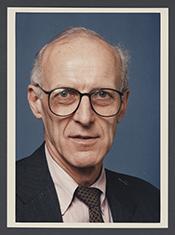
John Olver
Former U.S. Representative · Massachusetts District 1 · 1991–2013 · Democratic
John Olver represented Massachusetts's District 1 in the United States House of Representatives (1991–2013) for the Democratic party. The page below collects sourced biographical facts, term history, committee roles, and provenance for Olver.
Bioguide ID: O000085
Key facts
- Full name
- John Olver
- State
- Massachusetts
- District
- District 1
- Party
- Democratic
- House service
- 1991–2013
- First House term
- 1991
- Status
- Left office
- Current term ends
- —
- Born
- 1936
- Bioguide ID
- O000085
- Committee assignments
- —
- Dataset version
- 1.20260605
Biographical narrative
815 words · sourced from the Wikipedia REST extract
John W. Olver was an American politician and chemist who served as the U.S. Representative for Massachusetts's 1st congressional district from 1991 until 2013. A member of the Democratic Party, Olver was the first Democrat to hold this seat, which he won in a special election following the death of long-serving Congressman Silvio O. Conte. Throughout his 11 terms in Congress, Olver was known for his progressive stances on various issues, including healthcare reform and foreign policy, particularly regarding military involvement in Iraq. He retired from Congress in 2013 and passed away in 2023.
Early life and career
John Walter Olver was born on September 3, 1936, in Honesdale, Pennsylvania. He was the son of Helen Marguerite Fulleborn and Thomas Horace Olver. His family background included English and German ancestry. Growing up on a farm, Olver was involved in agricultural activities, helping his father tend to cows while his mother operated a boarding house catering to families visiting from urban centers like Philadelphia and New York City.
Olver demonstrated academic prowess from an early age, graduating from high school at the age of 15. He enrolled at Rensselaer Polytechnic Institute, where he earned a Bachelor of Science degree in chemistry by the age of 18. Following his undergraduate education, he continued his studies at Tufts University, obtaining a Master of Science in chemistry in 1956. Olver then pursued a Doctor of Philosophy in chemistry at the Massachusetts Institute of Technology, completing his doctorate in 1961.
After finishing his education, Olver began a career in academia, teaching chemistry at the University of Massachusetts Amherst for eight years. His tenure in education laid a foundation for his subsequent transition into politics. In 1968, he entered the political arena by winning a seat in the Massachusetts House of Representatives, where he served two terms until 1973. Following this, he was elected to the Massachusetts Senate, where he served for nine terms until his resignation in 1991 to take up his role in the U.S. House of Representatives.
House tenure
Olver's congressional career began with a special election held on June 18, 1991, to fill the vacancy left by Congressman Silvio O. Conte, who had passed away shortly after beginning his 17th term. Olver, who had just been sworn in for his tenth term in the Massachusetts Senate, won this election against Republican candidate Steven Pierce, marking a significant political shift as he became the first Democrat to represent the 1st congressional district since its reconfiguration in 1893.
After securing his initial victory, Olver went on to win a full term in the 1992 election. His subsequent electoral campaigns included an unopposed run in 1994, a narrow victory against future Lieutenant Governor Jane Swift in 1996, and consistent re-elections thereafter with substantial margins, often exceeding 60 percent of the vote. In October 2011, Olver announced that he would not seek re-election in 2012, concluding his service in the House after eleven terms on January 3, 2013.
Throughout his time in Congress, Olver was characterized as a staunch liberal, often aligning with progressive policies and initiatives. His voting record reflected a commitment to liberal principles, earning him high ratings from progressive advocacy groups while receiving lower scores from conservative organizations. He was also recognized as a superdelegate at the 2008 Democratic National Convention, where he endorsed Barack Obama.
Legislative focus and committees
During his tenure in the U.S. House of Representatives, Olver focused on a variety of legislative issues, particularly in the realms of foreign and domestic policy. He was a vocal opponent of U.S. military involvement in Iraq, consistently advocating for the withdrawal of American troops and a shift toward diplomatic solutions involving neighboring countries. Olver's stance on this issue was evident from his opposition to military funding increases and his calls for political resolutions rather than military interventions.
In addition to his foreign policy positions, Olver was actively involved in domestic policy initiatives, particularly regarding healthcare. He co-sponsored legislation aimed at establishing a universal health insurance program with single-payer financing. His support for healthcare reform extended to advocating for the inclusion of abortion services in federally funded health programs, aligning with his pro-choice stance. He received high ratings from pro-choice organizations, reflecting his commitment to reproductive rights.
Olver also addressed immigration issues, advocating for reforms that would facilitate the entry of qualified immigrants while supporting pathways to citizenship for those already residing in the United States illegally. His approach balanced the need for immigration control with compassion for individuals seeking a better life in the country.
Throughout his congressional career, Olver served on various committees, contributing to discussions and decisions that shaped national policy. His legislative focus and commitment to progressive values left a lasting impact on his constituents and the broader political landscape. After retiring from Congress, Olver's legacy continued to be recognized, culminating in his passing in 2023 at the age of 86.
Notable legislation
Sponsored and co-sponsored legislation for John Olver is pending operator curation. The biographical narrative above carries the same provenance trail until per-bill rows are written.
Sources
- [1]https://en.wikipedia.org/wiki/John_OlverWikipedia · retrieved 2026-06-05
Notable quotes
Sourced quotes for John Olver are pending operator curation. Narrative-scope provenance remains attached below.
Sources
- [1]https://en.wikipedia.org/wiki/John_OlverWikipedia · retrieved 2026-06-05
Key positions
Curated policy positions for John Olver are pending operator review. The biographical narrative above carries the same provenance trail until per-topic positions are written.
Sources
- [1]https://en.wikipedia.org/wiki/John_OlverWikipedia · retrieved 2026-06-05
Terms served
- 1991–1993U.S. House · Term 1 · Democratic
- 1993–1995U.S. House · Term 2 · Democratic
- 1995–1997U.S. House · Term 3 · Democratic
- 1997–1999U.S. House · Term 4 · Democratic
- 1999–2001U.S. House · Term 5 · Democratic
- 2001–2003U.S. House · Term 6 · Democratic
- 2003–2005U.S. House · Term 7 · Democratic
- 2005–2007U.S. House · Term 8 · Democratic
- 2007–2009U.S. House · Term 9 · Democratic
- 2009–2011U.S. House · Term 10 · Democratic
- 2011–2013U.S. House · Term 11 · Democratic
Sources & provenance
Every attributable claim above carries a per-section [N] marker that resolves to the corresponding URL below. Each entry records the upstream provider, the canonical URL, and the timestamp at which the source was retrieved by the ingest pipeline.
Key facts
- https://bioguide.congress.gov/search/bio/O000085bioguide · retrieved 2026-06-05
- http://www.house.gov/olverhouse.gov · retrieved 2026-06-05
Biographical narrative
- https://en.wikipedia.org/wiki/John_Olverwikipedia · retrieved 2026-06-05
Find your representative
Every U.S. state elects representatives by district. Browse Massachusetts’s delegation, the full former-representative roster, or explore the role and term length.
Related on The Candidate
- Preceded by Silvio ConteEarlier holder of the Massachusetts District 1 House seat · Republican.Open
- Abbott LawrenceFormer U.S. Representative · Massachusetts District 1 · WhigOpen
- Allen TreadwayFormer U.S. Representative · Massachusetts District 1 · RepublicanOpen
- Artemas Ward Jr.Former U.S. Representative · Massachusetts District 1 · FederalistOpen
- Ashley WrightFormer U.S. Representative · Massachusetts District 1 · RepublicanOpen
- Democratic PartyFederal candidates and office holders on the Democratic line.Open