
Historical · U.S. House · Massachusetts · District 10
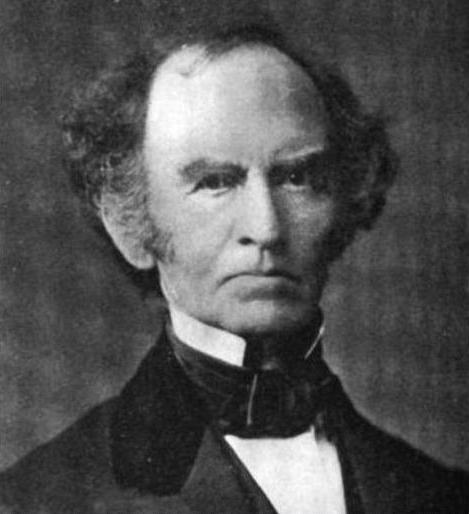
Edward Dickinson
Former U.S. Representative · Massachusetts District 10 · 1853–1855 · Whig
Edward Dickinson represented Massachusetts's District 10 in the United States House of Representatives (1853–1855) for the Whig party. The page below collects sourced biographical facts, term history, committee roles, and provenance for Dickinson.
Bioguide ID: D000319
Key facts
- Full name
- Edward Dickinson
- State
- Massachusetts
- District
- District 10
- Party
- Whig
- House service
- 1853–1855
- First House term
- 1853
- Status
- Left office
- Current term ends
- —
- Born
- 1803
- Bioguide ID
- D000319
- Committee assignments
- —
- Dataset version
- 1.20260606
Biographical narrative
1,034 words · sourced from the Wikipedia REST extract
Edward Dickinson was an American politician from Massachusetts who served as a U.S. Representative for the 10th congressional district. A member of the Whig Party, he held office from 1853 until 1855. Born in 1803, Dickinson was also known for being the father of the renowned poet Emily Dickinson. His contributions to public service extended beyond his congressional tenure, as he was involved in various capacities in local and state government, as well as in the educational sector. His legacy continues, particularly through the Emily Dickinson Museum located in Amherst, Massachusetts, which celebrates the life and work of his daughter.
Early life and career
Edward Dickinson was born on January 1, 1803, in Amherst, Massachusetts, into a prominent family. He was the eldest son of Samuel Fowler Dickinson, a respected figure in the community, and Lucretia Gunn Dickinson. Growing up in Amherst, he received his early education in public schools and furthered his studies at the Amherst Academy, a local institution known for its rigorous academic standards. Following his preparatory education, Dickinson attended Yale College, where he graduated in 1823. His education laid a strong foundation for his future career in law and politics.
After completing his studies, Dickinson pursued legal training at Northampton Law School in Northampton, Massachusetts. He was admitted to the bar in 1826, marking the beginning of his legal career in his hometown of Amherst. In addition to his legal practice, he became actively involved in community affairs. On May 6, 1828, he married Emily Norcross Dickinson, and together they had three children: William Austin, Emily Elizabeth, and Lavinia Norcross. His family life was intertwined with his professional endeavors, and he would later become known for his connection to his daughter, Emily, who would achieve literary fame.
Dickinson's commitment to education and public service was evident in his role as treasurer of Amherst College, a position he held from 1835 until 1873. His long tenure at the college reflected his dedication to higher education and the community. In recognition of his contributions, Amherst College awarded him an honorary Doctor of Laws (LL.D.) degree in 1863. This acknowledgment underscored his influence and standing in the educational landscape of Massachusetts.
In addition to his work in education, Dickinson ventured into politics. He served in the Massachusetts House of Representatives from 1838 to 1839, where he began to establish his reputation as a public servant. Following this, he was elected to the Massachusetts Senate, serving from 1842 to 1843. His political career continued to evolve as he became a member of the Massachusetts Governor's Council in 1846 and 1847. These roles provided him with valuable experience in governance and policy-making, which would later inform his work at the federal level.
House tenure
Edward Dickinson's congressional career began when he was elected as a Whig to the United States House of Representatives, representing Massachusetts's 10th congressional district. His term in the House lasted from 1853 to 1855. During this period, he participated in the legislative process at a time when the nation was grappling with significant issues, including debates over slavery and states' rights, which would eventually lead to the Civil War.
As a member of the Whig Party, Dickinson aligned himself with a political group that sought to address the concerns of various constituencies, including those advocating for economic development and infrastructure improvements. His election to Congress was part of a broader Whig strategy to maintain influence in a rapidly changing political landscape, particularly as the Democratic Party began to gain prominence.
While specific details about Dickinson's legislative actions during his time in the House are not extensively documented, it is known that he was involved in discussions and decisions that shaped the direction of the country. His background in law and his experience in state politics likely informed his contributions to legislative debates and committee work.
After completing his term in the House, Dickinson declined to seek the Republican nomination for Lieutenant Governor in 1861. This decision marked a shift in his political aspirations, as he chose to step back from the national political arena. However, he remained engaged in public service and returned to the Massachusetts House of Representatives in 1873. His re-election was motivated by a desire to secure advantages for his town, particularly in relation to the Massachusetts Central Railroad, highlighting his ongoing commitment to local development and infrastructure.
Legislative focus and committees
During his time in the U.S. House of Representatives, Edward Dickinson's legislative focus was likely influenced by his background in law and his experiences in state government. Although specific committee assignments and legislative initiatives are not detailed in the available records, it can be inferred that his interests may have included issues related to infrastructure, economic development, and education, given his previous roles and commitments.
Dickinson's involvement in the Massachusetts Governor's Council and his long tenure as treasurer of Amherst College suggest that he valued education and public welfare. These priorities may have informed his approach to legislation, particularly in advocating for policies that would benefit his constituents and the broader community. His commitment to local interests was evident in his later return to the Massachusetts House, where he aimed to leverage his experience for the benefit of his town.
The context of his congressional term was marked by significant national debates, including those surrounding the expansion of slavery and the rights of states versus the federal government. While specific votes and legislative outcomes from Dickinson's term are not recorded, his alignment with the Whig Party indicates that he was part of a political faction that sought to navigate these contentious issues.
Edward Dickinson's life and career were characterized by a blend of legal practice, political service, and a commitment to education. His legacy is intertwined with that of his daughter, Emily Dickinson, whose literary contributions have left an indelible mark on American literature. Edward Dickinson passed away on June 16, 1874, after delivering a speech in the House regarding his connection to the Hoosac Tunnel. His death marked the end of a life dedicated to public service and community engagement, and he was laid to rest in Amherst's West Cemetery, a testament to his enduring ties to the town he called home.
Notable legislation
Sponsored and co-sponsored legislation for Edward Dickinson is pending operator curation. The biographical narrative above carries the same provenance trail until per-bill rows are written.
Sources
- [1]https://en.wikipedia.org/wiki/Edward_DickinsonWikipedia · retrieved 2026-06-06
Notable quotes
Sourced quotes for Edward Dickinson are pending operator curation. Narrative-scope provenance remains attached below.
Sources
- [1]https://en.wikipedia.org/wiki/Edward_DickinsonWikipedia · retrieved 2026-06-06
Key positions
Curated policy positions for Edward Dickinson are pending operator review. The biographical narrative above carries the same provenance trail until per-topic positions are written.
Sources
- [1]https://en.wikipedia.org/wiki/Edward_DickinsonWikipedia · retrieved 2026-06-06
Terms served
- 1853–1855U.S. House · Term 1 · Whig
Sources & provenance
Every attributable claim above carries a per-section [N] marker that resolves to the corresponding URL below. Each entry records the upstream provider, the canonical URL, and the timestamp at which the source was retrieved by the ingest pipeline.
Key facts
- https://bioguide.congress.gov/search/bio/D000319bioguide · retrieved 2026-06-06
- https://www.govtrack.us/congress/members/403439govtrack · retrieved 2026-06-06
Biographical narrative
- https://en.wikipedia.org/wiki/Edward_Dickinsonwikipedia · retrieved 2026-06-06
Find your representative
Every U.S. state elects representatives by district. Browse Massachusetts’s delegation, the full former-representative roster, or explore the role and term length.
Related on The Candidate
- Preceded by Joseph GrinnellEarlier holder of the Massachusetts District 10 House seat · Whig.Open
- Succeeded by Calvin ChaffeeLater holder of the Massachusetts District 10 House seat · Republican.Open
- Abbott LawrenceFormer U.S. Representative · Massachusetts District 1 · WhigOpen
- Allen TreadwayFormer U.S. Representative · Massachusetts District 1 · RepublicanOpen
- Artemas Ward Jr.Former U.S. Representative · Massachusetts District 1 · FederalistOpen
- Ashley WrightFormer U.S. Representative · Massachusetts District 1 · RepublicanOpen