
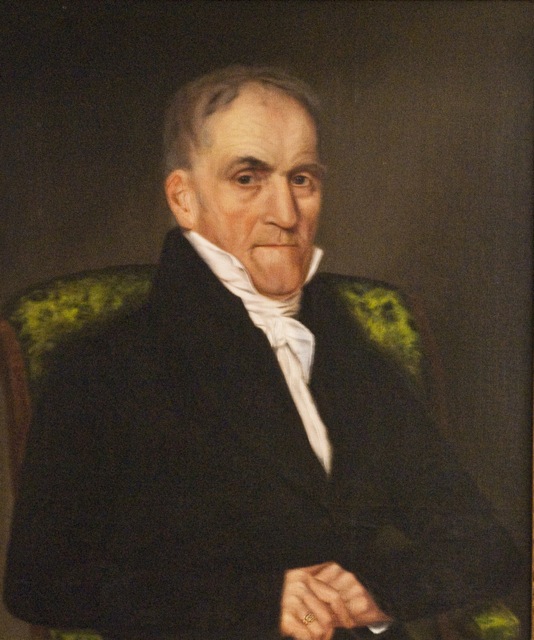
Historical · U.S. House · Massachusetts · District 10
Laban Wheaton
Former U.S. Representative · Massachusetts District 10 · 1809–1817 · Federalist
Laban Wheaton represented Massachusetts's District 10 in the United States House of Representatives (1809–1817) for the Federalist party. The page below collects sourced biographical facts, term history, committee roles, and provenance for Wheaton.
Bioguide ID: W000329
Key facts
- Full name
- Laban Wheaton
- State
- Massachusetts
- District
- District 10
- Party
- Federalist
- House service
- 1809–1817
- First House term
- 1809
- Status
- Left office
- Current term ends
- —
- Born
- 1754
- Bioguide ID
- W000329
- Committee assignments
- —
- Dataset version
- 1.20260606
Biographical narrative
813 words · sourced from the Wikipedia REST extract
Laban Wheaton was a prominent political figure in early American history, serving as a U.S. Representative for Massachusetts's 10th congressional district. A member of the Federalist Party, he held office in the House of Representatives from 1809 until 1817. In addition to his legislative career, Wheaton was involved in various aspects of public service, including roles in the Massachusetts House of Representatives and the judiciary. His contributions extended beyond politics, as he also founded an educational institution in memory of his daughter.
Early life and career
Laban Wheaton was born on March 13, 1754, in Mansfield, which was then part of the Province of Massachusetts Bay. He received his early education at Wrentham Academy, a preparatory school that laid the foundation for his later academic pursuits. In 1774, he graduated from Harvard College, one of the most prestigious institutions in the United States. Following his graduation, Wheaton pursued theological studies under a private instructor in Woodstock, Connecticut, reflecting his interest in religious matters.
In addition to theology, Wheaton also studied law, which would later become his profession. He was admitted to the bar in 1788, marking the beginning of his legal career in Milton, Massachusetts. His legal background provided him with a strong foundation for his subsequent political endeavors, as many early American politicians had legal training.
Wheaton's public service began in the Massachusetts House of Representatives, where he served from 1803 to 1808. This experience in state politics likely equipped him with the skills and knowledge necessary for his later role in the U.S. Congress. After his initial term in the state legislature, he returned to serve again in 1825, demonstrating his continued commitment to public service.
House tenure
Laban Wheaton was elected to the U.S. House of Representatives as a member of the Federalist Party, beginning his first term on March 4, 1809. He was re-elected for three additional terms, serving in total for eight years until his last term ended on March 3, 1817. During this period, Wheaton participated in the Eleventh Congress and the three succeeding Congresses, contributing to the legislative process during a formative time in American history.
As a Federalist, Wheaton was part of a party that advocated for a strong central government and was generally supportive of commercial interests. His tenure in Congress coincided with significant national events, including the War of 1812, which had profound implications for American foreign policy and domestic affairs. While specific details of his legislative actions during this time are not documented, his role as a representative would have involved addressing the pressing issues of the day, including national defense, trade, and the economy.
Wheaton's congressional career was marked by the challenges faced by the Federalist Party during the early 19th century, as the party began to decline in influence following the War of 1812. Despite this decline, Wheaton's service in the House contributed to the representation of Massachusetts interests at the federal level.
Legislative focus and committees
While specific details regarding Laban Wheaton's committee assignments and legislative focus during his time in Congress are not available, it is known that he was an active member of the Federalist Party, which often prioritized issues related to commerce, trade, and national security. The Federalists were known for their support of a strong national government and a robust economic framework, which would have influenced Wheaton's legislative priorities.
In addition to his congressional duties, Wheaton's legal background likely informed his perspectives on various legislative matters, particularly those related to the judiciary and legal affairs. His experience in the Massachusetts House of Representatives and as a practicing attorney would have provided him with insights into the legal implications of proposed legislation.
After concluding his service in the U.S. House of Representatives, Wheaton continued to engage in public service through his judicial roles. He served as a judge of the Bristol County Court and was appointed chief justice of the court of common pleas for Bristol County in 1810. He held this position until 1819, when he became chief justice of the court of sessions for Bristol County, a role he maintained until the court was abolished in 1820. These judicial positions reflect his ongoing commitment to public service and the legal profession.
Wheaton's contributions to education are also noteworthy. In 1834, he established the Wheaton Female Seminary in Norton, Massachusetts, as a memorial to his daughter, Eliza Wheaton Strong. This institution later evolved into Wheaton College, which continues to operate today, highlighting Wheaton's lasting impact on education in the region.
Laban Wheaton passed away on March 23, 1846, in Norton, Massachusetts, at the age of 92. He was laid to rest in Norton Cemetery, leaving behind a legacy of public service that encompassed legislative, judicial, and educational contributions. His life and career reflect the complexities of early American governance and the evolving landscape of political and social issues in the United States.
Notable legislation
Sponsored and co-sponsored legislation for Laban Wheaton is pending operator curation. The biographical narrative above carries the same provenance trail until per-bill rows are written.
Sources
- [1]https://en.wikipedia.org/wiki/Laban_WheatonWikipedia · retrieved 2026-06-06
Notable quotes
Sourced quotes for Laban Wheaton are pending operator curation. Narrative-scope provenance remains attached below.
Sources
- [1]https://en.wikipedia.org/wiki/Laban_WheatonWikipedia · retrieved 2026-06-06
Key positions
Curated policy positions for Laban Wheaton are pending operator review. The biographical narrative above carries the same provenance trail until per-topic positions are written.
Sources
- [1]https://en.wikipedia.org/wiki/Laban_WheatonWikipedia · retrieved 2026-06-06
Terms served
- 1809–1811U.S. House · Term 1 · Federalist
- 1811–1813U.S. House · Term 2 · Federalist
- 1813–1815U.S. House · Term 3 · Federalist
- 1815–1817U.S. House · Term 4 · Federalist
Sources & provenance
Every attributable claim above carries a per-section [N] marker that resolves to the corresponding URL below. Each entry records the upstream provider, the canonical URL, and the timestamp at which the source was retrieved by the ingest pipeline.
Key facts
- https://bioguide.congress.gov/search/bio/W000329bioguide · retrieved 2026-06-06
- https://www.govtrack.us/congress/members/411491govtrack · retrieved 2026-06-06
Biographical narrative
- https://en.wikipedia.org/wiki/Laban_Wheatonwikipedia · retrieved 2026-06-06
Find your representative
Every U.S. state elects representatives by district. Browse Massachusetts’s delegation, the full former-representative roster, or explore the role and term length.
Related on The Candidate
- Preceded by Seth HastingsEarlier holder of the Massachusetts District 10 House seat · Federalist.Open
- Succeeded by Marcus MortonLater holder of the Massachusetts District 10 House seat · Republican.Open
- Abbott LawrenceFormer U.S. Representative · Massachusetts District 1 · WhigOpen
- Allen TreadwayFormer U.S. Representative · Massachusetts District 1 · RepublicanOpen
- Artemas Ward Jr.Former U.S. Representative · Massachusetts District 1 · FederalistOpen
- Ashley WrightFormer U.S. Representative · Massachusetts District 1 · RepublicanOpen