
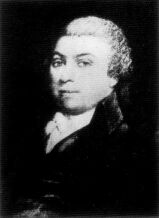
Historical · U.S. House · Massachusetts · District 10
Samuel Sewall
Former U.S. Representative · Massachusetts District 10 · 1795–1801 · Federalist
Samuel Sewall represented Massachusetts's District 10 in the United States House of Representatives (1795–1801) for the Federalist party. The page below collects sourced biographical facts, term history, committee roles, and provenance for Sewall.
Bioguide ID: S000259
Key facts
- Full name
- Samuel Sewall
- State
- Massachusetts
- District
- District 10
- Party
- Federalist
- House service
- 1795–1801
- First House term
- 1795
- Status
- Left office
- Current term ends
- —
- Born
- 1757
- Bioguide ID
- S000259
- Committee assignments
- —
- Dataset version
- 1.20260606
Biographical narrative
896 words · sourced from the Wikipedia REST extract
Samuel Sewall was an American lawyer and politician who served as a U.S. Representative for Massachusetts's 10th congressional district from 1796 until 1800. A member of the Federalist Party, Sewall's political career was marked by his involvement in the early legislative processes of the United States following its independence. After his tenure in the House, he served as a judge on the Massachusetts Supreme Judicial Court, eventually becoming its chief justice. His family background and connections to significant historical events in Massachusetts further underscore his role in American history.
Early life and career
Samuel Sewall was born on December 11, 1757, in Boston, which was then part of the Province of Massachusetts Bay. He received his early education at Dummer Charity School, now known as The Governor's Academy. Following his studies there, he attended Harvard College, where he earned his Bachelor of Arts degree in 1776 and a Master of Arts degree in 1779. He was later awarded an honorary Doctor of Laws degree in 1808, reflecting his contributions to law and public service.
After completing his education, Sewall established himself as a lawyer in Marblehead, Massachusetts. His legal career began in a period of significant political change in the United States, and he quickly became involved in public service. In 1783, he was elected to the Massachusetts state legislature, where he served until 1786. He returned to the state legislature from 1788 to 1796, during which time he gained valuable experience in governance and lawmaking.
Sewall's political ambitions led him to run for a seat in the U.S. House of Representatives in 1792, representing Massachusetts's 1st congressional district. Although he was not elected at that time, he continued to pursue a political career and was successful in securing a seat in the House in 1796, representing the newly established 10th congressional district.
House tenure
Samuel Sewall's congressional career began in 1796, and he served three terms in the U.S. House of Representatives until 1800. During his time in office, he was a member of the Federalist Party, which was one of the first two political parties in the United States. The Federalists generally supported a strong central government and were influential in shaping the early policies of the nation.
Throughout his tenure, Sewall participated in various legislative activities and discussions that were critical to the early years of the republic. One notable aspect of his congressional service was his appointment as an impeachment manager during the impeachment proceedings against Senator William Blount. This role involved presenting the case for impeachment to the Senate, highlighting Sewall's involvement in significant legal and political processes of the time.
Sewall's time in the House coincided with a period of considerable political and social change in the United States. His legislative work contributed to the establishment of foundational policies and practices that would shape the future of the nation. After completing his third term, Sewall's service in the House ended on March 3, 1801.
Legislative focus and committees
During his time in the U.S. House of Representatives, Samuel Sewall focused on issues pertinent to the early years of American governance. As a member of the Federalist Party, he was aligned with the party's priorities, which included support for a strong federal government, the promotion of commerce, and the establishment of a national bank. His legal background likely influenced his approach to legislation and governance, as he sought to balance the interests of his constituents with the broader needs of the nation.
Sewall's involvement in the impeachment of Senator William Blount is a notable aspect of his legislative career. This event was one of the early tests of the impeachment process in the United States, and Sewall's role as an impeachment manager placed him at the center of a significant constitutional issue. The proceedings highlighted the tensions between the executive and legislative branches of government, as well as the challenges of maintaining accountability among elected officials.
After his congressional service, Sewall transitioned to a judicial career, which further demonstrated his commitment to public service and the rule of law. He was appointed to the Massachusetts Supreme Judicial Court, where he served from 1800 until his death in 1814. His judicial career culminated in his appointment as chief justice, a position he held until shortly before his passing.
In addition to his political and judicial roles, Sewall was involved in various civic and scholarly organizations. He was elected a Fellow of the American Academy of Arts and Sciences in 1801, reflecting his contributions to the intellectual and cultural life of the nation. He was also elected to the American Antiquarian Society shortly before his death, although he passed away on June 8, 1814, before he could formally respond to the membership invitation.
Samuel Sewall's legacy is intertwined with his family's historical significance. His great-grandfather, also named Samuel Sewall, was a judge during the Salem witch trials and later served as Chief Justice of Massachusetts. This connection to a prominent historical figure adds depth to Sewall's own contributions to American history.
In summary, Samuel Sewall's career as a U.S. Representative and later as a judge reflects the complexities of early American governance and the evolving role of law and politics in the newly formed United States. His experiences in the House of Representatives and the judiciary illustrate the interconnectedness of these institutions in shaping the nation's legal and political landscape.
Notable legislation
Sponsored and co-sponsored legislation for Samuel Sewall is pending operator curation. The biographical narrative above carries the same provenance trail until per-bill rows are written.
Sources
- [1]https://en.wikipedia.org/wiki/Samuel_Sewall_(congressman)Wikipedia · retrieved 2026-06-06
Notable quotes
Sourced quotes for Samuel Sewall are pending operator curation. Narrative-scope provenance remains attached below.
Sources
- [1]https://en.wikipedia.org/wiki/Samuel_Sewall_(congressman)Wikipedia · retrieved 2026-06-06
Key positions
Curated policy positions for Samuel Sewall are pending operator review. The biographical narrative above carries the same provenance trail until per-topic positions are written.
Sources
- [1]https://en.wikipedia.org/wiki/Samuel_Sewall_(congressman)Wikipedia · retrieved 2026-06-06
Terms served
- 1795–1797U.S. House · Term 1 · Federalist
- 1797–1799U.S. House · Term 2 · Federalist
- 1799–1801U.S. House · Term 3 · Federalist
Sources & provenance
Every attributable claim above carries a per-section [N] marker that resolves to the corresponding URL below. Each entry records the upstream provider, the canonical URL, and the timestamp at which the source was retrieved by the ingest pipeline.
Key facts
- https://bioguide.congress.gov/search/bio/S000259bioguide · retrieved 2026-06-06
- https://www.govtrack.us/congress/members/409760govtrack · retrieved 2026-06-06
Biographical narrative
- https://en.wikipedia.org/wiki/Samuel_Sewall_(congressman)wikipedia · retrieved 2026-06-06
Find your representative
Every U.S. state elects representatives by district. Browse Massachusetts’s delegation, the full former-representative roster, or explore the role and term length.
Related on The Candidate
- Succeeded by Seth HastingsLater holder of the Massachusetts District 10 House seat · Federalist.Open
- Abbott LawrenceFormer U.S. Representative · Massachusetts District 1 · WhigOpen
- Allen TreadwayFormer U.S. Representative · Massachusetts District 1 · RepublicanOpen
- Artemas Ward Jr.Former U.S. Representative · Massachusetts District 1 · FederalistOpen
- Ashley WrightFormer U.S. Representative · Massachusetts District 1 · RepublicanOpen
- Representatives from MassachusettsEvery former U.S. Representative who has represented Massachusetts.Open