
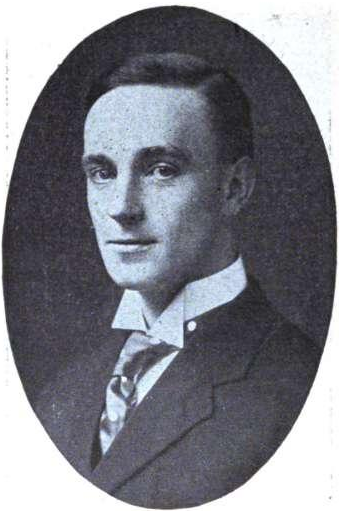
Historical · U.S. House · Massachusetts · District 10
William Murray
Former U.S. Representative · Massachusetts District 10 · 1911–1915 · Democratic
William Murray represented Massachusetts's District 10 in the United States House of Representatives (1911–1915) for the Democratic party. The page below collects sourced biographical facts, term history, committee roles, and provenance for Murray.
Bioguide ID: M001117
Key facts
- Full name
- William Murray
- State
- Massachusetts
- District
- District 10
- Party
- Democratic
- House service
- 1911–1915
- First House term
- 1911
- Status
- Left office
- Current term ends
- —
- Born
- 1881
- Bioguide ID
- M001117
- Committee assignments
- —
- Dataset version
- 1.20260606
Biographical narrative
961 words · sourced from the Wikipedia REST extract
William Murray was a prominent figure in early 20th-century American politics, serving as a U.S. Representative for Massachusetts's 10th congressional district. A member of the Democratic Party, he held office from 1911 until 1914, after which he was appointed as the Postmaster of Boston, a position he held until his untimely death in 1918. Murray's political career was marked by his youth and his alignment with the progressive policies of President Woodrow Wilson. His contributions to local governance and his brief tenure in Congress reflect a commitment to public service that began in his early years and continued until his passing.
Early life and career
William Murray was born on September 7, 1881, in Boston, Massachusetts. He grew up in a city known for its rich history and educational institutions. Murray attended the public schools in Boston, where he laid the foundation for his future academic pursuits. He furthered his education at the Boston Latin School, one of the oldest public schools in the United States, which has a reputation for academic excellence. Following his secondary education, he enrolled at Harvard University, where he completed his undergraduate studies in 1904. He continued his education at Harvard Law School, graduating in 1906. This rigorous academic background equipped him with the skills necessary for a career in law and public service.
After earning his law degree, Murray began practicing law in Boston, where he gained valuable experience in the legal field. His legal career coincided with a growing interest in public service, which led him to engage in local politics. In 1904, he was elected to the Boston Common Council, serving in this capacity for two years. His involvement in local governance provided him with insights into the needs and concerns of his constituents. Following his tenure on the council, he was elected to the Massachusetts House of Representatives, where he served from 1907 to 1908. His legislative experience at the state level further solidified his reputation as a dedicated public servant.
In 1910, Murray's political ambitions led him to seek a higher office. He ran for a seat in the U.S. House of Representatives, challenging the incumbent Democrat John A. Keliher. In a notable primary election, Murray successfully defeated Keliher, showcasing his ability to connect with voters and his emerging political influence. His victory in the primary was followed by success in the general election, making him one of the youngest members of the Sixty-second Congress at the age of 29.
House tenure
Murray's congressional career began on March 4, 1911, when he took office as a U.S. Representative for Massachusetts's 10th congressional district. His time in Congress was characterized by his strong support for the policies of President Woodrow Wilson, particularly during a period of significant national change. As a member of the Democratic Party, Murray aligned himself with Wilson's progressive agenda, which included reforms aimed at addressing economic inequality and expanding social welfare.
During his first term, Murray engaged in various legislative activities, contributing to discussions on issues relevant to his constituents and the nation. His youth and vigor were assets in the political arena, allowing him to advocate for progressive reforms and represent the interests of his district effectively. Murray's commitment to public service was evident in his active participation in congressional debates and his willingness to support initiatives that aligned with his party's goals.
Murray was reelected to the Sixty-third Congress, where he continued to serve until September 28, 1914. His tenure in Congress was marked by a focus on the pressing issues of the time, including labor rights and economic reform. However, his congressional career was cut short when he resigned from his position to accept an appointment as the Postmaster of Boston.
Legislative focus and committees
Throughout his time in the House of Representatives, Murray's legislative focus reflected the priorities of the Democratic Party during the early 20th century. He was particularly interested in issues related to social justice and economic reform, which were central to the progressive movement of the era. His alignment with President Wilson's policies indicated a commitment to advancing the Democratic agenda, which sought to address the needs of the working class and promote equitable economic opportunities.
Murray's involvement in various committees during his congressional tenure allowed him to influence legislation directly. Although specific committee assignments are not detailed in the available records, it is common for members of Congress to serve on committees that align with their interests and the needs of their constituents. Through these committees, Murray would have had the opportunity to engage with key issues, advocate for his district, and contribute to the legislative process.
In addition to his legislative work, Murray's appointment as Postmaster of Boston in 1914 marked a significant transition in his career. His nomination by President Wilson and subsequent confirmation by the Senate underscored his standing within the Democratic Party and his continued commitment to public service. As postmaster, he was responsible for overseeing the operations of one of the largest post offices in the country, a position that required strong leadership and organizational skills.
Murray's tenure as Postmaster of Boston lasted until his death on September 21, 1918. His time in this role was marked by the challenges of managing postal services during a period of national upheaval, including World War I and the influenza pandemic. Unfortunately, Murray contracted the Spanish flu in the autumn of 1918, which led to pneumonia and ultimately his death at Boston City Hospital.
William Murray was interred in Holyhood Cemetery, located in the Chestnut Hill section of Brookline, Massachusetts. His legacy as a public servant is remembered through his contributions to local and national governance, as well as his commitment to the principles of the Democratic Party during a transformative period in American history.
Notable legislation
Sponsored and co-sponsored legislation for William Murray is pending operator curation. The biographical narrative above carries the same provenance trail until per-bill rows are written.
Sources
- [1]https://en.wikipedia.org/wiki/William_Francis_MurrayWikipedia · retrieved 2026-06-06
Notable quotes
Sourced quotes for William Murray are pending operator curation. Narrative-scope provenance remains attached below.
Sources
- [1]https://en.wikipedia.org/wiki/William_Francis_MurrayWikipedia · retrieved 2026-06-06
Key positions
Curated policy positions for William Murray are pending operator review. The biographical narrative above carries the same provenance trail until per-topic positions are written.
Sources
- [1]https://en.wikipedia.org/wiki/William_Francis_MurrayWikipedia · retrieved 2026-06-06
Terms served
- 1911–1913U.S. House · Term 1 · Democratic
- 1913–1915U.S. House · Term 2 · Democratic
Sources & provenance
Every attributable claim above carries a per-section [N] marker that resolves to the corresponding URL below. Each entry records the upstream provider, the canonical URL, and the timestamp at which the source was retrieved by the ingest pipeline.
Key facts
- https://bioguide.congress.gov/search/bio/M001117bioguide · retrieved 2026-06-06
- https://www.govtrack.us/congress/members/408080govtrack · retrieved 2026-06-06
Biographical narrative
- https://en.wikipedia.org/wiki/William_Francis_Murraywikipedia · retrieved 2026-06-06
Find your representative
Every U.S. state elects representatives by district. Browse Massachusetts’s delegation, the full former-representative roster, or explore the role and term length.
Related on The Candidate
- Preceded by Joseph O’ConnellEarlier holder of the Massachusetts District 10 House seat · Democratic.Open
- Succeeded by George TinkhamLater holder of the Massachusetts District 10 House seat · Republican.Open
- Abbott LawrenceFormer U.S. Representative · Massachusetts District 1 · WhigOpen
- Allen TreadwayFormer U.S. Representative · Massachusetts District 1 · RepublicanOpen
- Artemas Ward Jr.Former U.S. Representative · Massachusetts District 1 · FederalistOpen
- Ashley WrightFormer U.S. Representative · Massachusetts District 1 · RepublicanOpen