
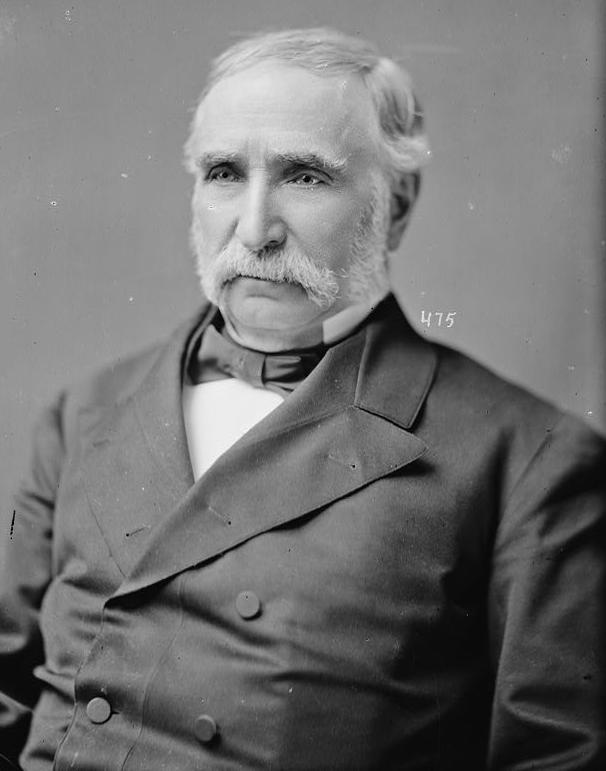
Historical · U.S. House · Massachusetts · District 11
Chester Chapin
Former U.S. Representative · Massachusetts District 11 · 1875–1877 · Democratic
Chester Chapin represented Massachusetts's District 11 in the United States House of Representatives (1875–1877) for the Democratic party. The page below collects sourced biographical facts, term history, committee roles, and provenance for Chapin.
Bioguide ID: C000305
Key facts
- Full name
- Chester Chapin
- State
- Massachusetts
- District
- District 11
- Party
- Democratic
- House service
- 1875–1877
- First House term
- 1875
- Status
- Left office
- Current term ends
- —
- Born
- 1798
- Bioguide ID
- C000305
- Committee assignments
- —
- Dataset version
- 1.20260606
Biographical narrative
843 words · sourced from the Wikipedia REST extract
Chester Chapin was a prominent American businessman and politician who served as a U.S. Representative for Massachusetts's 11th congressional district from 1875 to 1877. A member of the Democratic Party, Chapin had a significant impact on the railroad industry in New England, notably serving as president of the Boston and Albany Railroad. His career spanned various sectors, including transportation and banking, and he was recognized for his contributions to the development of infrastructure in the region. Chapin's life was marked by his entrepreneurial spirit and his involvement in public service, culminating in his election to Congress during a transformative period in American history.
Early life and career
Chester William Chapin was born on December 16, 1798, in Ludlow, Massachusetts, to Ephriam and Mary Smith Chapin. He was the youngest of seven children and was descended from Puritan forebearer Deacon Samuel Chapin, establishing a lineage that traced back several generations. The Chapin family relocated to Chicopee, Massachusetts, where Chester's father passed away in 1806. Following this loss, Chester and his brothers took on the responsibility of managing the family farm. His education included attendance at common schools and Westfield Academy in Westfield, Massachusetts.
Chapin's early work experience began in the local cotton mills, where he earned a modest wage of $1.50 per day during the construction phase of these facilities. He quickly transitioned into business, opening his own store. By 1822, he had been appointed as the town tax collector, a position that provided him with a salary of $80. His entrepreneurial ventures expanded when he acquired an interest in a stage line operating between Hartford, Connecticut, and Brattleboro, Vermont, around 1826. This venture led to extensive mail and stage contracts, and by 1831, he had become the sole proprietor of a steamboat service that controlled passenger traffic on the Connecticut River between Hartford and Springfield, Massachusetts, for approximately 15 years.
Chapin's business acumen extended to the steamship lines connecting New York City with Hartford and New Haven, Connecticut. He diversified his interests further into railroads and banking, becoming a founder, principal, or president of several companies, including the Western Railroad, the Agawam (National) Bank, and the Connecticut River Railroad. He was an early advocate for infrastructure improvements, notably supporting the construction of a bridge over the Hudson River at Albany, New York. His leadership roles included serving as president and director of the Western Railroad Corporation from 1854 to 1867 and as president of the Boston and Albany Railroad from 1868 to 1878, remaining a director until 1880.
House tenure
Chester Chapin's political career included significant involvement in public service prior to his election to Congress. He was a delegate to the Massachusetts Constitutional Convention in 1853 and demonstrated his commitment to the Union during the American Civil War by purchasing uniforms for the 10th Regiment Massachusetts Volunteer Infantry. His political affiliation with the Democratic Party led to his election to the Forty-fourth Congress, where he served from March 4, 1875, to March 3, 1877. During his tenure, he was a member of the Committee on Ways and Means, which is responsible for overseeing taxation and revenue-related legislation.
Chapin's time in Congress was marked by the challenges of the post-Civil War era, as the nation grappled with issues of reconstruction and economic recovery. Despite his contributions, he was unable to secure re-election in 1876, concluding his congressional career after a single term. His legislative efforts during this period reflected the interests of his constituents and the broader Democratic agenda of the time.
Legislative focus and committees
During his congressional tenure, Chester Chapin was involved in various legislative matters, primarily through his role on the Committee on Ways and Means. This committee plays a crucial role in shaping fiscal policy, including taxation and government spending, which were particularly pertinent issues in the aftermath of the Civil War. While specific details of the bills he supported or opposed are not documented, his position on this committee suggests a focus on economic recovery and financial stability for the nation.
Chapin's background as a businessman likely informed his perspective on economic issues, and his experience in the railroad industry may have influenced his views on infrastructure development and transportation policy. The period in which he served was characterized by significant changes in the American economy, with railroads becoming increasingly vital to commerce and communication. His involvement in these sectors positioned him to advocate for policies that would benefit both his constituents and the broader economic landscape.
After leaving Congress, Chapin continued to be active in business and remained influential in the railroad industry until his death. His legacy includes not only his contributions to transportation and infrastructure but also his role in shaping the political landscape of Massachusetts during a critical time in American history. Chester Chapin passed away on June 10, 1883, in Springfield, Massachusetts, leaving behind a legacy as a multimillionaire and a significant figure in the development of New England's transportation networks. His contributions to both business and public service reflect the interconnected nature of these domains during the 19th century.
Notable legislation
Sponsored and co-sponsored legislation for Chester Chapin is pending operator curation. The biographical narrative above carries the same provenance trail until per-bill rows are written.
Sources
- [1]https://en.wikipedia.org/wiki/Chester_W._ChapinWikipedia · retrieved 2026-06-06
Notable quotes
Sourced quotes for Chester Chapin are pending operator curation. Narrative-scope provenance remains attached below.
Sources
- [1]https://en.wikipedia.org/wiki/Chester_W._ChapinWikipedia · retrieved 2026-06-06
Key positions
Curated policy positions for Chester Chapin are pending operator review. The biographical narrative above carries the same provenance trail until per-topic positions are written.
Sources
- [1]https://en.wikipedia.org/wiki/Chester_W._ChapinWikipedia · retrieved 2026-06-06
Terms served
- 1875–1877U.S. House · Term 1 · Democratic
Sources & provenance
Every attributable claim above carries a per-section [N] marker that resolves to the corresponding URL below. Each entry records the upstream provider, the canonical URL, and the timestamp at which the source was retrieved by the ingest pipeline.
Key facts
- https://bioguide.congress.gov/search/bio/C000305bioguide · retrieved 2026-06-06
- https://www.govtrack.us/congress/members/402447govtrack · retrieved 2026-06-06
Biographical narrative
- https://en.wikipedia.org/wiki/Chester_W._Chapinwikipedia · retrieved 2026-06-06
Find your representative
Every U.S. state elects representatives by district. Browse Massachusetts’s delegation, the full former-representative roster, or explore the role and term length.
Related on The Candidate
- Preceded by Mark TraftonEarlier holder of the Massachusetts District 11 House seat · American.Open
- Succeeded by William WhitingLater holder of the Massachusetts District 11 House seat · Republican.Open
- Abbott LawrenceFormer U.S. Representative · Massachusetts District 1 · WhigOpen
- Allen TreadwayFormer U.S. Representative · Massachusetts District 1 · RepublicanOpen
- Artemas Ward Jr.Former U.S. Representative · Massachusetts District 1 · FederalistOpen
- Ashley WrightFormer U.S. Representative · Massachusetts District 1 · RepublicanOpen