
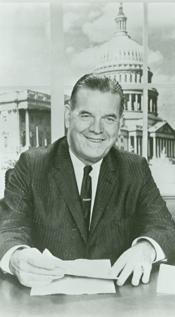
Historical · U.S. House · Massachusetts · District 11
James Burke
Former U.S. Representative · Massachusetts District 11 · 1959–1979 · Democratic
James Burke represented Massachusetts's District 11 in the United States House of Representatives (1959–1979) for the Democratic party. The page below collects sourced biographical facts, term history, committee roles, and provenance for Burke.
Bioguide ID: B001092
Key facts
- Full name
- James Burke
- State
- Massachusetts
- District
- District 11
- Party
- Democratic
- House service
- 1959–1979
- First House term
- 1959
- Status
- Left office
- Current term ends
- —
- Born
- 1910
- Bioguide ID
- B001092
- Committee assignments
- —
- Dataset version
- 1.20260605
Biographical narrative
969 words · sourced from the Wikipedia REST extract
James A. Burke was a prominent American politician who served as a U.S. Representative for Massachusetts's 11th congressional district from 1959 until 1979. A member of the Democratic Party, Burke's legislative career spanned two decades during which he became known for his expertise in social security and his leadership role on the Ways and Means Committee. His political journey was marked by a commitment to public service, beginning at the state level before transitioning to national politics.
Early life and career
James Anthony Burke was born on March 30, 1910, in Boston, Massachusetts. He received his education in the Boston public school system and furthered his studies at Lincoln Preparatory School. He also attended Suffolk University, where he began to develop the skills that would later serve him in his political career. Before entering politics, Burke worked as a real estate salesman, which provided him with valuable experience in understanding community needs and economic issues.
Burke's political career began in the Massachusetts House of Representatives, where he served from 1937 to 1939. His early involvement in state politics laid the groundwork for his future endeavors. After a brief hiatus from elected office, he returned to the Massachusetts House, serving four additional terms from 1947 to 1955. During this time, he rose to the position of assistant majority leader, demonstrating his leadership abilities and commitment to his constituents.
In addition to his legislative work, Burke held several appointive positions, including registrar of vital statistics for the city of Boston. His public service was further distinguished by his military service during World War II, where he served as a special agent in counter-intelligence with the 77th Infantry Division in the South Pacific. This experience not only shaped his character but also enhanced his understanding of national security issues.
After the war, Burke continued his political career, serving another term in the Massachusetts House from 1947 to 1955. He also played a significant role in the Massachusetts Democratic State Committee as vice chairman for four years. Despite his efforts, he faced challenges in his political aspirations, including unsuccessful campaigns for lieutenant governor in 1954 and the Democratic nomination for Congress in 1956. However, these setbacks did not deter him from pursuing a seat in the U.S. House of Representatives.
House tenure
Burke's congressional career began when he was elected to the Eighty-sixth Congress in 1958. He was subsequently reelected to nine additional terms, serving in the House from January 3, 1959, to January 3, 1979. His tenure in the House was marked by a steady rise in seniority, which allowed him to gain significant influence within the Democratic Party and Congress as a whole.
During his time in the House, Burke became the second-ranking Democrat on the Ways and Means Committee, a powerful committee responsible for taxation and revenue-related legislation. His expertise in social security made him a key figure in discussions and policymaking related to this critical aspect of American social welfare. Burke's knowledge and experience in this area contributed to his reputation as a reliable advocate for social security reform and related issues.
Burke's legislative record reflects a commitment to addressing the needs of his constituents and the broader American public. His focus on social security and economic issues resonated with many voters, allowing him to maintain a strong presence in Congress for two decades. As a member of the Ways and Means Committee, he played a crucial role in shaping policies that affected the financial well-being of millions of Americans.
Despite his long and successful career, Burke chose not to seek reelection in 1978, concluding his service in the Ninety-sixth Congress. His decision to step away from politics marked the end of an era for his constituents and the Democratic Party in Massachusetts.
Legislative focus and committees
Throughout his congressional career, James A. Burke was particularly noted for his focus on social security and economic policy. As a member of the Ways and Means Committee, he was involved in crafting legislation that directly impacted the financial security of American families. His expertise in social security issues made him a valuable resource for his colleagues and a trusted advocate for policies aimed at improving the lives of his constituents.
Burke's legislative efforts were characterized by a commitment to social welfare and economic justice. He worked on various initiatives designed to enhance the social safety net and ensure that vulnerable populations received the support they needed. His understanding of the complexities of social security allowed him to navigate the intricacies of legislation effectively, making him a respected figure in discussions surrounding these critical issues.
In addition to his work on social security, Burke's tenure on the Ways and Means Committee involved addressing broader economic concerns, including taxation and revenue generation. His contributions to these discussions were informed by his background in real estate and public service, which provided him with a unique perspective on the challenges facing American families and businesses.
Burke's legislative focus was not only about policy but also about the people affected by those policies. He was known for his dedication to representing the interests of his constituents in Massachusetts, ensuring that their voices were heard in the halls of Congress. His ability to connect with the needs of his district contributed to his longevity in office and his effectiveness as a legislator.
After concluding his congressional career in 1979, Burke returned to his life in Milton, Massachusetts. He remained engaged in his community until his passing on October 13, 1983, in Boston. His contributions to public service and his legacy as a dedicated public servant continue to be recognized in Massachusetts and beyond. He was interred at Milton Cemetery, where he is remembered for his commitment to his constituents and his role in shaping American social policy during a transformative period in U.S. history.
Notable legislation
Sponsored and co-sponsored legislation for James Burke is pending operator curation. The biographical narrative above carries the same provenance trail until per-bill rows are written.
Sources
- [1]https://en.wikipedia.org/wiki/James_A._Burke_(Massachusetts_politician)Wikipedia · retrieved 2026-06-05
Notable quotes
Sourced quotes for James Burke are pending operator curation. Narrative-scope provenance remains attached below.
Sources
- [1]https://en.wikipedia.org/wiki/James_A._Burke_(Massachusetts_politician)Wikipedia · retrieved 2026-06-05
Key positions
Curated policy positions for James Burke are pending operator review. The biographical narrative above carries the same provenance trail until per-topic positions are written.
Sources
- [1]https://en.wikipedia.org/wiki/James_A._Burke_(Massachusetts_politician)Wikipedia · retrieved 2026-06-05
Terms served
- 1959–1961U.S. House · Term 1 · Democratic
- 1961–1963U.S. House · Term 2 · Democratic
- 1963–1965U.S. House · Term 3 · Democratic
- 1965–1967U.S. House · Term 4 · Democratic
- 1967–1969U.S. House · Term 5 · Democratic
- 1969–1971U.S. House · Term 6 · Democratic
- 1971–1973U.S. House · Term 7 · Democratic
- 1973–1975U.S. House · Term 8 · Democratic
- 1975–1977U.S. House · Term 9 · Democratic
- 1977–1979U.S. House · Term 10 · Democratic
Sources & provenance
Every attributable claim above carries a per-section [N] marker that resolves to the corresponding URL below. Each entry records the upstream provider, the canonical URL, and the timestamp at which the source was retrieved by the ingest pipeline.
Key facts
- https://bioguide.congress.gov/search/bio/B001092bioguide · retrieved 2026-06-05
- https://www.govtrack.us/congress/members/402038govtrack · retrieved 2026-06-05
Biographical narrative
- https://en.wikipedia.org/wiki/James_A._Burke_(Massachusetts_politician)wikipedia · retrieved 2026-06-05
Find your representative
Every U.S. state elects representatives by district. Browse Massachusetts’s delegation, the full former-representative roster, or explore the role and term length.
Related on The Candidate
- Preceded by James CurleyEarlier holder of the Massachusetts District 11 House seat · Democratic.Open
- Succeeded by Brian DonnellyLater holder of the Massachusetts District 11 House seat · Democratic.Open
- Abbott LawrenceFormer U.S. Representative · Massachusetts District 1 · WhigOpen
- Allen TreadwayFormer U.S. Representative · Massachusetts District 1 · RepublicanOpen
- Artemas Ward Jr.Former U.S. Representative · Massachusetts District 1 · FederalistOpen
- Ashley WrightFormer U.S. Representative · Massachusetts District 1 · RepublicanOpen