
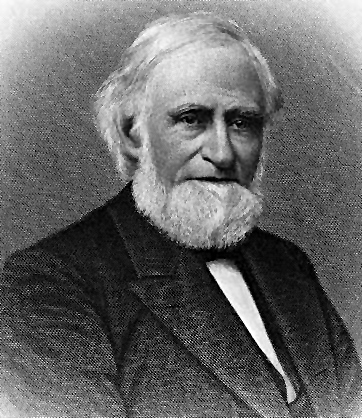
Historical · U.S. House · Massachusetts · District 11
John Goodrich
Former U.S. Representative · Massachusetts District 11 · 1851–1855 · Whig
John Goodrich represented Massachusetts's District 11 in the United States House of Representatives (1851–1855) for the Whig party. The page below collects sourced biographical facts, term history, committee roles, and provenance for Goodrich.
Bioguide ID: G000295
Key facts
- Full name
- John Goodrich
- State
- Massachusetts
- District
- District 11
- Party
- Whig
- House service
- 1851–1855
- First House term
- 1851
- Status
- Left office
- Current term ends
- —
- Born
- 1804
- Bioguide ID
- G000295
- Committee assignments
- —
- Dataset version
- 1.20260606
Biographical narrative
929 words · sourced from the Wikipedia REST extract
John Goodrich was an American politician who served as a U.S. Representative from Massachusetts and held various significant roles in state and national politics during the 19th century. A member of the Whig Party, he was elected to the U.S. House of Representatives for two terms, contributing to the legislative process during a pivotal era in American history. Goodrich's political career also included service as the 24th lieutenant governor of Massachusetts, and he was involved in various political organizations aimed at addressing the issues of his time. His life spanned from September 27, 1804, until April 19, 1885, during which he made notable contributions to both state and national governance.
Early life and career
John Goodrich was born on September 27, 1804, in Sheffield, Massachusetts. His early education took place in local common schools, which provided him with a foundational knowledge that would serve him well in his later pursuits. He furthered his education at Lenox Academy, an institution known for preparing students for higher education. Goodrich's academic journey culminated in his graduation from Williams College in 1848, where he likely developed the skills and knowledge that would later inform his political career.
After completing his education, Goodrich pursued a career in law, studying the discipline rigorously until he was admitted to the bar. This legal background would prove beneficial as he navigated the complexities of political life. In addition to his legal practice, Goodrich engaged in manufacturing, which provided him with insights into the economic conditions of his constituents and the broader implications of industrialization in America.
Goodrich's political career began at the state level when he served in the Massachusetts State Senate. His experience in the Senate helped him build a network and gain the political acumen necessary for his future endeavors. His involvement in state politics laid the groundwork for his election to the U.S. House of Representatives, where he would represent the 11th congressional district of Massachusetts.
House tenure
Goodrich was elected to the U.S. House of Representatives as a member of the Whig Party, serving during the Thirty-second and Thirty-third Congresses from March 4, 1851, until March 3, 1855. His tenure in the House coincided with a period of significant national tension, particularly surrounding issues such as slavery, states' rights, and the expansion of the United States. As a Whig, Goodrich was part of a party that sought to address these contentious issues through a platform that emphasized modernization and economic development.
During his time in Congress, Goodrich participated in legislative discussions that would shape the future of the nation. Although specific details regarding the bills he supported or opposed are not documented, his role as a congressman placed him at the center of critical debates that influenced the political landscape of the time. His ability to navigate the complex dynamics of the House would have required a keen understanding of both national and local interests, as he represented the constituents of Massachusetts.
In addition to his legislative duties, Goodrich was involved in the 1861 Peace Conference held in Washington, D.C. This conference aimed to address the growing divide between the North and South and sought to find a peaceful resolution to the escalating tensions that would eventually lead to the Civil War. Goodrich's participation in this conference reflects his commitment to seeking solutions during a time of national crisis.
Legislative focus and committees
Throughout his congressional career, Goodrich's legislative focus was likely influenced by the pressing issues of his time, including economic development, infrastructure, and the contentious debates surrounding slavery and states' rights. The Whig Party, of which he was a member, was known for advocating for internal improvements and a strong national economy, which may have guided his priorities in Congress.
After concluding his terms in the House, Goodrich continued to engage in public service. He was elected as the lieutenant governor of Massachusetts in 1860, serving from January 1, 1861, until his resignation on March 29, 1861. His time as lieutenant governor allowed him to further influence state policies and governance during a tumultuous period in American history. However, his resignation came shortly after the onset of the Civil War, a conflict that would dominate national attention and reshape the political landscape.
In addition to his roles in the House and as lieutenant governor, Goodrich held the position of president of the Union Emigration Society, an organization dedicated to mobilizing support for the Northern cause during the Civil War. This role underscored his commitment to political action and his belief in the importance of organized efforts to address the challenges facing the nation.
Goodrich's public service continued beyond his time in elected office. He was appointed collector of customs at the port of Boston on March 13, 1865, a position he held until March 11, 1865. This role involved overseeing the collection of tariffs and duties, which were crucial for the federal government’s revenue. His experience in this position further demonstrated his understanding of economic issues and the importance of trade in the context of national policy.
After retiring from public life, Goodrich lived until April 19, 1885, when he passed away in Stockbridge, Massachusetts. His contributions to American politics, particularly in the context of the Whig Party and his roles in both state and federal government, left a lasting impact on the political landscape of his time. He was interred in Stockbridge Cemetery, where he rests alongside other notable figures from the region. Goodrich’s legacy is marked by his commitment to public service and his involvement in significant political movements during a transformative period in American history.
Notable legislation
Sponsored and co-sponsored legislation for John Goodrich is pending operator curation. The biographical narrative above carries the same provenance trail until per-bill rows are written.
Sources
- [1]https://en.wikipedia.org/wiki/John_Z._GoodrichWikipedia · retrieved 2026-06-06
Notable quotes
Sourced quotes for John Goodrich are pending operator curation. Narrative-scope provenance remains attached below.
Sources
- [1]https://en.wikipedia.org/wiki/John_Z._GoodrichWikipedia · retrieved 2026-06-06
Key positions
Curated policy positions for John Goodrich are pending operator review. The biographical narrative above carries the same provenance trail until per-topic positions are written.
Sources
- [1]https://en.wikipedia.org/wiki/John_Z._GoodrichWikipedia · retrieved 2026-06-06
Terms served
- 1851–1853U.S. House · Term 1 · Whig
- 1853–1855U.S. House · Term 2 · Whig
Sources & provenance
Every attributable claim above carries a per-section [N] marker that resolves to the corresponding URL below. Each entry records the upstream provider, the canonical URL, and the timestamp at which the source was retrieved by the ingest pipeline.
Key facts
- https://bioguide.congress.gov/search/bio/G000295bioguide · retrieved 2026-06-06
- https://www.govtrack.us/congress/members/404654govtrack · retrieved 2026-06-06
Biographical narrative
- https://en.wikipedia.org/wiki/John_Z._Goodrichwikipedia · retrieved 2026-06-06
Find your representative
Every U.S. state elects representatives by district. Browse Massachusetts’s delegation, the full former-representative roster, or explore the role and term length.
Related on The Candidate
- Preceded by John ReedEarlier holder of the Massachusetts District 11 House seat · Whig.Open
- Succeeded by Mark TraftonLater holder of the Massachusetts District 11 House seat · American.Open
- Abbott LawrenceFormer U.S. Representative · Massachusetts District 1 · WhigOpen
- Allen TreadwayFormer U.S. Representative · Massachusetts District 1 · RepublicanOpen
- Artemas Ward Jr.Former U.S. Representative · Massachusetts District 1 · FederalistOpen
- Ashley WrightFormer U.S. Representative · Massachusetts District 1 · RepublicanOpen