
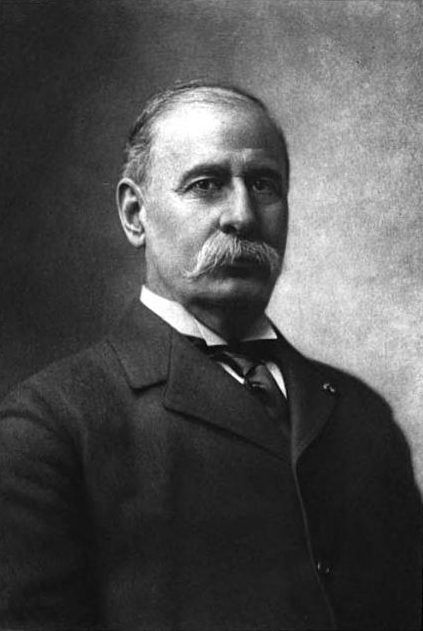
Historical · U.S. House · Massachusetts · District 11
William Draper
Former U.S. Representative · Massachusetts District 11 · 1893–1897 · Republican
William Draper represented Massachusetts's District 11 in the United States House of Representatives (1893–1897) for the Republican party. The page below collects sourced biographical facts, term history, committee roles, and provenance for Draper.
Bioguide ID: D000488
Key facts
- Full name
- William Draper
- State
- Massachusetts
- District
- District 11
- Party
- Republican
- House service
- 1893–1897
- First House term
- 1893
- Status
- Left office
- Current term ends
- —
- Born
- 1842
- Bioguide ID
- D000488
- Committee assignments
- —
- Dataset version
- 1.20260606
Biographical narrative
867 words · sourced from the Wikipedia REST extract
William Draper was an American businessman, industrialist, and soldier who served as a U.S. Representative for Massachusetts's 11th congressional district from 1893 to 1897. A member of the Republican Party, Draper had a diverse career that included military service during the American Civil War, involvement in the textile manufacturing industry, and a brief tenure in public office. His contributions to both business and politics reflect a significant period in American history, particularly in the context of post-war industrialization and the evolving political landscape of the late 19th century.
Early life and career
William Draper was born on April 9, 1842, in Lowell, Massachusetts. He was a descendant of James Draper, an early settler in Massachusetts, which connected him to the region's historical roots. Draper received his education through a combination of public, private, and high schools, where he developed an interest in mechanical engineering and cotton manufacturing. This educational background would later serve him well in his business endeavors.
In 1861, during the American Civil War, Draper enlisted in the Twenty-fifth Regiment, Massachusetts Volunteer Infantry. His military career began as a private, but he quickly rose through the ranks, being elected Second Lieutenant of his company. His leadership abilities were recognized, and he was promoted to lieutenant colonel. Draper's service was marked by commendable performance, and upon his discharge, he was awarded the brevet ranks of colonel and brigadier general of Volunteers, reflecting his contributions and leadership during the conflict.
After the war, Draper returned to Massachusetts and joined his family's textile machine manufacturing business located in Hopedale. His experience in engineering and manufacturing allowed him to innovate within the industry, where he patented several improvements that enhanced the efficiency and effectiveness of textile machinery. Draper's involvement in the family business not only solidified his career in manufacturing but also positioned him as a significant figure in the local economy.
In addition to his business pursuits, Draper was politically active. He served as a delegate to the Republican National Convention in 1876, which highlighted his engagement in the political process. Furthermore, he held the position of colonel on the staff of Governor John Davis Long from 1880 to 1883, further establishing his presence in both business and politics.
House tenure
Draper's political career culminated in his election to the U.S. House of Representatives, where he served as a Republican for two terms from March 4, 1893, to March 3, 1897. He was elected during a period of significant political change and economic development in the United States. His tenure in the House coincided with the Fifty-third and Fifty-fourth Congresses, during which he participated in various legislative activities.
As a member of Congress, Draper was appointed chairman of the Committee on Patents during the Fifty-fourth Congress. This committee was responsible for overseeing issues related to intellectual property and patent law, which were increasingly important as the nation experienced rapid industrial growth and innovation. Draper's background in engineering and manufacturing likely informed his work on this committee, allowing him to contribute valuable insights into the challenges and opportunities faced by inventors and businesses in the burgeoning industrial landscape.
Despite his active role in Congress, Draper chose not to seek renomination in 1896. His decision to step away from electoral politics marked the end of his formal legislative career, but it did not signify a retreat from public service or leadership.
Legislative focus and committees
During his time in the House of Representatives, Draper focused on issues pertinent to his background in manufacturing and engineering. His leadership of the Committee on Patents underscored his commitment to fostering innovation and protecting the rights of inventors. The late 19th century was a pivotal time for American industry, characterized by advancements in technology and a growing emphasis on intellectual property rights. Draper's work in this area was significant, as it aligned with the broader national interest in promoting industrial growth and securing the competitive edge of American businesses.
Draper's legislative efforts were reflective of the Republican Party's platform during this era, which often emphasized economic development, support for industry, and the importance of protecting American innovation. His contributions in Congress were part of a larger narrative of the United States transitioning into a major industrial power, and Draper's background in textile manufacturing positioned him as a relevant voice in these discussions.
After concluding his congressional service, Draper continued to engage in business as the president of the Draper Company, which was incorporated in 1896. His leadership in the company allowed him to remain influential in the textile industry, further contributing to the economic landscape of Massachusetts and beyond.
In addition to his business pursuits, Draper was appointed as the Ambassador and Minister Plenipotentiary to Italy, serving from 1897 to 1899. This diplomatic role marked a new chapter in his career, allowing him to represent American interests abroad and engage with international affairs.
William Draper's life and career were marked by a blend of military service, business acumen, and political involvement. He passed away on January 28, 1910, in Washington, D.C., and was interred in Village Cemetery in Hopedale, Massachusetts. His legacy reflects the complexities of American society during a transformative period, illustrating the interconnectedness of industry, politics, and personal achievement.
Notable legislation
Sponsored and co-sponsored legislation for William Draper is pending operator curation. The biographical narrative above carries the same provenance trail until per-bill rows are written.
Sources
- [1]https://en.wikipedia.org/wiki/William_Franklin_Draper_(politician)Wikipedia · retrieved 2026-06-06
Notable quotes
Sourced quotes for William Draper are pending operator curation. Narrative-scope provenance remains attached below.
Sources
- [1]https://en.wikipedia.org/wiki/William_Franklin_Draper_(politician)Wikipedia · retrieved 2026-06-06
Key positions
Curated policy positions for William Draper are pending operator review. The biographical narrative above carries the same provenance trail until per-topic positions are written.
Sources
- [1]https://en.wikipedia.org/wiki/William_Franklin_Draper_(politician)Wikipedia · retrieved 2026-06-06
Terms served
- 1893–1895U.S. House · Term 1 · Republican
- 1895–1897U.S. House · Term 2 · Republican
Sources & provenance
Every attributable claim above carries a per-section [N] marker that resolves to the corresponding URL below. Each entry records the upstream provider, the canonical URL, and the timestamp at which the source was retrieved by the ingest pipeline.
Key facts
- https://bioguide.congress.gov/search/bio/D000488bioguide · retrieved 2026-06-06
- https://www.govtrack.us/congress/members/403596govtrack · retrieved 2026-06-06
Biographical narrative
- https://en.wikipedia.org/wiki/William_Franklin_Draper_(politician)wikipedia · retrieved 2026-06-06
Find your representative
Every U.S. state elects representatives by district. Browse Massachusetts’s delegation, the full former-representative roster, or explore the role and term length.
Related on The Candidate
- Preceded by Frederick CoolidgeEarlier holder of the Massachusetts District 11 House seat · Democratic.Open
- Succeeded by Charles SpragueLater holder of the Massachusetts District 11 House seat · Republican.Open
- Abbott LawrenceFormer U.S. Representative · Massachusetts District 1 · WhigOpen
- Allen TreadwayFormer U.S. Representative · Massachusetts District 1 · RepublicanOpen
- Artemas Ward Jr.Former U.S. Representative · Massachusetts District 1 · FederalistOpen
- Ashley WrightFormer U.S. Representative · Massachusetts District 1 · RepublicanOpen