
Historical · U.S. House · Massachusetts · District 12
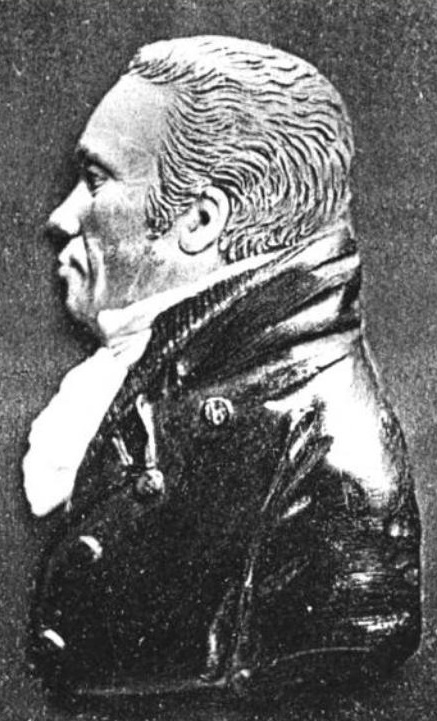
Thomson Skinner
Former U.S. Representative · Massachusetts District 12 · 1795–1805 · Republican
Thomson Skinner represented Massachusetts's District 12 in the United States House of Representatives (1795–1805) for the Republican party. The page below collects sourced biographical facts, term history, committee roles, and provenance for Skinner.
Bioguide ID: S000471
Key facts
- Full name
- Thomson Skinner
- State
- Massachusetts
- District
- District 12
- Party
- Republican
- House service
- 1795–1805
- First House term
- 1795
- Status
- Left office
- Current term ends
- —
- Born
- 1752
- Bioguide ID
- S000471
- Committee assignments
- —
- Dataset version
- 1.20260606
Biographical narrative
804 words · sourced from the Wikipedia REST extract
Thomson Skinner was a prominent American politician and military officer from Massachusetts, who served as a U.S. Representative in the late 18th and early 19th centuries. Initially a member of the Federalist Party, he later aligned with the Jeffersonian or Democratic-Republican Party. His political career spanned various roles, including judge, sheriff, and state treasurer, reflecting his deep involvement in the governance of Massachusetts. Skinner's legacy is marked by his contributions to both state and national politics, as well as his military service during the American Revolution.
Early life and career
Thomson J. Skinner was born on May 24, 1752, in Colchester, which was part of the Connecticut Colony at the time. He was the son of Reverend Thomas Skinner and Mary Thomson, who was his father's second wife. Skinner's early education took place in Colchester, but his life changed significantly when his father passed away when he was just ten years old. Following this loss, Skinner and his brother Benjamin were apprenticed to a carpenter and homebuilder, which provided them with practical skills that would later serve them well in their business endeavors.
At the age of 21, Skinner relocated to Williamstown, Massachusetts, with his brother, where they established a construction business known as "T. J. and B. Skinner." This venture proved successful, and the brothers also engaged in other enterprises, including operating a tavern. Skinner's early career in construction and hospitality laid the groundwork for his later involvement in public service and politics.
House tenure
Thomson Skinner's political career began in earnest with his election to the Massachusetts House of Representatives in 1781. He served multiple terms in this body, with additional stints in 1785, 1789, and 1800. His legislative experience expanded when he became a member of the Massachusetts State Senate, where he served from 1786 to 1788 and again from 1790 to 1797, as well as from 1801 to 1803. His political influence was further solidified when he was appointed as a Judge of the Court of Common Pleas for Berkshire County in 1788, a position he held until 1807, including a term as chief judge from 1795 to 1807.
Skinner's congressional career began with his election to the U.S. House of Representatives, where he represented Massachusetts's 1st congressional district from January 1797 to March 1799. He had previously attempted to secure a seat in the House in 1792 and 1794 but was unsuccessful in those bids. After a brief hiatus from Congress, Skinner was elected again in 1802, this time representing the newly renumbered 12th District. He served from March 1803 until his resignation in August 1804. During this period, he was recognized as a member of the Jeffersonian or Democratic-Republican Party, having shifted from his earlier Federalist affiliations.
In addition to his roles in the House, Skinner was active in various capacities within the state government. He served as Berkshire County Sheriff from 1791 to 1792 and was a presidential elector in 1792, supporting the reelection of George Washington and John Adams. His commitment to education is evidenced by his role as a founding trustee of Williams College, where he served from 1793 until his death in 1809.
Legislative focus and committees
Throughout his time in the U.S. House of Representatives, Thomson Skinner's legislative focus reflected the interests and needs of his constituents in Massachusetts. While specific details regarding the bills he sponsored or supported during his tenure are not documented, his background as a judge and local official likely influenced his perspectives on law, governance, and public service. His experience in the Massachusetts legislature and as a county judge would have provided him with insights into the legislative process and the importance of effective governance.
Skinner's alignment with the Jeffersonian or Democratic-Republican Party during his later congressional term indicated a shift in his political ideology, which was consistent with the broader national trends of the time. This transition may have influenced his legislative priorities, particularly as the nation grappled with issues related to federalism, states' rights, and the balance of power between the federal government and the states.
After his congressional service, Skinner continued to be active in public life, serving as U.S. Marshal for Massachusetts from 1804 to 1807. He also held the position of Treasurer and Receiver-General of Massachusetts from 1806 until his death in 1809. His tenure as state treasurer was later marred by controversy, as an audit conducted after his death revealed significant deficiencies in his accounts, leading to financial obligations that exceeded the value of his estate.
Thomson Skinner passed away on January 20, 1809, in Boston, leaving behind a complex legacy that encompassed his military service, judicial roles, and extensive political career. His contributions to Massachusetts and the United States during a formative period in American history are noteworthy, reflecting the challenges and responsibilities faced by early American leaders.
Notable legislation
Sponsored and co-sponsored legislation for Thomson Skinner is pending operator curation. The biographical narrative above carries the same provenance trail until per-bill rows are written.
Sources
- [1]https://en.wikipedia.org/wiki/Thomson_J._SkinnerWikipedia · retrieved 2026-06-06
Notable quotes
Sourced quotes for Thomson Skinner are pending operator curation. Narrative-scope provenance remains attached below.
Sources
- [1]https://en.wikipedia.org/wiki/Thomson_J._SkinnerWikipedia · retrieved 2026-06-06
Key positions
Curated policy positions for Thomson Skinner are pending operator review. The biographical narrative above carries the same provenance trail until per-topic positions are written.
Sources
- [1]https://en.wikipedia.org/wiki/Thomson_J._SkinnerWikipedia · retrieved 2026-06-06
Terms served
- 1795–1797U.S. House · Term 1 · Republican
- 1797–1799U.S. House · Term 2 · Republican
- 1803–1805U.S. House · Term 3 · Republican
Sources & provenance
Every attributable claim above carries a per-section [N] marker that resolves to the corresponding URL below. Each entry records the upstream provider, the canonical URL, and the timestamp at which the source was retrieved by the ingest pipeline.
Key facts
- https://bioguide.congress.gov/search/bio/S000471bioguide · retrieved 2026-06-06
- https://www.govtrack.us/congress/members/409961govtrack · retrieved 2026-06-06
Biographical narrative
- https://en.wikipedia.org/wiki/Thomson_J._Skinnerwikipedia · retrieved 2026-06-06
Find your representative
Every U.S. state elects representatives by district. Browse Massachusetts’s delegation, the full former-representative roster, or explore the role and term length.
Related on The Candidate
- Succeeded by Ezekiel BaconLater holder of the Massachusetts District 12 House seat · Republican.Open
- Abbott LawrenceFormer U.S. Representative · Massachusetts District 1 · WhigOpen
- Allen TreadwayFormer U.S. Representative · Massachusetts District 1 · RepublicanOpen
- Artemas Ward Jr.Former U.S. Representative · Massachusetts District 1 · FederalistOpen
- Ashley WrightFormer U.S. Representative · Massachusetts District 1 · RepublicanOpen
- Republican PartyFederal candidates and office holders on the Republican line.Open