
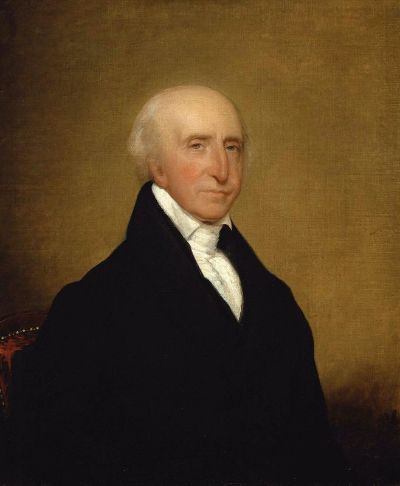
Historical · U.S. House · Massachusetts · District 2
Benjamin Pickman Jr.
Former U.S. Representative · Massachusetts District 2 · 1809–1811 · Federalist
Benjamin Pickman Jr. represented Massachusetts's District 2 in the United States House of Representatives (1809–1811) for the Federalist party. The page below collects sourced biographical facts, term history, committee roles, and provenance for Jr..
Bioguide ID: P000330
Key facts
- Full name
- Benjamin Pickman Jr.
- State
- Massachusetts
- District
- District 2
- Party
- Federalist
- House service
- 1809–1811
- First House term
- 1809
- Status
- Left office
- Current term ends
- —
- Born
- 1763
- Bioguide ID
- P000330
- Committee assignments
- —
- Dataset version
- 1.20260606
Biographical narrative
882 words · sourced from the Wikipedia REST extract
Benjamin Pickman Jr. was a U.S. Representative from Massachusetts, serving in the Eleventh Congress as a member of the Federalist Party. His political career spanned various roles in both state and national governance, and he was also known for his contributions to commerce and education in his community. Born in 1763, Pickman was part of a prominent family in Salem, Massachusetts, and he played a significant role in the development of the region's commercial landscape.
Early life and career
Benjamin Pickman Jr. was born on September 30, 1763, in Salem, Massachusetts, during the period of the Province of Massachusetts Bay. He was a descendant of Benjamin Pickman, an Englishman who emigrated from Bristol. Growing up in a prominent merchant family, Pickman was well-positioned to pursue a career in commerce and public service. He attended Dummer Academy, which is now known as The Governor's Academy, and later graduated from Harvard University in 1784. Following his education, he studied law in Newburyport, Massachusetts, and was admitted to the bar, although he soon chose to abandon the legal profession in favor of commercial endeavors.
Pickman's family background was influential in shaping his career. His father, Colonel Benjamin Pickman Sr., was a significant merchant in Salem but faced challenges during the American Revolutionary War due to his Loyalist stance, which resulted in the confiscation of his estates. After the war, he returned to Salem in 1785. This family history likely influenced Pickman's later involvement in both commerce and politics. As a merchant, Pickman became one of the most active figures in Salem's commercial scene, contributing to the economic development of the area.
In addition to his commercial pursuits, Pickman engaged in public service early in his career. He served in the Massachusetts House of Representatives multiple times, with terms recorded from 1797 to 1802 and again in 1812 and 1813. He also held a position in the Massachusetts Senate in 1803 and was a member of the executive council of the state during several years, including 1805, 1808, and from 1813 to 1821. His political career was marked by a commitment to public service and community development.
House tenure
Pickman was elected to the United States House of Representatives as a member of the Federalist Party, serving in the Eleventh Congress from March 4, 1809, to March 3, 1811. His election to Congress was part of a broader trend during this period, as the Federalist Party was a significant political force in the early years of the United States. During his time in the House, Pickman participated in the legislative process, contributing to discussions and decisions that shaped the nation during its formative years.
Despite his involvement in national politics, Pickman did not seek renomination for a subsequent term in 1810. His decision to step away from federal office was not uncommon among politicians of the era, who often balanced their political careers with other professional and personal commitments. Following his tenure in Congress, Pickman continued to engage in public service at the state level and maintained his involvement in local affairs.
Legislative focus and committees
While specific details regarding Pickman's legislative focus during his time in Congress are not extensively documented, his broader political career suggests a commitment to issues relevant to his constituents and the Federalist Party's platform. The Federalists were known for advocating a strong central government, commercial interests, and a cautious approach to foreign relations, particularly in the context of the War of 1812, which began shortly after Pickman's congressional term ended.
In addition to his congressional service, Pickman was active in various capacities within Massachusetts. He participated in the Massachusetts Constitutional Convention of 1820-1821, which was a significant event in the state's political history, as it addressed issues related to governance and civil rights. His involvement in this convention indicates his continued commitment to shaping the political landscape of Massachusetts.
Pickman also served as an overseer of Harvard University from 1810 to 1818, reflecting his dedication to education and the development of future leaders. His role in overseeing one of the nation's premier institutions of higher learning underscores his belief in the importance of education in fostering civic responsibility and leadership.
In addition to his educational contributions, Pickman was involved in the development of Salem's commercial infrastructure. He played a key role in the commercial development of Derby Square, a project that included the construction of several brick commercial buildings. This initiative not only contributed to the economic vitality of Salem but also left a lasting architectural legacy in the area.
Throughout his life, Pickman maintained connections with prominent families and individuals in Salem, further solidifying his status in the community. He was married to Anstiss Derby, who was part of another influential family in the region. Their marriage connected him to a network of prominent merchants and public figures, which likely facilitated his political and commercial endeavors.
Benjamin Pickman Jr. passed away on August 16, 1843, in Salem, Massachusetts. He was interred in Broad Street Cemetery alongside his ancestors, reflecting his deep roots in the community. His legacy includes not only his contributions to politics and commerce but also his role in shaping the educational landscape of Massachusetts. Through his various public service roles, Pickman exemplified the interconnectedness of commerce, education, and governance in early American society.
Notable legislation
Sponsored and co-sponsored legislation for Benjamin Pickman Jr. is pending operator curation. The biographical narrative above carries the same provenance trail until per-bill rows are written.
Sources
- [1]https://en.wikipedia.org/wiki/Benjamin_Pickman_Jr.Wikipedia · retrieved 2026-06-06
Notable quotes
Sourced quotes for Benjamin Pickman Jr. are pending operator curation. Narrative-scope provenance remains attached below.
Sources
- [1]https://en.wikipedia.org/wiki/Benjamin_Pickman_Jr.Wikipedia · retrieved 2026-06-06
Key positions
Curated policy positions for Benjamin Pickman Jr. are pending operator review. The biographical narrative above carries the same provenance trail until per-topic positions are written.
Sources
- [1]https://en.wikipedia.org/wiki/Benjamin_Pickman_Jr.Wikipedia · retrieved 2026-06-06
Terms served
- 1809–1811U.S. House · Term 1 · Federalist
Sources & provenance
Every attributable claim above carries a per-section [N] marker that resolves to the corresponding URL below. Each entry records the upstream provider, the canonical URL, and the timestamp at which the source was retrieved by the ingest pipeline.
Key facts
- https://bioguide.congress.gov/search/bio/P000330bioguide · retrieved 2026-06-06
- https://www.govtrack.us/congress/members/408727govtrack · retrieved 2026-06-06
Biographical narrative
- https://en.wikipedia.org/wiki/Benjamin_Pickman_Jr.wikipedia · retrieved 2026-06-06
Find your representative
Every U.S. state elects representatives by district. Browse Massachusetts’s delegation, the full former-representative roster, or explore the role and term length.
Related on The Candidate
- Preceded by Jacob CrowninshieldEarlier holder of the Massachusetts District 2 House seat · Republican.Open
- Succeeded by William ReedLater holder of the Massachusetts District 2 House seat · Federalist.Open
- Abbott LawrenceFormer U.S. Representative · Massachusetts District 1 · WhigOpen
- Allen TreadwayFormer U.S. Representative · Massachusetts District 1 · RepublicanOpen
- Artemas Ward Jr.Former U.S. Representative · Massachusetts District 1 · FederalistOpen
- Ashley WrightFormer U.S. Representative · Massachusetts District 1 · RepublicanOpen