
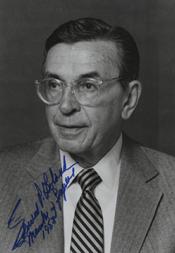
Historical · U.S. House · Massachusetts · District 2
Edward Boland
Former U.S. Representative · Massachusetts District 2 · 1953–1989 · Democratic
Edward Boland represented Massachusetts's District 2 in the United States House of Representatives (1953–1989) for the Democratic party. The page below collects sourced biographical facts, term history, committee roles, and provenance for Boland.
Bioguide ID: B000600
Key facts
- Full name
- Edward Boland
- State
- Massachusetts
- District
- District 2
- Party
- Democratic
- House service
- 1953–1989
- First House term
- 1953
- Status
- Left office
- Current term ends
- —
- Born
- 1911
- Bioguide ID
- B000600
- Committee assignments
- —
- Dataset version
- 1.20260605
Biographical narrative
921 words · sourced from the Wikipedia REST extract
Edward P. Boland was a prominent American politician who served as a U.S. Representative for Massachusetts's 2nd congressional district from 1953 until 1989. A member of the Democratic Party, Boland's lengthy tenure in the House of Representatives spanned 18 terms, during which he engaged in various legislative efforts and became known for his significant contributions to national policy, particularly regarding foreign affairs.
Early life and career
Edward Patrick Boland was born on October 1, 1911, in Springfield, Massachusetts. He was raised in a working-class family; his father was an Irish immigrant who worked as a railroad employee. Boland completed his secondary education at Springfield Central High School, graduating in 1928. Following high school, he pursued further education at Bay Path Institute and later attended Boston College Law School, where he developed a foundation in legal studies that would inform his future political career.
Boland's political journey began in the late 1930s when he was elected to the Massachusetts House of Representatives, serving from 1939 to 1940. His early political involvement laid the groundwork for a more prominent role in public service. Following his time in the state legislature, he served as the Hampden County register of deeds from 1941 to 1952. This position allowed him to gain valuable experience in public administration and local governance.
His career was interrupted by World War II, during which he served in the United States Army. This military service not only shaped his character but also enhanced his understanding of national issues, which would later influence his legislative priorities.
House tenure
In 1952, Boland was elected to the United States House of Representatives, marking the beginning of an extensive congressional career that would last for over three decades. He was a member of the Democratic Party and represented Massachusetts's 2nd congressional district. Throughout his time in office, Boland was known for his dedication to his constituents and his ability to navigate the complexities of federal legislation.
Boland's tenure was marked by significant events and challenges. One notable incident occurred in 1968 when the Springfield Armory, a major employer in his district, was closed. Boland faced criticism for his inability to prevent this closure, which led to a challenge from Springfield Mayor Charles V. Ryan in the same year. Despite this challenge, Boland was re-elected, receiving substantial support from influential figures, including the family of U.S. Senator Ted Kennedy. This election marked the last time Boland faced a major contender, as he would go on to serve without significant opposition for the remainder of his career.
In 1982, Boland gained national attention for his authorship of the Boland Amendment, a legislative measure that sought to restrict U.S. funding for the Contras in Nicaragua. This amendment emerged in response to concerns regarding the Central Intelligence Agency's covert actions in the region, which had been conducted without congressional oversight. The Boland Amendment highlighted Boland's commitment to ensuring that Congress maintained its authority over foreign policy and military funding.
Boland's long career in the House was characterized by a commitment to public service and a focus on the needs of his constituents. He lived in a Washington, D.C. apartment with fellow Massachusetts Congressman Tip O'Neill until 1977, reflecting the camaraderie and collaboration that often characterized relationships among members of Congress from Massachusetts.
In April 1988, Boland announced that he would not seek re-election for a 19th term, marking the end of an era in his political career. He had never lost an election during his 50 years in public office, a testament to his popularity and effectiveness as a representative. Prior to his retirement, he informed Springfield Mayor Richard Neal of his decision, allowing Neal to begin fundraising efforts for the upcoming election. Neal ultimately ran unopposed for the Democratic nomination in what was considered the real contest in the heavily Democratic district.
Legislative focus and committees
Throughout his congressional career, Boland served on various committees and was involved in numerous legislative initiatives. His work was often centered around issues that directly affected his constituents and the broader national landscape. While specific committee assignments are not detailed, it is known that Boland's legislative focus included domestic policies as well as foreign affairs, particularly in relation to military funding and oversight.
The Boland Amendment, which he introduced in 1982, serves as a significant example of his legislative priorities. This amendment was a response to the growing concerns about U.S. involvement in Central America and aimed to limit the funding of the Contras, a rebel group in Nicaragua. The amendment underscored Boland's commitment to ensuring that Congress played a critical role in decisions related to military engagement and foreign aid.
In addition to his legislative achievements, Boland's long tenure allowed him to build relationships with colleagues across the aisle, contributing to his effectiveness as a legislator. His ability to work collaboratively with other members of Congress, including influential figures from his home state, helped him navigate the complexities of federal legislation and advocate for the interests of his district.
Boland's career in the House of Representatives concluded on January 3, 1989, after which he retired from public office. His legacy includes a commitment to public service, a focus on legislative oversight, and a dedication to the needs of his constituents in Massachusetts.
Following his retirement, Boland remained a respected figure in Massachusetts politics until his passing on November 4, 2001, at the age of 90. His contributions to public service and his long-standing commitment to his constituents have left a lasting impact on the political landscape of Massachusetts.
Notable legislation
Sponsored and co-sponsored legislation for Edward Boland is pending operator curation. The biographical narrative above carries the same provenance trail until per-bill rows are written.
Sources
- [1]https://en.wikipedia.org/wiki/Edward_BolandWikipedia · retrieved 2026-06-05
Notable quotes
Sourced quotes for Edward Boland are pending operator curation. Narrative-scope provenance remains attached below.
Sources
- [1]https://en.wikipedia.org/wiki/Edward_BolandWikipedia · retrieved 2026-06-05
Key positions
Curated policy positions for Edward Boland are pending operator review. The biographical narrative above carries the same provenance trail until per-topic positions are written.
Sources
- [1]https://en.wikipedia.org/wiki/Edward_BolandWikipedia · retrieved 2026-06-05
Terms served
- 1953–1955U.S. House · Term 1 · Democratic
- 1955–1957U.S. House · Term 2 · Democratic
- 1957–1959U.S. House · Term 3 · Democratic
- 1959–1961U.S. House · Term 4 · Democratic
- 1961–1963U.S. House · Term 5 · Democratic
- 1963–1965U.S. House · Term 6 · Democratic
- 1965–1967U.S. House · Term 7 · Democratic
- 1967–1969U.S. House · Term 8 · Democratic
- 1969–1971U.S. House · Term 9 · Democratic
- 1971–1973U.S. House · Term 10 · Democratic
- 1973–1975U.S. House · Term 11 · Democratic
- 1975–1977U.S. House · Term 12 · Democratic
- 1977–1979U.S. House · Term 13 · Democratic
- 1979–1981U.S. House · Term 14 · Democratic
- 1981–1983U.S. House · Term 15 · Democratic
- 1983–1985U.S. House · Term 16 · Democratic
- 1985–1987U.S. House · Term 17 · Democratic
- 1987–1989U.S. House · Term 18 · Democratic
Sources & provenance
Every attributable claim above carries a per-section [N] marker that resolves to the corresponding URL below. Each entry records the upstream provider, the canonical URL, and the timestamp at which the source was retrieved by the ingest pipeline.
Key facts
- https://bioguide.congress.gov/search/bio/B000600bioguide · retrieved 2026-06-05
- https://www.govtrack.us/congress/members/401568govtrack · retrieved 2026-06-05
Biographical narrative
- https://en.wikipedia.org/wiki/Edward_Bolandwikipedia · retrieved 2026-06-05
Find your representative
Every U.S. state elects representatives by district. Browse Massachusetts’s delegation, the full former-representative roster, or explore the role and term length.
Related on The Candidate
- Preceded by John FurcoloEarlier holder of the Massachusetts District 2 House seat · Democratic.Open
- Abbott LawrenceFormer U.S. Representative · Massachusetts District 1 · WhigOpen
- Allen TreadwayFormer U.S. Representative · Massachusetts District 1 · RepublicanOpen
- Artemas Ward Jr.Former U.S. Representative · Massachusetts District 1 · FederalistOpen
- Ashley WrightFormer U.S. Representative · Massachusetts District 1 · RepublicanOpen
- Democratic PartyFederal candidates and office holders on the Democratic line.Open