
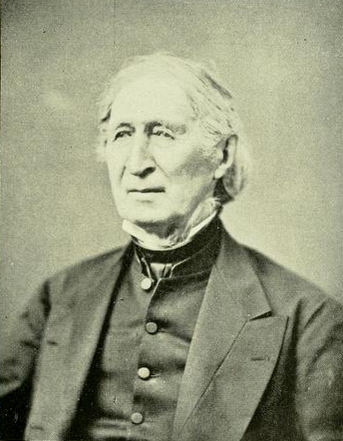
Historical · U.S. House · Massachusetts · District 2
Francis Fay
Former U.S. Representative · Massachusetts District 2 · 1851–1853 · Whig
Francis Fay represented Massachusetts's District 2 in the United States House of Representatives (1851–1853) for the Whig party. The page below collects sourced biographical facts, term history, committee roles, and provenance for Fay.
Bioguide ID: F000050
Key facts
- Full name
- Francis Fay
- State
- Massachusetts
- District
- District 2
- Party
- Whig
- House service
- 1851–1853
- First House term
- 1851
- Status
- Left office
- Current term ends
- —
- Born
- 1793
- Bioguide ID
- F000050
- Committee assignments
- —
- Dataset version
- 1.20260606
Biographical narrative
949 words · sourced from the Wikipedia REST extract
Francis Fay was a 19th-century American politician, merchant, and philanthropist who served as a U.S. Representative for Massachusetts's 2nd congressional district. A member of the Whig Party, he held office in the U.S. House of Representatives for a brief period from 1852 to 1853. Fay's career spanned various roles in local and state government, and he was notably involved in community development and social reform initiatives, particularly in education and juvenile justice.
Early life and career
Francis Ball Fay was born on June 12, 1793, in Southborough, Massachusetts. His early life was marked by economic hardship, as he was born into a poor family and received limited formal education. At the age of 18, he engaged in a practice known as "buying his time," which involved compensating his father for the labor he was expected to provide until the age of 21. This arrangement allowed him to pursue other opportunities, which he did by working in various capacities.
Fay's early career began in the bustling market environment of Boston, where he attended public scales in Dock Square from 1811 to 1812. He initially worked as a market man and butcher before transitioning into a successful career as a merchant in Southborough in 1817. His entrepreneurial spirit and business acumen contributed to his later political endeavors.
In addition to his business pursuits, Fay was actively involved in the local militia from 1816 to 1824, achieving the rank of colonel. His commitment to public service was further demonstrated through his appointment as postmaster of Southborough, a position he held from September 15, 1817, until March 29, 1832. He also served as deputy sheriff of Worcester County from 1824 to 1830, showcasing his engagement in law enforcement and community safety.
Fay's political career began to take shape when he served as a member of the Massachusetts General Court, representing Southborough in 1830 and 1831. His political influence grew when he moved to Chelsea, Massachusetts, in 1831, where he built one of the first substantial homes in the area and initiated the first ferry service to Boston. His contributions to Chelsea included representation in the Massachusetts General Court from 1834 to 1836 and again in 1840, as well as service in the State Senate from 1843 to 1845 and 1848. In 1857, he became the first Mayor of Chelsea, further solidifying his role as a community leader.
Fay's involvement in local governance extended beyond his mayoral duties. He was also the first president of the Chelsea Savings Bank, which was incorporated in 1854. His work in the banking sector reflected his commitment to fostering economic growth and stability in the community. Additionally, Fay acted as an investigative agent for Boston speculators interested in the western territories, producing reports that provided insights into travel and investment opportunities during a transformative period in American history.
House tenure
Fay's tenure in the U.S. House of Representatives began when he was elected as a Whig to the Thirty-second Congress. He filled the vacancy left by the death of Robert Rantoul, Jr., and served from December 13, 1852, until March 3, 1853. His time in Congress was relatively short, and he opted not to seek re-election after completing this term. Despite the brevity of his congressional service, Fay's election to the House marked a significant step in his political career, allowing him to represent the interests of his constituents at the national level.
During his time in Congress, Fay participated in the legislative process during a period of considerable national tension, as the country grappled with issues related to slavery, states' rights, and westward expansion. While specific details of his legislative actions and votes are not documented, his affiliation with the Whig Party suggests that he was part of a political movement that sought to address these pressing issues through compromise and reform.
Legislative focus and committees
Francis Fay's legislative focus and committee assignments during his time in the House of Representatives are not extensively documented. However, his broader political and philanthropic activities prior to and following his congressional service provide insight into his interests and priorities. Fay was known for his commitment to education and social reform, particularly in the context of juvenile justice.
In 1852, he endowed his hometown of Southborough with a public lending library, which is recognized as one of the earliest free municipal libraries in the United States, predating the establishment of the Boston Public Library by a few months. This initiative reflected his belief in the importance of access to knowledge and education for all members of the community.
Fay's involvement in social reform continued with his connection to the Lancaster Industrial School for Girls, which he helped establish in 1854. This institution was notable for being the first state reform school for girls in the country, providing an alternative to the common practice of incarcerating juvenile delinquents. Fay served in various capacities at the school, including as commissioner, trustee, and treasurer, from 1854 to 1864. His work in this area demonstrated his commitment to progressive reform and the welfare of young women in society.
In addition to his educational initiatives, Fay returned to the Massachusetts State Senate for a final term in 1868, further indicating his ongoing engagement in public service and legislative affairs. His contributions to the community and the state reflect a dedication to improving the lives of his constituents through both political action and philanthropic efforts.
Francis Fay passed away on October 6, 1876, in South Lancaster, Massachusetts. He was interred in Woodlawn Cemetery in Everett, Massachusetts. His legacy includes not only his brief tenure in the U.S. House of Representatives but also his significant contributions to education, community development, and social reform in Massachusetts.
Notable legislation
Sponsored and co-sponsored legislation for Francis Fay is pending operator curation. The biographical narrative above carries the same provenance trail until per-bill rows are written.
Sources
- [1]https://en.wikipedia.org/wiki/Francis_B._FayWikipedia · retrieved 2026-06-06
Notable quotes
Sourced quotes for Francis Fay are pending operator curation. Narrative-scope provenance remains attached below.
Sources
- [1]https://en.wikipedia.org/wiki/Francis_B._FayWikipedia · retrieved 2026-06-06
Key positions
Curated policy positions for Francis Fay are pending operator review. The biographical narrative above carries the same provenance trail until per-topic positions are written.
Sources
- [1]https://en.wikipedia.org/wiki/Francis_B._FayWikipedia · retrieved 2026-06-06
Terms served
- 1851–1853U.S. House · Term 1 · Whig
Sources & provenance
Every attributable claim above carries a per-section [N] marker that resolves to the corresponding URL below. Each entry records the upstream provider, the canonical URL, and the timestamp at which the source was retrieved by the ingest pipeline.
Key facts
- https://bioguide.congress.gov/search/bio/F000050bioguide · retrieved 2026-06-06
- https://www.govtrack.us/congress/members/404010govtrack · retrieved 2026-06-06
Biographical narrative
- https://en.wikipedia.org/wiki/Francis_B._Faywikipedia · retrieved 2026-06-06
Find your representative
Every U.S. state elects representatives by district. Browse Massachusetts’s delegation, the full former-representative roster, or explore the role and term length.
Related on The Candidate
- Preceded by Daniel KingEarlier holder of the Massachusetts District 2 House seat · Whig.Open
- Succeeded by Samuel CrockerLater holder of the Massachusetts District 2 House seat · Whig.Open
- Abbott LawrenceFormer U.S. Representative · Massachusetts District 1 · WhigOpen
- Allen TreadwayFormer U.S. Representative · Massachusetts District 1 · RepublicanOpen
- Artemas Ward Jr.Former U.S. Representative · Massachusetts District 1 · FederalistOpen
- Ashley WrightFormer U.S. Representative · Massachusetts District 1 · RepublicanOpen