
Historical · U.S. House · Massachusetts · District 2
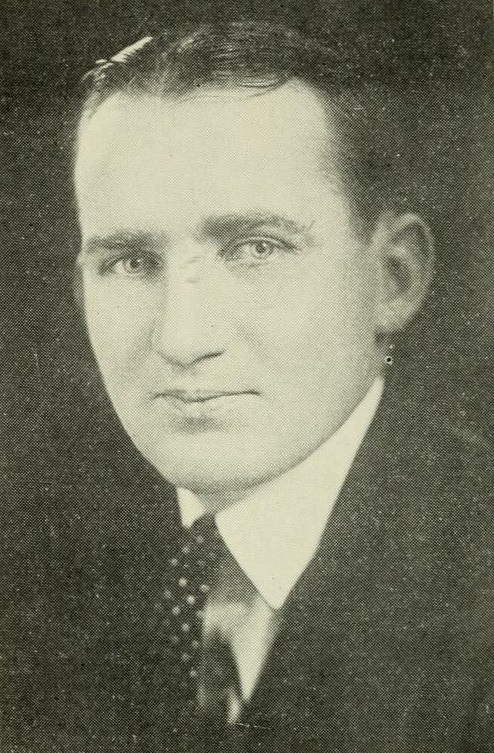
William Granfield
Former U.S. Representative · Massachusetts District 2 · 1929–1937 · Democratic
William Granfield represented Massachusetts's District 2 in the United States House of Representatives (1929–1937) for the Democratic party. The page below collects sourced biographical facts, term history, committee roles, and provenance for Granfield.
Bioguide ID: G000372
Key facts
- Full name
- William Granfield
- State
- Massachusetts
- District
- District 2
- Party
- Democratic
- House service
- 1929–1937
- First House term
- 1929
- Status
- Left office
- Current term ends
- —
- Born
- 1889
- Bioguide ID
- G000372
- Committee assignments
- —
- Dataset version
- 1.20260605
Biographical narrative
873 words · sourced from the Wikipedia REST extract
William Granfield was a notable figure in American politics, serving as a United States Representative for Massachusetts's 2nd congressional district. A member of the Democratic Party, Granfield's political career spanned several decades, during which he was involved in various legislative activities and local governance. His tenure in the U.S. House of Representatives lasted from 1930 until 1937, after which he continued to serve the public in the judicial system. Granfield's contributions to both state and national politics reflect a commitment to public service that began early in his life and continued until his retirement.
Early life and career
William Granfield was born on December 18, 1889, in Springfield, Massachusetts. He grew up in a community that would later become central to his political career. Granfield completed his elementary and high school education in Springfield, laying a foundation for his future academic pursuits. He graduated from Williston Academy in 1910, an institution known for its rigorous academic standards. Following his secondary education, Granfield attended Notre Dame Law School, where he earned his law degree in 1913. This legal education would prove instrumental in shaping his career, as he was admitted to the bar in 1916 and began practicing law in Springfield shortly thereafter.
Granfield's early involvement in politics began at the local level. He served on Springfield's common council in 1915 and 1916, gaining valuable experience in governance and public affairs. His political aspirations continued to grow, leading him to serve in the Massachusetts House of Representatives from 1917 to 1919. During this time, he was actively engaged in legislative matters, contributing to discussions and decisions that would impact his constituents. Additionally, Granfield participated as a delegate in the State constitutional convention held in 1918 and 1919, further demonstrating his commitment to shaping the legal framework of Massachusetts.
Granfield's political involvement extended beyond state politics. He was a delegate to the Democratic National Conventions every four years from 1924 to 1940, which allowed him to engage with national party politics and influence the direction of the Democratic Party at a national level. This experience would later serve him well as he transitioned to federal politics.
House tenure
William Granfield's congressional career began when he was elected to the U.S. House of Representatives to fill the vacancy left by the death of Representative William K. Kaynor. He was elected as a Democrat to the Seventy-first Congress, officially taking office on February 11, 1930. Granfield was subsequently reelected to serve in the Seventy-second, Seventy-third, and Seventy-fourth Congresses, maintaining his position until January 3, 1937. His time in Congress was marked by a commitment to representing the interests of his constituents in Massachusetts's 2nd congressional district.
During his tenure, Granfield participated in various legislative initiatives and discussions, contributing to the broader political landscape of the time. The period in which he served was characterized by significant national challenges, including the Great Depression, which influenced many of the policies and debates occurring in Congress. Granfield's role as a member of the House allowed him to engage with these pressing issues, advocating for the needs and concerns of his district.
Despite his active involvement in Congress, Granfield chose not to seek renomination in 1936. This decision marked the end of his congressional career, but it did not conclude his public service. Following his time in the House, he was appointed as presiding justice of the district court of Springfield in 1936. This role allowed him to continue serving the public in a different capacity, focusing on the judicial system and the administration of justice.
Legislative focus and committees
While specific details about Granfield's legislative focus and committee assignments during his time in the House are not provided, it can be inferred that, like many representatives of his era, he was likely involved in addressing the economic challenges of the Great Depression. Members of Congress during this time often engaged in discussions surrounding economic recovery, social welfare programs, and infrastructure development, which were critical issues for their constituents.
Granfield's legal background would have informed his approach to legislation, as he would have been equipped to analyze and understand the implications of various bills and policies. His experience in the Massachusetts House of Representatives and as a delegate at the Democratic National Conventions likely provided him with insights into both state and national legislative processes, allowing him to navigate the complexities of federal governance effectively.
After leaving Congress, Granfield continued to influence the legal landscape in Massachusetts through his role as presiding justice of the district court. He served in this capacity until his retirement on July 27, 1949. His judicial career further exemplified his dedication to public service and commitment to upholding the law, reflecting the values he had championed throughout his political life.
William Granfield passed away on May 28, 1959, in Springfield, Massachusetts. His contributions to both state and national politics, as well as his service in the judicial system, left a lasting impact on the communities he served. He was interred at St. Michael’s Cemetery in Springfield, where he is remembered for his dedication to public service and the legal profession. Granfield's life and career illustrate the journey of a public servant committed to the welfare of his constituents and the principles of democracy.
Notable legislation
Sponsored and co-sponsored legislation for William Granfield is pending operator curation. The biographical narrative above carries the same provenance trail until per-bill rows are written.
Sources
- [1]https://en.wikipedia.org/wiki/William_J._GranfieldWikipedia · retrieved 2026-06-05
Notable quotes
Sourced quotes for William Granfield are pending operator curation. Narrative-scope provenance remains attached below.
Sources
- [1]https://en.wikipedia.org/wiki/William_J._GranfieldWikipedia · retrieved 2026-06-05
Key positions
Curated policy positions for William Granfield are pending operator review. The biographical narrative above carries the same provenance trail until per-topic positions are written.
Sources
- [1]https://en.wikipedia.org/wiki/William_J._GranfieldWikipedia · retrieved 2026-06-05
Terms served
- 1929–1931U.S. House · Term 1 · Democratic
- 1931–1933U.S. House · Term 2 · Democratic
- 1933–1935U.S. House · Term 3 · Democratic
- 1935–1937U.S. House · Term 4 · Democratic
Sources & provenance
Every attributable claim above carries a per-section [N] marker that resolves to the corresponding URL below. Each entry records the upstream provider, the canonical URL, and the timestamp at which the source was retrieved by the ingest pipeline.
Key facts
- https://bioguide.congress.gov/search/bio/G000372bioguide · retrieved 2026-06-05
- https://www.govtrack.us/congress/members/404724govtrack · retrieved 2026-06-05
Biographical narrative
- https://en.wikipedia.org/wiki/William_J._Granfieldwikipedia · retrieved 2026-06-05
Find your representative
Every U.S. state elects representatives by district. Browse Massachusetts’s delegation, the full former-representative roster, or explore the role and term length.
Related on The Candidate
- Preceded by Henry BowlesEarlier holder of the Massachusetts District 2 House seat · Republican.Open
- Succeeded by Charles ClasonLater holder of the Massachusetts District 2 House seat · Republican.Open
- Abbott LawrenceFormer U.S. Representative · Massachusetts District 1 · WhigOpen
- Allen TreadwayFormer U.S. Representative · Massachusetts District 1 · RepublicanOpen
- Artemas Ward Jr.Former U.S. Representative · Massachusetts District 1 · FederalistOpen
- Ashley WrightFormer U.S. Representative · Massachusetts District 1 · RepublicanOpen