
Historical · U.S. House · Massachusetts · District 3
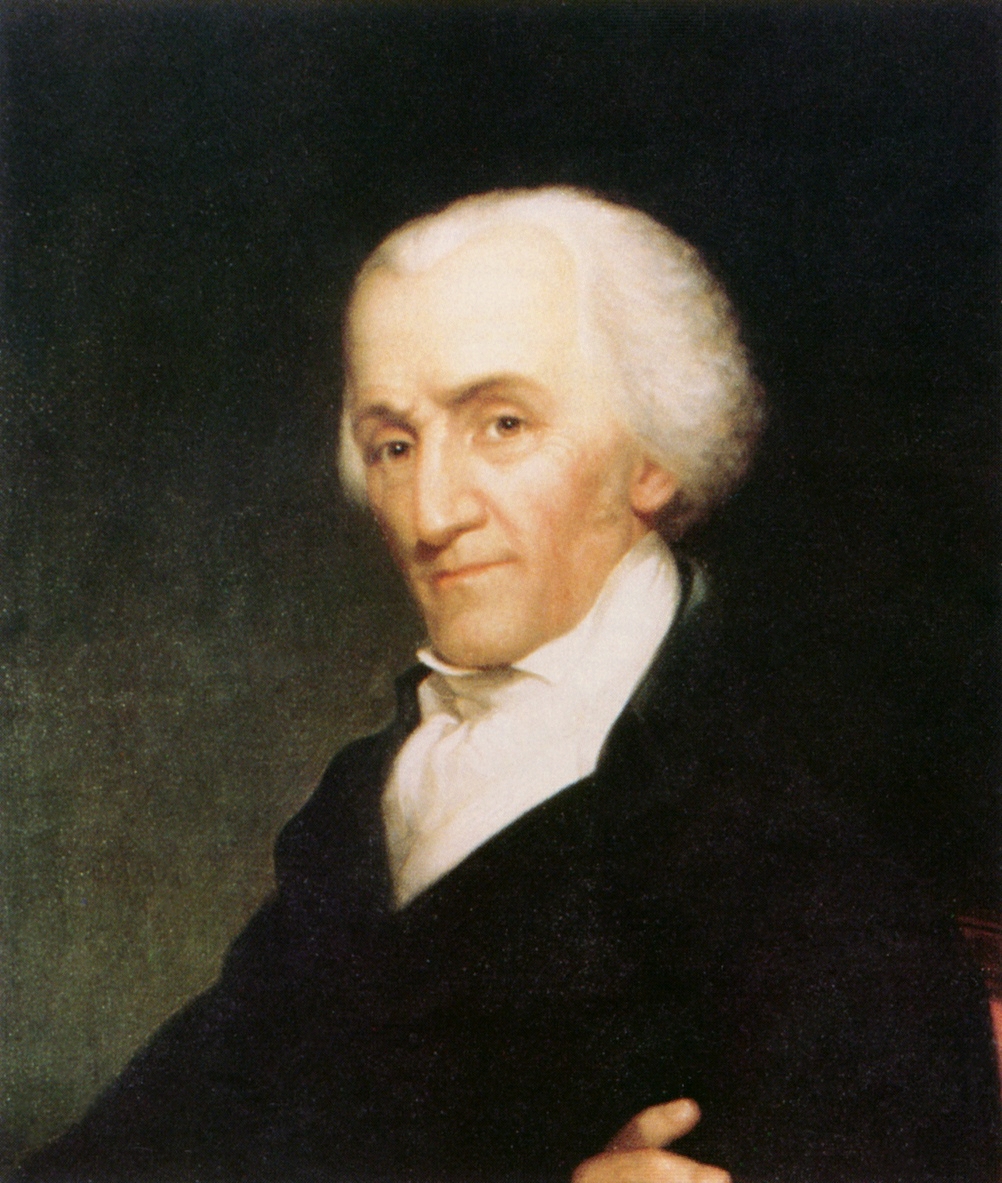
Elbridge Gerry
Former U.S. Representative · Massachusetts District 3 · 1789–1793
Elbridge Gerry represented Massachusetts's District 3 in the United States House of Representatives (1789–1793). The page below collects sourced biographical facts, term history, committee roles, and provenance for Gerry.
Bioguide ID: G000139
Key facts
- Full name
- Elbridge Gerry
- State
- Massachusetts
- District
- District 3
- Party
- —
- House service
- 1789–1793
- First House term
- 1789
- Status
- Left office
- Current term ends
- —
- Born
- 1744
- Bioguide ID
- G000139
- Committee assignments
- —
- Dataset version
- 1.20260606
Biographical narrative
969 words · sourced from the Wikipedia REST extract
Elbridge Gerry was an influential American politician and Founding Father, best known for his role as a U.S. Representative from Massachusetts and for his contributions to the early political landscape of the United States. He served in the First Congress and was a signatory of both the Declaration of Independence and the Articles of Confederation. Gerry's political career spanned several decades, during which he was involved in significant events such as the drafting of the Bill of Rights and the Constitutional Convention. He is also recognized for his association with the term "gerrymandering," which originated during his tenure as Governor of Massachusetts.
Early life and career
Elbridge Thomas Gerry was born on July 17, 1744, in Marblehead, Massachusetts, into a prominent merchant family. His father, Thomas Gerry, was a successful merchant who operated ships and had significant trading connections, while his mother, Elizabeth Greenleaf Gerry, came from a family of Boston merchants. Elbridge was the third of eleven children, with only five surviving to adulthood. He received his early education from private tutors and entered Harvard College at the age of 14, graduating with a Bachelor of Arts degree in 1762 and a Master of Arts in 1765. Following his education, Gerry joined his father's merchant business, which had become one of the wealthiest in Massachusetts by the 1770s.
Gerry's political engagement began early, as he opposed British taxation policies following the French and Indian War. In 1770, he was part of a Marblehead committee that enforced bans on British goods, and he maintained correspondence with other colonial leaders such as Samuel Adams and John Adams. His political career took a significant turn in May 1772 when he was elected to the Great and General Court of the Province of Massachusetts Bay, where he worked alongside Samuel Adams to promote colonial resistance to British policies. Gerry was instrumental in establishing Marblehead's committee of correspondence, which facilitated communication among Patriots.
In 1774, after the Boston Port Act closed Boston's port, Marblehead emerged as an alternative port for relief supplies. Gerry played a crucial role in coordinating the storage and delivery of these supplies to Boston, demonstrating his commitment to the Patriot cause. He was elected to the First Continental Congress in September 1774 but declined the position due to personal circumstances, specifically the recent death of his father.
House tenure
Gerry's political career advanced significantly during the American Revolutionary War. He was elected to the Massachusetts Provincial Congress, which was formed after the dissolution of the provincial assembly by Governor Thomas Gage. In this role, he was appointed to the committee of safety, which was responsible for safeguarding the province's limited military supplies. His efforts contributed to the storage of weapons in Concord, which became a focal point of British military action, igniting the Revolutionary War with the battles of Lexington and Concord in April 1775.
Gerry's involvement in the war extended beyond his legislative duties; he actively supported the Continental Army by leveraging his business connections in France and Spain to procure munitions and supplies. His contributions to the war effort solidified his reputation as a dedicated Patriot.
After the war, Gerry's political career continued to flourish. He was a delegate to the Constitutional Convention in 1787 but chose not to sign the Constitution due to his concerns about the absence of a Bill of Rights. Despite his reservations, he was elected to the inaugural United States Congress in 1789, representing Massachusetts's 3rd congressional district. During his two terms in the House of Representatives, which lasted until 1793, Gerry was involved in significant legislative efforts, including the drafting and passage of the Bill of Rights, which aimed to protect individual liberties and limit government power.
Gerry's tenure in Congress was marked by his opposition to the emergence of political parties. He maintained friendships across party lines, engaging with both Federalists and Democratic-Republicans. His political journey took a turn during the XYZ Affair, a diplomatic incident with France that strained U.S.-French relations. Gerry was part of a diplomatic delegation that faced hostility, leading to a shift in his political alignment toward the Democratic-Republican Party.
Legislative focus and committees
Throughout his time in the House of Representatives, Gerry's legislative focus was primarily on issues related to individual rights and state sovereignty. He was a staunch advocate for the inclusion of a Bill of Rights in the Constitution, believing that such protections were essential for safeguarding the liberties of citizens. His commitment to these principles was evident in his active participation in the debates surrounding the Bill of Rights, which ultimately became a cornerstone of American democracy.
In addition to his work on the Bill of Rights, Gerry served on various committees during his congressional tenure. His involvement in these committees allowed him to influence key legislation and address the pressing issues of the time. Although specific details of his committee assignments are not documented, it is known that he played a significant role in shaping the early legislative framework of the United States.
After concluding his terms in the House, Gerry continued to engage in public service, eventually becoming the Governor of Massachusetts. His governorship was notable for the approval of new state senate districts, which led to the coining of the term "gerrymander" to describe the manipulation of district boundaries for political advantage. Despite facing electoral challenges, Gerry's political career culminated in his election as Vice President of the United States in 1812, serving under President James Madison until his death in 1814.
Elbridge Gerry's legacy is multifaceted, encompassing his contributions to the founding of the United States, his advocacy for individual rights, and his role in the evolution of American political practices. His life and career reflect the complexities of early American governance and the ongoing struggle to balance power and liberty in a fledgling democracy.
Notable legislation
Sponsored and co-sponsored legislation for Elbridge Gerry is pending operator curation. The biographical narrative above carries the same provenance trail until per-bill rows are written.
Sources
- [1]https://en.wikipedia.org/wiki/Elbridge_GerryWikipedia · retrieved 2026-06-06
Notable quotes
Sourced quotes for Elbridge Gerry are pending operator curation. Narrative-scope provenance remains attached below.
Sources
- [1]https://en.wikipedia.org/wiki/Elbridge_GerryWikipedia · retrieved 2026-06-06
Key positions
Curated policy positions for Elbridge Gerry are pending operator review. The biographical narrative above carries the same provenance trail until per-topic positions are written.
Sources
- [1]https://en.wikipedia.org/wiki/Elbridge_GerryWikipedia · retrieved 2026-06-06
Terms served
- 1789–1791U.S. House · Term 1
- 1791–1793U.S. House · Term 2
Sources & provenance
Every attributable claim above carries a per-section [N] marker that resolves to the corresponding URL below. Each entry records the upstream provider, the canonical URL, and the timestamp at which the source was retrieved by the ingest pipeline.
Key facts
- https://bioguide.congress.gov/search/bio/G000139bioguide · retrieved 2026-06-06
- https://www.govtrack.us/congress/members/404507govtrack · retrieved 2026-06-06
Biographical narrative
- https://en.wikipedia.org/wiki/Elbridge_Gerrywikipedia · retrieved 2026-06-06
Find your representative
Every U.S. state elects representatives by district. Browse Massachusetts’s delegation, the full former-representative roster, or explore the role and term length.
Related on The Candidate
- Succeeded by Peleg Coffin Jr.Later holder of the Massachusetts District 3 House seat.Open
- Abbott LawrenceFormer U.S. Representative · Massachusetts District 1 · WhigOpen
- Allen TreadwayFormer U.S. Representative · Massachusetts District 1 · RepublicanOpen
- Artemas Ward Jr.Former U.S. Representative · Massachusetts District 1 · FederalistOpen
- Ashley WrightFormer U.S. Representative · Massachusetts District 1 · RepublicanOpen
- Representatives from MassachusettsEvery former U.S. Representative who has represented Massachusetts.Open