
Historical · U.S. House · Massachusetts · District 3
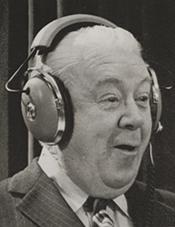
Harold Donohue
Former U.S. Representative · Massachusetts District 3 · 1947–1975 · Democratic
Harold Donohue represented Massachusetts's District 3 in the United States House of Representatives (1947–1975) for the Democratic party. The page below collects sourced biographical facts, term history, committee roles, and provenance for Donohue.
Bioguide ID: D000419
Key facts
- Full name
- Harold Donohue
- State
- Massachusetts
- District
- District 3
- Party
- Democratic
- House service
- 1947–1975
- First House term
- 1947
- Status
- Left office
- Current term ends
- —
- Born
- 1901
- Bioguide ID
- D000419
- Committee assignments
- —
- Dataset version
- 1.20260605
Biographical narrative
853 words · sourced from the Wikipedia REST extract
Harold D. Donohue was an American politician who served as a U.S. Representative for Massachusetts, representing the state's third congressional district from 1947 until 1975. A member of the Democratic Party, Donohue's congressional career spanned nearly three decades, during which he participated in significant legislative activities and was involved in key moments of American political history, including the Watergate scandal. His contributions to the House of Representatives included a focus on judicial matters and the American Bicentennial celebration.
Early life and career
Harold Daniel Donohue was born on June 18, 1901, in Worcester, Massachusetts. He completed his secondary education at St. John's High School, graduating in 1920. Following his high school education, Donohue pursued higher education at Northeastern University School of Law, where he earned his law degree in 1925. This educational background laid the foundation for his future career in law and politics.
After completing his studies, Donohue began his professional career as a lawyer. His early involvement in local governance began in Worcester, where he served as a councilman and later as an alderman from 1927 to 1935. This experience in local government provided him with insights into public service and the workings of political systems, which would prove beneficial in his later congressional career.
During World War II, Donohue served in the United States Navy from 1942 to 1945, contributing to the war effort during a critical period in American history. His military service likely influenced his perspectives on national issues and governance, shaping his approach as a legislator upon his return to civilian life.
House tenure
Harold D. Donohue was first elected to the United States House of Representatives in 1946, taking office on January 3, 1947. He succeeded a long-serving Republican incumbent, marking a significant political shift in Massachusetts' third congressional district. Over the course of his career, Donohue was re-elected to a total of fourteen consecutive terms, serving until January 3, 1975. His tenure in the House was characterized by a commitment to his constituents and a focus on legislative issues pertinent to Massachusetts and the nation.
Throughout his time in Congress, Donohue was involved in various legislative initiatives, although he was noted for having enacted a limited number of public bills. His legislative achievements included measures related to court procedures, the appointment of judges in Alaska, and the celebration of the American Bicentennial. The latter was a significant national event, and Donohue played a role in both establishing and reforming its governance, reflecting his interest in American history and civic engagement.
In his final term, Donohue held a prominent position as the second-ranking Democrat on the Judiciary Committee. This role placed him at the center of one of the most consequential political events of the time: the impeachment proceedings against President Richard M. Nixon. The Judiciary Committee was tasked with investigating the Watergate scandal, and Donohue's involvement included making motions to subpoena audio tapes from the Nixon administration, which were critical to the impeachment process. He also introduced the articles of impeachment that would ultimately lead to Nixon's resignation, underscoring his significant role in this pivotal moment in American political history.
Donohue chose not to seek re-election for the Ninety-fourth Congress in 1974, concluding his long and impactful career in the House of Representatives. His decision to retire marked the end of an era for the third congressional district of Massachusetts, which had been represented by Donohue for nearly three decades.
Legislative focus and committees
Throughout his congressional career, Harold D. Donohue's legislative focus encompassed a range of issues, with a particular emphasis on judicial matters. His role on the Judiciary Committee allowed him to engage deeply with legal and constitutional issues, particularly during the tumultuous period of the Watergate scandal. Donohue's work on this committee highlighted his commitment to upholding the rule of law and ensuring accountability within the executive branch.
In addition to his judicial focus, Donohue was involved in legislation that addressed the needs and interests of his constituents in Massachusetts. His work on public bills, while limited in number, reflected his dedication to improving court procedures and addressing specific regional concerns, such as the appointment of judges in Alaska. These legislative efforts demonstrated his understanding of the complexities of governance and the importance of responsive representation.
Donohue's involvement in the American Bicentennial celebration was another significant aspect of his legislative focus. He recognized the importance of this national milestone and worked to ensure that it was commemorated in a manner that honored the nation's history and values. His efforts in this area illustrated his belief in the importance of civic engagement and the role of government in fostering a sense of national identity.
After leaving Congress, Donohue's legacy continued to be recognized. In 1987, the Harold D. Donohue Federal Building and United States Courthouse was renamed in his honor, reflecting the impact he had on his community and the nation during his years of public service. Harold D. Donohue passed away on November 4, 1984, and was interred in St. John's Cemetery in Worcester, Massachusetts, leaving behind a legacy of dedication to public service and the rule of law.
Notable legislation
Sponsored and co-sponsored legislation for Harold Donohue is pending operator curation. The biographical narrative above carries the same provenance trail until per-bill rows are written.
Sources
- [1]https://en.wikipedia.org/wiki/Harold_DonohueWikipedia · retrieved 2026-06-05
Notable quotes
Sourced quotes for Harold Donohue are pending operator curation. Narrative-scope provenance remains attached below.
Sources
- [1]https://en.wikipedia.org/wiki/Harold_DonohueWikipedia · retrieved 2026-06-05
Key positions
Curated policy positions for Harold Donohue are pending operator review. The biographical narrative above carries the same provenance trail until per-topic positions are written.
Sources
- [1]https://en.wikipedia.org/wiki/Harold_DonohueWikipedia · retrieved 2026-06-05
Terms served
- 1947–1949U.S. House · Term 1 · Democratic
- 1949–1951U.S. House · Term 2 · Democratic
- 1951–1953U.S. House · Term 3 · Democratic
- 1953–1955U.S. House · Term 4 · Democratic
- 1955–1957U.S. House · Term 5 · Democratic
- 1957–1959U.S. House · Term 6 · Democratic
- 1959–1961U.S. House · Term 7 · Democratic
- 1961–1963U.S. House · Term 8 · Democratic
- 1963–1965U.S. House · Term 9 · Democratic
- 1965–1967U.S. House · Term 10 · Democratic
- 1967–1969U.S. House · Term 11 · Democratic
- 1969–1971U.S. House · Term 12 · Democratic
- 1971–1973U.S. House · Term 13 · Democratic
- 1973–1975U.S. House · Term 14 · Democratic
Sources & provenance
Every attributable claim above carries a per-section [N] marker that resolves to the corresponding URL below. Each entry records the upstream provider, the canonical URL, and the timestamp at which the source was retrieved by the ingest pipeline.
Key facts
- https://bioguide.congress.gov/search/bio/D000419bioguide · retrieved 2026-06-05
- https://www.govtrack.us/congress/members/403532govtrack · retrieved 2026-06-05
Biographical narrative
- https://en.wikipedia.org/wiki/Harold_Donohuewikipedia · retrieved 2026-06-05
Find your representative
Every U.S. state elects representatives by district. Browse Massachusetts’s delegation, the full former-representative roster, or explore the role and term length.
Related on The Candidate
- Preceded by Joseph CaseyEarlier holder of the Massachusetts District 3 House seat · Democratic.Open
- Succeeded by Joseph EarlyLater holder of the Massachusetts District 3 House seat · Democratic.Open
- Abbott LawrenceFormer U.S. Representative · Massachusetts District 1 · WhigOpen
- Allen TreadwayFormer U.S. Representative · Massachusetts District 1 · RepublicanOpen
- Artemas Ward Jr.Former U.S. Representative · Massachusetts District 1 · FederalistOpen
- Ashley WrightFormer U.S. Representative · Massachusetts District 1 · RepublicanOpen