
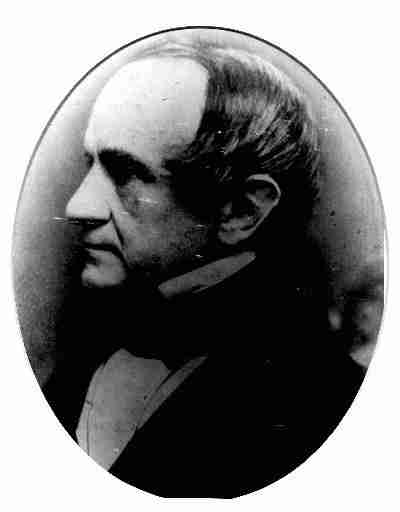
Historical · U.S. House · Massachusetts · District 4
John Palfrey
Former U.S. Representative · Massachusetts District 4 · 1847–1849 · Whig
John Palfrey represented Massachusetts's District 4 in the United States House of Representatives (1847–1849) for the Whig party. The page below collects sourced biographical facts, term history, committee roles, and provenance for Palfrey.
Bioguide ID: P000033
Key facts
- Full name
- John Palfrey
- State
- Massachusetts
- District
- District 4
- Party
- Whig
- House service
- 1847–1849
- First House term
- 1847
- Status
- Left office
- Current term ends
- —
- Born
- 1796
- Bioguide ID
- P000033
- Committee assignments
- —
- Dataset version
- 1.20260606
Biographical narrative
1,058 words · sourced from the Wikipedia REST extract
John Palfrey was a notable American clergyman, historian, and politician who served as a U.S. Representative from Massachusetts. A member of the Whig Party, Palfrey's political career was marked by his commitment to anti-slavery principles and his involvement in educational reform. He held office in the U.S. House of Representatives for a single term from 1847 to 1849, after which he continued to influence public life through various roles, including as a historian and educator.
Early life and career
John Palfrey was born on May 2, 1796, in Boston, Massachusetts, to Mary Sturgis Gorham and John Palfrey. His early life was marked by personal tragedy; his mother passed away shortly after his birth, and his father relocated to Baltimore in 1804. Palfrey's education began at the Berry Street Academy in Boston, where he studied under notable figures, including William Ellery Channing. He later completed his preparatory studies as a charity student at Phillips Exeter Academy in New Hampshire before graduating from Harvard University in 1815.
Following his undergraduate education, Palfrey pursued theological studies at Harvard Divinity School, where he graduated in its second class. He was ordained as a minister at Boston's Brattle Square Unitarian Church on June 17, 1818. His pastoral duties included delivering sermons, teaching Sunday school, and providing support to the sick and impoverished members of his congregation. Palfrey was an active member of the American Unitarian Association and contributed to the religious community through his preaching and writings.
In 1827, he gained recognition for delivering a series of sermons on the topic of intemperance, which were published and circulated widely. His efforts in this area were acknowledged by the American Society for the Promotion of Temperance, which praised his discourses on the causes and remedies of intemperance. Palfrey's commitment to education extended to his involvement with Harvard Divinity School, where he served as secretary of the Society for the Promotion of Theological Education and later became a Professor of Biblical Literature and Dean of Faculty. His tenure at the Divinity School was characterized by significant curricular reforms and the establishment of new rules to enhance the educational experience for students.
Palfrey's contributions to academia were complemented by his work as an editor and author. He served as editor of several publications, including the Christian Disciple, which he renamed the Christian Examiner, and the North American Review, where he held the position from 1835 to 1843. His editorial career was marked by challenges, leading him to resign from his teaching position at the Divinity School in 1839. He is perhaps best known for his extensive historical work, "History of New England to the Revolutionary War," which spanned five volumes and was published over several decades.
House tenure
Palfrey's political career began in the early 1840s when he was elected to the Massachusetts House of Representatives as a member of the Whig Party. He served two terms in the state legislature, where he was appointed chairman of the House Standing Committee on Education, collaborating closely with prominent education reformer Horace Mann. Despite his initial success, Palfrey faced challenges during his second term, as the Whig Party found itself in the minority, leading to legislative setbacks. Consequently, he opted not to seek re-election to the state House and instead pursued a position as Massachusetts Secretary of the Commonwealth, a role he held from 1844 to 1848.
As Secretary, Palfrey introduced statistical tables that established new standards for record-keeping in the state. He also organized the Revolutionary War records, enhancing the efficiency of pension claims processing, and managed a significant collection of written records, including thousands of volumes and pamphlets.
In 1847, Palfrey was elected to the Thirtieth Congress, representing Massachusetts's 4th congressional district. His term in the U.S. House of Representatives lasted until March 3, 1849. During his time in Congress, Palfrey was known as a "Conscience Whig," a faction of the Whig Party that opposed slavery. He had freed sixteen slaves inherited from his father, who had been a successful plantation owner in Louisiana. In Washington, Palfrey was part of a small group of anti-slavery congressmen who met regularly to discuss their shared concerns.
Despite his principled stance against slavery, Palfrey's views alienated him from more conservative constituents, particularly the "Cotton Whigs" in his district. In 1848, he ran for re-election on the Free-Soil ticket but was unsuccessful. The seat he vacated remained unfilled during the 31st Congress due to multiple elections failing to produce a candidate with the required majority. Palfrey also sought the governorship of Massachusetts in 1851 as a Free-Soil candidate but was not elected.
Legislative focus and committees
During his brief tenure in the U.S. House of Representatives, Palfrey's legislative focus was primarily on issues related to education and anti-slavery. His background as an educator and reformer informed his approach to legislative matters, and he sought to promote policies that aligned with his principles. As a member of Congress, he participated in discussions and initiatives aimed at addressing the moral and social implications of slavery, advocating for the rights of enslaved individuals and opposing the institution itself.
Palfrey's involvement in the anti-slavery movement was significant, as he aligned himself with like-minded colleagues who shared his commitment to ending slavery. This association with the anti-slavery faction of the Whig Party positioned him in opposition to more conservative elements within his district, which ultimately contributed to his electoral challenges. His efforts in Congress reflected a broader national debate over slavery and its implications for American society.
In addition to his anti-slavery advocacy, Palfrey's work in education remained a priority throughout his political career. His experience as chairman of the House Standing Committee on Education in the Massachusetts legislature informed his perspective on educational reform at the national level. He recognized the importance of education in shaping public policy and sought to advance initiatives that would improve educational opportunities for all citizens.
Although Palfrey's time in the U.S. House was limited, his contributions to the legislative process and his commitment to social justice left a lasting impact. After leaving Congress, he continued to engage in public life through his historical writings and his involvement in various educational and civic organizations. His legacy is characterized by his dedication to the principles of education, social reform, and the fight against slavery, which were central to his identity as both a clergyman and a politician.
Notable legislation
Sponsored and co-sponsored legislation for John Palfrey is pending operator curation. The biographical narrative above carries the same provenance trail until per-bill rows are written.
Sources
- [1]https://en.wikipedia.org/wiki/John_G._PalfreyWikipedia · retrieved 2026-06-06
Notable quotes
Sourced quotes for John Palfrey are pending operator curation. Narrative-scope provenance remains attached below.
Sources
- [1]https://en.wikipedia.org/wiki/John_G._PalfreyWikipedia · retrieved 2026-06-06
Key positions
Curated policy positions for John Palfrey are pending operator review. The biographical narrative above carries the same provenance trail until per-topic positions are written.
Sources
- [1]https://en.wikipedia.org/wiki/John_G._PalfreyWikipedia · retrieved 2026-06-06
Terms served
- 1847–1849U.S. House · Term 1 · Whig
Sources & provenance
Every attributable claim above carries a per-section [N] marker that resolves to the corresponding URL below. Each entry records the upstream provider, the canonical URL, and the timestamp at which the source was retrieved by the ingest pipeline.
Key facts
- https://bioguide.congress.gov/search/bio/P000033bioguide · retrieved 2026-06-06
- https://www.govtrack.us/congress/members/408444govtrack · retrieved 2026-06-06
Biographical narrative
- https://en.wikipedia.org/wiki/John_G._Palfreywikipedia · retrieved 2026-06-06
Find your representative
Every U.S. state elects representatives by district. Browse Massachusetts’s delegation, the full former-representative roster, or explore the role and term length.
Related on The Candidate
- Preceded by William ParmenterEarlier holder of the Massachusetts District 4 House seat · Democratic.Open
- Succeeded by Lorenzo SabineLater holder of the Massachusetts District 4 House seat · Whig.Open
- Abbott LawrenceFormer U.S. Representative · Massachusetts District 1 · WhigOpen
- Allen TreadwayFormer U.S. Representative · Massachusetts District 1 · RepublicanOpen
- Artemas Ward Jr.Former U.S. Representative · Massachusetts District 1 · FederalistOpen
- Ashley WrightFormer U.S. Representative · Massachusetts District 1 · RepublicanOpen