
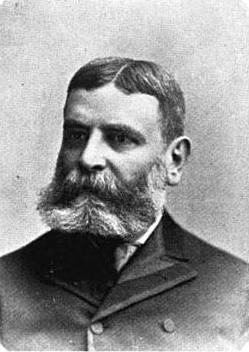
Historical · U.S. House · Massachusetts · District 5
Edward Hayden
Former U.S. Representative · Massachusetts District 5 · 1885–1889 · Republican
Edward Hayden represented Massachusetts's District 5 in the United States House of Representatives (1885–1889) for the Republican party. The page below collects sourced biographical facts, term history, committee roles, and provenance for Hayden.
Bioguide ID: H000386
Key facts
- Full name
- Edward Hayden
- State
- Massachusetts
- District
- District 5
- Party
- Republican
- House service
- 1885–1889
- First House term
- 1885
- Status
- Left office
- Current term ends
- —
- Born
- 1833
- Bioguide ID
- H000386
- Committee assignments
- —
- Dataset version
- 1.20260606
Biographical narrative
994 words · sourced from the Wikipedia REST extract
Edward Hayden was a notable figure in American politics during the late 19th century, serving as a U.S. Representative from Massachusetts. A member of the Republican Party, he represented the state's fifth congressional district from 1885 to 1889. His career spanned various sectors, including law, military service, banking, and public service, reflecting a diverse professional background that contributed to his political endeavors. Hayden's life and career were marked by his commitment to public service, both in military and civilian capacities, as well as his involvement in local governance and banking.
Early life and career
Edward Daniel Hayden was born on December 27, 1833, in Cambridge, Massachusetts. He pursued his education at the Lawrence Academy in Groton, Massachusetts, before attending Harvard University, where he graduated in 1854. Following his graduation, Hayden studied law and was admitted to the bar in 1857, beginning his legal practice in Woburn, Massachusetts. His early career in law laid the groundwork for his later political aspirations, as he developed a strong understanding of legal and governmental processes.
In 1861, amidst the backdrop of the Civil War, Hayden joined the United States Navy as an assistant paymaster. His military service was significant, as he served in the Mississippi Squadron under Admiral David Dixon Porter. During his time in the Navy, he participated in crucial military campaigns, including those at Vicksburg and the Red River. These experiences not only shaped his character but also provided him with insights into leadership and governance, which would later inform his political career.
After his military service concluded in 1866, Hayden returned to Woburn and shifted his focus to mercantile pursuits. His involvement in business complemented his legal background and further established his reputation in the community. In 1874, he became president of the First National Bank, a position he held until 1900. This role in banking not only demonstrated his financial acumen but also positioned him as a prominent figure in the economic landscape of Massachusetts.
In addition to his professional endeavors, Hayden was active in local politics. He served as a member of the Massachusetts House of Representatives from 1880 to 1882, where he began to establish himself as a political leader. His local governance experience provided him with a platform to advocate for his constituents and engage with the issues affecting his community.
House tenure
Hayden's congressional career began when he was elected as a Republican to the Forty-ninth and Fiftieth Congresses, serving from March 4, 1885, to March 3, 1889. His election to the U.S. House of Representatives marked a significant milestone in his political journey, allowing him to represent the interests of Massachusetts's fifth congressional district at the national level. During his time in Congress, Hayden was involved in various legislative discussions and decisions that shaped the policies of the era.
As a member of the House, Hayden participated in the political dynamics of the late 19th century, a period characterized by significant economic growth, industrialization, and social change in the United States. His tenure coincided with a time when the Republican Party was influential in shaping national policy, particularly in areas related to economic development and infrastructure. Although specific details about his legislative initiatives and voting record are not provided, it can be inferred that his background in law and finance likely informed his contributions to discussions on economic and fiscal matters.
In 1888, Hayden chose not to seek renomination for a third term, concluding his time in the House of Representatives. His decision to step back from national politics allowed him to focus on other interests and responsibilities, including his ongoing involvement in local governance and business.
In addition to his congressional duties, Hayden was active in the Republican National Convention in 1888, serving as a delegate. This role further underscored his commitment to the party and his engagement in the broader political landscape of the time. His participation in the convention reflected his influence within the party and his dedication to Republican ideals.
Legislative focus and committees
While specific details regarding Hayden's committee assignments and legislative focus during his congressional tenure are not extensively documented, his background suggests a strong inclination toward issues related to finance, commerce, and local governance. Given his experience as a banker and his previous service in the Massachusetts House of Representatives, it is reasonable to assume that he may have been involved in discussions surrounding economic policy, banking regulations, and infrastructure development.
Hayden's professional background in law and finance likely provided him with a unique perspective on legislative matters, allowing him to contribute effectively to debates on fiscal responsibility and economic growth. His experiences in the Navy may have also influenced his views on national defense and veterans' affairs, although specific legislative actions in these areas are not detailed in the available records.
In addition to his congressional work, Hayden maintained a significant presence in local governance and business. He served on the directorate of the Boston & Albany Railroad for over thirty years, eventually becoming vice president at the time of his death. His long-term involvement with the railroad reflects his interest in transportation and infrastructure, which were critical issues during the period of rapid industrialization in the United States.
Hayden's contributions to the Shawmut National Bank of Boston as a director further illustrate his engagement in the financial sector, where he played a role in shaping banking practices and policies. His extensive experience in both public service and the private sector positioned him as a knowledgeable figure in discussions related to economic development and governance.
Edward Hayden passed away on November 15, 1908, in Woburn, Massachusetts. He was interred in Mount Auburn Cemetery in Cambridge, Massachusetts. His life and career exemplified a commitment to public service and community engagement, leaving a legacy that reflects the complexities of American political life in the late 19th century. Through his various roles, Hayden contributed to the development of his community and the nation, navigating the intersections of law, finance, and governance.
Notable legislation
Sponsored and co-sponsored legislation for Edward Hayden is pending operator curation. The biographical narrative above carries the same provenance trail until per-bill rows are written.
Sources
- [1]https://en.wikipedia.org/wiki/Edward_D._HaydenWikipedia · retrieved 2026-06-06
Notable quotes
Sourced quotes for Edward Hayden are pending operator curation. Narrative-scope provenance remains attached below.
Sources
- [1]https://en.wikipedia.org/wiki/Edward_D._HaydenWikipedia · retrieved 2026-06-06
Key positions
Curated policy positions for Edward Hayden are pending operator review. The biographical narrative above carries the same provenance trail until per-topic positions are written.
Sources
- [1]https://en.wikipedia.org/wiki/Edward_D._HaydenWikipedia · retrieved 2026-06-06
Terms served
- 1885–1887U.S. House · Term 1 · Republican
- 1887–1889U.S. House · Term 2 · Republican
Sources & provenance
Every attributable claim above carries a per-section [N] marker that resolves to the corresponding URL below. Each entry records the upstream provider, the canonical URL, and the timestamp at which the source was retrieved by the ingest pipeline.
Key facts
- https://bioguide.congress.gov/search/bio/H000386bioguide · retrieved 2026-06-06
- https://www.govtrack.us/congress/members/405254govtrack · retrieved 2026-06-06
Biographical narrative
- https://en.wikipedia.org/wiki/Edward_D._Haydenwikipedia · retrieved 2026-06-06
Find your representative
Every U.S. state elects representatives by district. Browse Massachusetts’s delegation, the full former-representative roster, or explore the role and term length.
Related on The Candidate
- Preceded by Selwyn BowmanEarlier holder of the Massachusetts District 5 House seat · Republican.Open
- Succeeded by Moses StevensLater holder of the Massachusetts District 5 House seat · Democratic.Open
- Abbott LawrenceFormer U.S. Representative · Massachusetts District 1 · WhigOpen
- Allen TreadwayFormer U.S. Representative · Massachusetts District 1 · RepublicanOpen
- Artemas Ward Jr.Former U.S. Representative · Massachusetts District 1 · FederalistOpen
- Ashley WrightFormer U.S. Representative · Massachusetts District 1 · RepublicanOpen