
Historical · U.S. House · Massachusetts · District 5
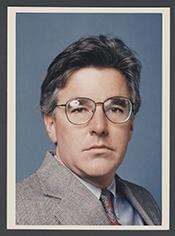
Marty Meehan
Former U.S. Representative · Massachusetts District 5 · 1993–2007 · Democratic
Marty Meehan represented Massachusetts's District 5 in the United States House of Representatives (1993–2007) for the Democratic party. The page below collects sourced biographical facts, term history, committee roles, and provenance for Meehan.
Bioguide ID: M000627
Key facts
- Full name
- Marty Meehan
- State
- Massachusetts
- District
- District 5
- Party
- Democratic
- House service
- 1993–2007
- First House term
- 1993
- Status
- Left office
- Current term ends
- —
- Born
- 1956
- Bioguide ID
- M000627
- Committee assignments
- —
- Dataset version
- 1.20260605
Biographical narrative
988 words · sourced from the Wikipedia REST extract
Martin T. Meehan is a former American politician and academic administrator who served as a U.S. Representative for Massachusetts's 5th congressional district from 1993 until 2007. A member of the Democratic Party, Meehan is recognized for his advocacy on issues such as campaign finance reform and LGBTQ+ rights. After concluding his congressional tenure, he transitioned into academia, eventually becoming the president of the University of Massachusetts in 2015.
Early life and career
Born on December 30, 1956, in Lowell, Massachusetts, Martin Thomas Meehan was the youngest of seven children in his family. His father, Martin T. Meehan, worked as a compositor for The Lowell Sun, while his mother, Alice Britton Meehan, was a homemaker. Meehan completed his secondary education at Lowell High School, graduating in 1974. He pursued higher education at the University of Massachusetts Lowell, where he earned a Bachelor of Science degree in education and political science, graduating cum laude in 1978.
Meehan continued his education at Suffolk University, obtaining a Master of Public Administration in 1981, followed by a Juris Doctor from Suffolk University Law School in 1986. His academic achievements have been recognized through several honorary degrees from institutions including the American College of Greece, Suffolk University, Green Mountain College in Vermont, and Shenkar College of Engineering & Design in Israel.
Meehan's early career began in public service, where he worked as a staff member for Lowell Mayor Raymond F. Rourke from 1978 to 1979. He then served as a press assistant to Representative James Michael Shannon from 1979 to 1981. Following this role, he was the head research analyst for the Massachusetts Senate's joint committee on election laws from 1981 to 1984. After completing his law degree, Meehan held the position of Director of Public Affairs for the Massachusetts Secretary of the Commonwealth and served as Deputy Secretary of State for Securities and Corporations from 1986 to 1990. He also spent time as a faculty member at the University of Massachusetts Lowell and Harvard Law School from 1987 to 1988. Before entering Congress, Meehan was the First Assistant District Attorney for Middlesex County from 1991 to 1992, where he implemented a "priority prosecution" policy aimed at targeting serious offenders.
House tenure
Meehan entered the political arena by running for the U.S. House of Representatives in the 1992 election, where he challenged incumbent Democrat Chet Atkins, who had served four terms. Atkins faced difficulties in his reelection bid, particularly in Meehan's hometown of Lowell, where he had narrowly won in a previous election. Additionally, Atkins was embroiled in the House Bank overdraft scandal, which contributed to his vulnerability. Meehan successfully defeated Atkins, receiving a significant majority of the votes in the Democratic primary and subsequently winning the general election on November 3, 1992. He officially took office in January 1993.
During his time in the House, Meehan was generally regarded as a political liberal. He was a prominent advocate for campaign finance reform and played a critical role as a sponsor of the Bipartisan Campaign Reform Act, commonly referred to as the "Shays–Meehan Bill" in the House. His legislative efforts also included a focus on LGBTQ+ rights; he was the chief sponsor of the legislation that aimed to repeal the "don't ask, don't tell" policy, which had restricted openly gay individuals from serving in the military.
Meehan's platform upon entering Congress included a commitment to reform, particularly advocating for term limits for House members. He publicly pledged not to serve more than four terms, emphasizing the importance of accountability among elected officials. However, he later ran for re-election multiple times, ultimately serving a total of eight terms in Congress.
In 2002, Meehan was among the House Democrats who voted in favor of authorizing military action in Iraq. As the situation in Iraq evolved, he expressed concerns about the lack of a clear strategy from the Bush administration. In early 2005, he published a Congressional white paper advocating for the transfer of security responsibilities to a democratically elected Iraqi government and proposed a timeline for the withdrawal of U.S. troops.
Meehan's fundraising capabilities were notable during his congressional career, with his campaign fund being one of the largest among House members. By October 2005, he reported having a substantial cash reserve, which was a result of consistently raising more funds than he spent in his campaigns. His financial prowess was evident in the 2004 Congressional race, where he raised significantly more than his opponent, demonstrating the advantages of incumbency in fundraising.
Throughout his tenure, Meehan was mentioned as a potential candidate for higher office, including speculation about a run for the U.S. Senate in 2004, particularly if then-Senator John Kerry had won the presidency. However, he ultimately chose to focus on his congressional responsibilities.
Legislative focus and committees
During his time in the House, Meehan served on various committees that aligned with his legislative interests and priorities. His focus on campaign finance reform and civil rights issues, particularly concerning LGBTQ+ rights, defined much of his legislative agenda. He was actively involved in discussions and initiatives aimed at improving the political landscape through reforms that would enhance transparency and accountability in campaign financing.
Meehan's advocacy for the repeal of "don't ask, don't tell" highlighted his commitment to civil rights and equality for LGBTQ+ individuals, particularly in the context of military service. His collaboration with other lawmakers, including former military personnel, underscored his dedication to addressing issues of military readiness and inclusivity.
After concluding his congressional career in July 2007, Meehan transitioned to academia, becoming the chancellor of the University of Massachusetts Lowell. He later ascended to the role of president of the University of Massachusetts in July 2015, where he has continued to influence public policy and education.
Meehan's legislative career, marked by his commitment to reform and advocacy for marginalized communities, reflects a significant chapter in the political history of Massachusetts and the broader national discourse on campaign finance and civil rights.
Notable legislation
Sponsored and co-sponsored legislation for Marty Meehan is pending operator curation. The biographical narrative above carries the same provenance trail until per-bill rows are written.
Sources
- [1]https://en.wikipedia.org/wiki/Marty_MeehanWikipedia · retrieved 2026-06-05
Notable quotes
Sourced quotes for Marty Meehan are pending operator curation. Narrative-scope provenance remains attached below.
Sources
- [1]https://en.wikipedia.org/wiki/Marty_MeehanWikipedia · retrieved 2026-06-05
Key positions
Curated policy positions for Marty Meehan are pending operator review. The biographical narrative above carries the same provenance trail until per-topic positions are written.
Sources
- [1]https://en.wikipedia.org/wiki/Marty_MeehanWikipedia · retrieved 2026-06-05
Terms served
- 1993–1995U.S. House · Term 1 · Democratic
- 1995–1997U.S. House · Term 2 · Democratic
- 1997–1999U.S. House · Term 3 · Democratic
- 1999–2001U.S. House · Term 4 · Democratic
- 2001–2003U.S. House · Term 5 · Democratic
- 2003–2005U.S. House · Term 6 · Democratic
- 2005–2007U.S. House · Term 7 · Democratic
- 2007–2007U.S. House · Term 8 · Democratic
Sources & provenance
Every attributable claim above carries a per-section [N] marker that resolves to the corresponding URL below. Each entry records the upstream provider, the canonical URL, and the timestamp at which the source was retrieved by the ingest pipeline.
Key facts
- https://bioguide.congress.gov/search/bio/M000627bioguide · retrieved 2026-06-05
- http://www.house.gov/meehanhouse.gov · retrieved 2026-06-05
Biographical narrative
- https://en.wikipedia.org/wiki/Marty_Meehanwikipedia · retrieved 2026-06-05
Find your representative
Every U.S. state elects representatives by district. Browse Massachusetts’s delegation, the full former-representative roster, or explore the role and term length.
Related on The Candidate
- Preceded by Chester AtkinsEarlier holder of the Massachusetts District 5 House seat · Democratic.Open
- Abbott LawrenceFormer U.S. Representative · Massachusetts District 1 · WhigOpen
- Allen TreadwayFormer U.S. Representative · Massachusetts District 1 · RepublicanOpen
- Artemas Ward Jr.Former U.S. Representative · Massachusetts District 1 · FederalistOpen
- Ashley WrightFormer U.S. Representative · Massachusetts District 1 · RepublicanOpen
- Democratic PartyFederal candidates and office holders on the Democratic line.Open