
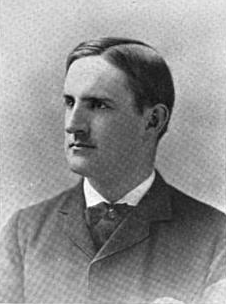
Historical · U.S. House · Massachusetts · District 5
Sherman Hoar
Former U.S. Representative · Massachusetts District 5 · 1891–1893 · Democratic
Sherman Hoar represented Massachusetts's District 5 in the United States House of Representatives (1891–1893) for the Democratic party. The page below collects sourced biographical facts, term history, committee roles, and provenance for Hoar.
Bioguide ID: H000657
Key facts
- Full name
- Sherman Hoar
- State
- Massachusetts
- District
- District 5
- Party
- Democratic
- House service
- 1891–1893
- First House term
- 1891
- Status
- Left office
- Current term ends
- —
- Born
- 1860
- Bioguide ID
- H000657
- Committee assignments
- —
- Dataset version
- 1.20260606
Biographical narrative
869 words · sourced from the Wikipedia REST extract
Sherman Hoar was an American lawyer and politician who served as a U.S. Representative for Massachusetts's 5th congressional district during the early 1890s. A member of the Democratic Party, Hoar's political career was marked by his commitment to public service and education, as well as his involvement in significant historical events such as the Spanish-American War. Born into a prominent family with deep political roots in New England, Hoar's legacy includes his contributions to law, education, and public health.
Early life and career
Sherman Hoar was born on July 30, 1860, into a distinguished family with a long history of public service in Massachusetts. He was the great-grandson of Roger Sherman, a notable figure in American history who signed both the U.S. Constitution and the Declaration of Independence. His lineage also included his grandfather, Congressman Samuel Hoar, and his father, Ebenezer Rockwood Hoar, who served as U.S. Attorney General, Congressman, and Justice of the Massachusetts Supreme Judicial Court. This rich family background provided Sherman Hoar with a strong foundation in both law and politics.
Hoar pursued higher education at Harvard University, where he graduated from Harvard College in 1882. He continued his studies at Harvard Law School, earning his law degree in 1884. During his time at Harvard, he became well-known for his role as the model for the head of the John Harvard statue, which is now a prominent landmark in Harvard Yard. This connection to the university not only highlights his educational achievements but also cements his place in the cultural history of Harvard.
After being admitted to the bar in Middlesex County in 1885, Hoar began his legal career in Concord, Massachusetts. His early professional life was marked by a commitment to public service and civic engagement. Although he hailed from a prominent Republican family, Hoar identified as a Mugwump, a term used to describe Republicans who supported Democratic candidate Grover Cleveland during the 1884 presidential election. This political alignment demonstrated his willingness to break from family tradition in pursuit of his beliefs.
House tenure
Sherman Hoar's political career in the U.S. House of Representatives began with his election to the Fifty-second Congress, where he served from 1891 to 1893. During his single term in office, he represented Massachusetts's 5th congressional district, a role that involved addressing the needs and concerns of his constituents while navigating the complexities of national legislation. His time in Congress was characterized by a focus on issues relevant to his district and the nation at large, although specific legislative achievements during his term are not detailed in the available records.
Following his congressional service, Hoar continued his dedication to public service by taking on the role of U.S. Attorney for Massachusetts from 1893 to 1897. This position allowed him to further influence legal and judicial matters within the state and to uphold the rule of law in federal cases. His tenure as U.S. Attorney was significant, as it placed him at the forefront of legal issues during a transformative period in American history.
Legislative focus and committees
While specific details regarding Sherman Hoar's legislative focus and committee assignments during his time in Congress are not provided, it is known that he was a strong advocate for public education. He believed in the importance of a robust public school system, viewing it as a cornerstone of American democracy and a critical factor in the nation's superiority over others. His commitment to education was likely influenced by his own experiences at Harvard and his family's emphasis on learning and civic responsibility.
In addition to his legislative work, Hoar played a significant role during the Spanish-American War, serving as the director of the Massachusetts Volunteer Aid Association. This organization was instrumental in providing support and resources to soldiers and their families during the conflict. Hoar's involvement in this capacity demonstrated his commitment to public health and welfare, as he worked in various U.S. Army hospitals in the South, contributing to the care of injured and ill soldiers.
Hoar's dedication to public service extended beyond his political and legal careers. He was known for his belief in the value of public education, which he considered essential for the nation's progress and stability. His advocacy for education reflects a broader trend among politicians of his era who recognized the importance of an informed citizenry in a democratic society.
Sherman Hoar's life came to an untimely end on October 7, 1898, after he contracted typhoid fever while touring Southern camps as a General of the Massachusetts Volunteer Association. His death followed a brief illness of three weeks and occurred at his home in Concord, Massachusetts. The circumstances of his passing underscore the risks faced by those who served during the Spanish-American War, as well as Hoar's commitment to supporting the troops.
In summary, Sherman Hoar's legacy is intertwined with his family's distinguished history and his own contributions to American law and politics. His tenure in the U.S. House of Representatives, though brief, was marked by a commitment to public service, education, and the welfare of soldiers during a critical time in U.S. history. His life and career reflect the values of dedication and civic responsibility that continue to resonate in American political life today.
Notable legislation
Sponsored and co-sponsored legislation for Sherman Hoar is pending operator curation. The biographical narrative above carries the same provenance trail until per-bill rows are written.
Sources
- [1]https://en.wikipedia.org/wiki/Sherman_HoarWikipedia · retrieved 2026-06-06
Notable quotes
Sourced quotes for Sherman Hoar are pending operator curation. Narrative-scope provenance remains attached below.
Sources
- [1]https://en.wikipedia.org/wiki/Sherman_HoarWikipedia · retrieved 2026-06-06
Key positions
Curated policy positions for Sherman Hoar are pending operator review. The biographical narrative above carries the same provenance trail until per-topic positions are written.
Sources
- [1]https://en.wikipedia.org/wiki/Sherman_HoarWikipedia · retrieved 2026-06-06
Terms served
- 1891–1893U.S. House · Term 1 · Democratic
Sources & provenance
Every attributable claim above carries a per-section [N] marker that resolves to the corresponding URL below. Each entry records the upstream provider, the canonical URL, and the timestamp at which the source was retrieved by the ingest pipeline.
Key facts
- https://bioguide.congress.gov/search/bio/H000657bioguide · retrieved 2026-06-06
- https://www.govtrack.us/congress/members/405512govtrack · retrieved 2026-06-06
Biographical narrative
- https://en.wikipedia.org/wiki/Sherman_Hoarwikipedia · retrieved 2026-06-06
Find your representative
Every U.S. state elects representatives by district. Browse Massachusetts’s delegation, the full former-representative roster, or explore the role and term length.
Related on The Candidate
- Preceded by Nathaniel BanksEarlier holder of the Massachusetts District 5 House seat · Republican.Open
- Succeeded by William KnoxLater holder of the Massachusetts District 5 House seat · Republican.Open
- Abbott LawrenceFormer U.S. Representative · Massachusetts District 1 · WhigOpen
- Allen TreadwayFormer U.S. Representative · Massachusetts District 1 · RepublicanOpen
- Artemas Ward Jr.Former U.S. Representative · Massachusetts District 1 · FederalistOpen
- Ashley WrightFormer U.S. Representative · Massachusetts District 1 · RepublicanOpen