
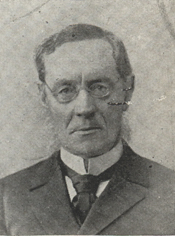
Historical · U.S. House · Massachusetts · District 7
William Everett
Former U.S. Representative · Massachusetts District 7 · 1893–1895 · Democratic
William Everett represented Massachusetts's District 7 in the United States House of Representatives (1893–1895) for the Democratic party. The page below collects sourced biographical facts, term history, committee roles, and provenance for Everett.
Bioguide ID: E000269
Key facts
- Full name
- William Everett
- State
- Massachusetts
- District
- District 7
- Party
- Democratic
- House service
- 1893–1895
- First House term
- 1893
- Status
- Left office
- Current term ends
- —
- Born
- 1839
- Bioguide ID
- E000269
- Committee assignments
- —
- Dataset version
- 1.20260606
Biographical narrative
899 words · sourced from the Wikipedia REST extract
William Everett was an American academic and politician who served as a U.S. Representative for Massachusetts's 7th congressional district. A member of the Democratic Party, he held office during the Fifty-third United States Congress, beginning his term in 1893 and concluding it in 1895. Everett's career was marked by his deep academic background and a commitment to education, which he pursued alongside his political ambitions. His legacy is intertwined with his family's historical significance, as he was the son of Edward Everett, a prominent figure in American politics and education.
Early life and career
William Everett was born on October 10, 1839, in Watertown, Massachusetts. He was the son of Charlotte Gray Brooks and Edward Everett, who served as the Governor of Massachusetts and as the U.S. Secretary of State. Growing up in a politically and intellectually stimulating environment, Everett was influenced by his father's prominence in public life and education. This background likely shaped his aspirations and commitment to both academic and civic engagement.
Everett's educational journey began at Harvard University, where he graduated in 1859. This foundational experience at one of the nation's most prestigious institutions provided him with a strong intellectual framework. After completing his undergraduate studies, he continued his education at Trinity College in Cambridge, England, where he graduated in 1863. Following his time in England, he returned to Harvard to study law, graduating from the law department in 1865. His legal education prepared him for a career in public service and advocacy.
In 1866, Everett was admitted to the bar, allowing him to practice law in Massachusetts. His legal career, however, was complemented by a strong inclination towards education. In 1870, he began tutoring at Harvard University, a role he maintained until 1873. His dedication to education led to his promotion to assistant professor of Latin, a position he held until 1877. During this period, he contributed to the academic community and helped shape the educational experiences of many students.
In 1878, Everett took on the role of master at Adams Academy, a prestigious preparatory school in Massachusetts. This position allowed him to influence the education of young minds and further solidified his commitment to academic excellence. His tenure at Adams Academy was significant, as he worked to foster an environment conducive to learning and personal growth. However, his career in education would take a turn as he transitioned into the political arena.
House tenure
In 1893, Everett left his position at Adams Academy to pursue a political career. He was elected to the Fifty-third United States Congress as a Democrat, representing Massachusetts's 7th congressional district. His election marked a significant shift from his previous focus on education to a role in national governance. During his time in Congress, Everett participated in legislative discussions and contributed to the shaping of policies that affected his constituents and the nation.
Everett's congressional term lasted until March 3, 1895. Although he served only one term, his time in the House of Representatives was marked by the challenges and responsibilities that come with public office. As a member of Congress, he was involved in the legislative process, working alongside other representatives to address various issues facing the nation during that period. His background in law and education likely informed his approach to governance and policy-making.
Following his congressional service, Everett sought to continue his public service by running for the office of Governor of Massachusetts. This decision reflected his desire to further engage in the political landscape of the state. However, he faced a competitive election against the incumbent governor, Roger Wolcott, and was ultimately unsuccessful in his bid for the governorship. This defeat marked a turning point in his political career, leading him back to his previous role in education.
Legislative focus and committees
While specific details regarding Everett's legislative focus and committee assignments during his time in Congress are not provided, it can be inferred that his background in education and law would have influenced his interests in various legislative matters. As a representative from Massachusetts, he would have been involved in discussions pertinent to the needs and concerns of his constituents, particularly those related to education, legal reform, and social issues of the time.
Everett's commitment to education was a significant aspect of his identity, and it is likely that he advocated for policies that promoted educational opportunities and resources. His experience as an educator and administrator at Adams Academy would have provided him with insights into the challenges faced by schools and students, potentially guiding his legislative priorities.
After concluding his term in Congress, Everett returned to his role as master of Adams Academy in 1897. This return to education underscored his enduring passion for teaching and mentoring young individuals. He continued to contribute to the academic community until his passing on February 16, 1910. Everett was interred alongside his parents in Mount Auburn Cemetery in Cambridge, Massachusetts, a final resting place that reflects his family's historical significance in the region.
William Everett's life and career exemplify the intertwining of education and public service. His journey from an academic to a politician highlights the importance of civic engagement and the impact that individuals can have on their communities. Through his work in Congress and his dedication to education, Everett left a legacy that continues to resonate in discussions about the role of education in society and the responsibilities of public officials.
Notable legislation
Sponsored and co-sponsored legislation for William Everett is pending operator curation. The biographical narrative above carries the same provenance trail until per-bill rows are written.
Sources
- [1]https://en.wikipedia.org/wiki/William_EverettWikipedia · retrieved 2026-06-06
Notable quotes
Sourced quotes for William Everett are pending operator curation. Narrative-scope provenance remains attached below.
Sources
- [1]https://en.wikipedia.org/wiki/William_EverettWikipedia · retrieved 2026-06-06
Key positions
Curated policy positions for William Everett are pending operator review. The biographical narrative above carries the same provenance trail until per-topic positions are written.
Sources
- [1]https://en.wikipedia.org/wiki/William_EverettWikipedia · retrieved 2026-06-06
Terms served
- 1893–1895U.S. House · Term 1 · Democratic
Sources & provenance
Every attributable claim above carries a per-section [N] marker that resolves to the corresponding URL below. Each entry records the upstream provider, the canonical URL, and the timestamp at which the source was retrieved by the ingest pipeline.
Key facts
- https://bioguide.congress.gov/search/bio/E000269bioguide · retrieved 2026-06-06
- https://www.govtrack.us/congress/members/403948govtrack · retrieved 2026-06-06
Biographical narrative
- https://en.wikipedia.org/wiki/William_Everettwikipedia · retrieved 2026-06-06
Find your representative
Every U.S. state elects representatives by district. Browse Massachusetts’s delegation, the full former-representative roster, or explore the role and term length.
Related on The Candidate
- Preceded by Eben StoneEarlier holder of the Massachusetts District 7 House seat · Republican.Open
- Succeeded by William BarrettLater holder of the Massachusetts District 7 House seat · Republican.Open
- Abbott LawrenceFormer U.S. Representative · Massachusetts District 1 · WhigOpen
- Allen TreadwayFormer U.S. Representative · Massachusetts District 1 · RepublicanOpen
- Artemas Ward Jr.Former U.S. Representative · Massachusetts District 1 · FederalistOpen
- Ashley WrightFormer U.S. Representative · Massachusetts District 1 · RepublicanOpen