
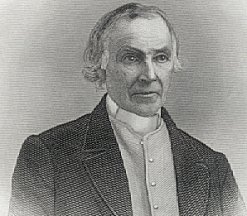
Historical · U.S. House · Massachusetts · District 8
John Baldwin
Former U.S. Representative · Massachusetts District 8 · 1863–1869 · Republican
John Baldwin represented Massachusetts's District 8 in the United States House of Representatives (1863–1869) for the Republican party. The page below collects sourced biographical facts, term history, committee roles, and provenance for Baldwin.
Bioguide ID: B000091
Key facts
- Full name
- John Baldwin
- State
- Massachusetts
- District
- District 8
- Party
- Republican
- House service
- 1863–1869
- First House term
- 1863
- Status
- Left office
- Current term ends
- —
- Born
- 1809
- Bioguide ID
- B000091
- Committee assignments
- —
- Dataset version
- 1.20260606
Biographical narrative
936 words · sourced from the Wikipedia REST extract
John Baldwin was an American politician, Congregationalist minister, newspaper editor, and anthropological writer who served as a U.S. Representative for Massachusetts's 8th congressional district. He was a member of the Republican Party and held office during the tumultuous years surrounding the Civil War and Reconstruction. Baldwin's tenure in the House of Representatives was marked by his advocacy for civil rights, particularly for African Americans, and his involvement in various social and political movements of his time. His career spanned multiple domains, including journalism and anthropology, reflecting a diverse set of interests and contributions to American society.
Early life and career
John Baldwin was born on September 28, 1809. He pursued higher education at Yale University, where he initially studied law before shifting his focus to theology. He graduated from Yale Divinity School in 1834, earning a degree that would lead him to a career in the ministry. Following his graduation, Baldwin became a Congregationalist minister, serving congregations in several towns in Connecticut, including West Woodstock, North Branford, and North Killingly. His early career in ministry was complemented by his involvement in education and public service, as he was awarded an honorary Master of Arts degree by Yale in 1839.
Baldwin's political engagement began in earnest when he was elected to the Connecticut State House of Representatives in 1847. His political activities were closely aligned with the Free Soil movement, which opposed the expansion of slavery into the territories of the United States. Baldwin's commitment to anti-slavery causes was further demonstrated through his editorial work. He edited several anti-slavery journals, including the "Republican" in Hartford and the "Commonwealth" in Boston. In 1859, he became the owner and editor of the "Worcester Spy," a newspaper that gained prominence in New England and was noted for its influence during a critical period in American history.
Baldwin's residence in Worcester, Massachusetts, marked a significant transition in his life. He became a delegate to the 1860 Republican National Convention, where he supported the nomination of Abraham Lincoln for the presidency. This involvement in national politics set the stage for his election to the U.S. House of Representatives in 1863.
House tenure
Baldwin's congressional career began in 1863 when he was elected to represent Massachusetts's 8th congressional district. He served three consecutive terms in the House, during which he became known for his advocacy of civil rights, particularly in the aftermath of the Civil War. Baldwin was a close ally of prominent Massachusetts senators Charles Sumner and Henry Wilson, both of whom were influential figures in the fight for equal rights for African Americans.
Throughout his time in Congress, Baldwin focused on issues related to Reconstruction and the rights of freed slaves. He was an active participant in debates concerning civil rights legislation and worked to promote policies that would ensure full equality for black Americans. His efforts were part of a broader movement within the Republican Party during this period, which sought to redefine the social and political landscape of the nation following the end of the Civil War.
Baldwin's legislative activities included speeches and writings that addressed the pressing issues of his time. He engaged in discussions about state sovereignty, treason, and the rights of individuals in the context of a nation rebuilding itself. His contributions to the House of Representatives were characterized by a commitment to justice and equality, reflecting the values of the Republican Party during the Reconstruction era.
In 1869, Baldwin's congressional career came to an end when he chose not to seek re-election. He returned to his journalistic pursuits and continued to edit the "Worcester Spy," a position he held until his death in 1883. His departure from Congress coincided with the nomination of George F. Hoar as the Republican candidate for Baldwin's seat, marking a transition in the political landscape of Massachusetts.
Legislative focus and committees
During his time in the House of Representatives, Baldwin was involved in various legislative initiatives that aligned with his advocacy for civil rights and social justice. His speeches and writings addressed critical issues such as the rights of African Americans, the implications of Reconstruction policies, and the broader themes of human rights. Baldwin's commitment to these causes was evident in his participation in debates and discussions that shaped the legislative agenda of the time.
Baldwin's work extended beyond the confines of Congress. He was a member of the American Antiquarian Society, reflecting his interest in history and anthropology. His scholarly pursuits included writing on topics related to human civilization and the origins of various cultures. Baldwin's anthropological writings posited theories about the development of human societies, suggesting that early civilizations arose among specific groups in Northeast Africa or Arabia. He also speculated on the origins of the Mound Builders, a prehistoric people believed to have constructed significant earthworks in North America.
In addition to his legislative focus on civil rights, Baldwin's writings contributed to the discourse on anthropology and archaeology in the United States. His works, including "Pre-Historic Nations" and "Ancient America," explored the complexities of human history and the diverse cultures that have shaped the American landscape. These contributions underscored Baldwin's multifaceted interests and his desire to engage with the intellectual currents of his time.
Overall, John Baldwin's tenure in the U.S. House of Representatives was marked by a commitment to civil rights, social justice, and scholarly inquiry. His legacy as a politician, minister, and writer reflects the dynamic interplay of these roles in shaping the political and cultural landscape of 19th-century America. Baldwin's work continues to be recognized for its contributions to the ongoing dialogue about equality and human rights in the United States.
Notable legislation
Sponsored and co-sponsored legislation for John Baldwin is pending operator curation. The biographical narrative above carries the same provenance trail until per-bill rows are written.
Sources
- [1]https://en.wikipedia.org/wiki/John_D._BaldwinWikipedia · retrieved 2026-06-06
Notable quotes
Sourced quotes for John Baldwin are pending operator curation. Narrative-scope provenance remains attached below.
Sources
- [1]https://en.wikipedia.org/wiki/John_D._BaldwinWikipedia · retrieved 2026-06-06
Key positions
Curated policy positions for John Baldwin are pending operator review. The biographical narrative above carries the same provenance trail until per-topic positions are written.
Sources
- [1]https://en.wikipedia.org/wiki/John_D._BaldwinWikipedia · retrieved 2026-06-06
Terms served
- 1863–1865U.S. House · Term 1 · Republican
- 1865–1867U.S. House · Term 2 · Republican
- 1867–1869U.S. House · Term 3 · Republican
Sources & provenance
Every attributable claim above carries a per-section [N] marker that resolves to the corresponding URL below. Each entry records the upstream provider, the canonical URL, and the timestamp at which the source was retrieved by the ingest pipeline.
Key facts
- https://bioguide.congress.gov/search/bio/B000091bioguide · retrieved 2026-06-06
- https://www.govtrack.us/congress/members/401093govtrack · retrieved 2026-06-06
Biographical narrative
- https://en.wikipedia.org/wiki/John_D._Baldwinwikipedia · retrieved 2026-06-06
Find your representative
Every U.S. state elects representatives by district. Browse Massachusetts’s delegation, the full former-representative roster, or explore the role and term length.
Related on The Candidate
- Preceded by Charles TrainEarlier holder of the Massachusetts District 8 House seat · Republican.Open
- Succeeded by John WilliamsLater holder of the Massachusetts District 8 House seat · Republican.Open
- Abbott LawrenceFormer U.S. Representative · Massachusetts District 1 · WhigOpen
- Allen TreadwayFormer U.S. Representative · Massachusetts District 1 · RepublicanOpen
- Artemas Ward Jr.Former U.S. Representative · Massachusetts District 1 · FederalistOpen
- Ashley WrightFormer U.S. Representative · Massachusetts District 1 · RepublicanOpen