
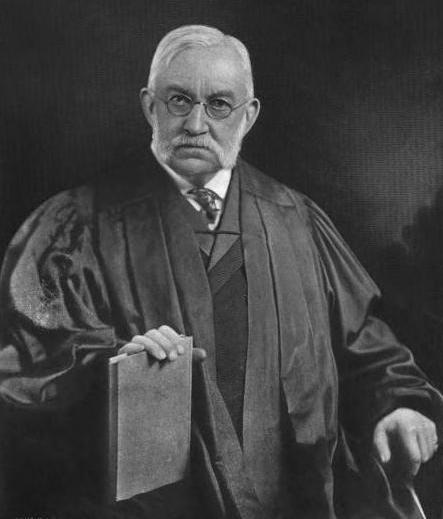
Historical · U.S. House · Massachusetts · District 9
Frederick Ely
Former U.S. Representative · Massachusetts District 9 · 1885–1887 · Republican
Frederick Ely represented Massachusetts's District 9 in the United States House of Representatives (1885–1887) for the Republican party. The page below collects sourced biographical facts, term history, committee roles, and provenance for Ely.
Bioguide ID: E000165
Key facts
- Full name
- Frederick Ely
- State
- Massachusetts
- District
- District 9
- Party
- Republican
- House service
- 1885–1887
- First House term
- 1885
- Status
- Left office
- Current term ends
- —
- Born
- 1838
- Bioguide ID
- E000165
- Committee assignments
- —
- Dataset version
- 1.20260606
Biographical narrative
882 words · sourced from the Wikipedia REST extract
Frederick Ely was a prominent figure in Massachusetts politics during the late 19th century, serving as a U.S. Representative for the state's 9th congressional district. A member of the Republican Party, Ely's political career was marked by his commitment to public service and his involvement in various levels of government. His tenure in the U.S. House of Representatives spanned from 1885 to 1887, after which he returned to his legal practice. Ely's life and career reflect the complexities of American political life during a transformative period in the nation's history.
Early life and career
Frederick David Ely was born on September 24, 1838, in Wrentham, Massachusetts. His early education took place at Day's Academy, a local institution that provided foundational learning. Ely demonstrated academic promise and continued his education at Brown University, where he graduated in 1859. Following his graduation, he pursued a career in law, a path that would shape much of his professional life.
After completing his legal studies, Ely was admitted to the bar and began practicing law in Dedham, Massachusetts. His legal career was complemented by a series of public service roles that showcased his commitment to his community. Ely served as a trial justice, a position that allowed him to adjudicate minor legal disputes and contribute to the local judicial system. His involvement in politics extended to the Massachusetts House of Representatives, where he represented his constituents and participated in legislative processes. Additionally, he served in the Massachusetts State Senate, further solidifying his reputation as a dedicated public servant.
Ely's commitment to education and community governance was evident in his role as a member of the Dedham school committee. This position allowed him to influence educational policy and ensure that the needs of local students were met. His diverse experiences in law, education, and government laid the groundwork for his future political career.
In his personal life, Frederick Ely married Eliza Baldwin Whittier on December 6, 1866. Their marriage was a significant event in his life, but it was marked by tragedy when Eliza passed away on February 12, 1881. Ely later remarried to Anna Emerson on August 10, 1885, further shaping his personal narrative during a time of both personal and professional change.
House tenure
Frederick Ely's political career reached a new height when he was elected as a Republican to the United States House of Representatives. His term began on March 4, 1885, as he took office in the Forty-ninth Congress. During this period, Ely was part of a larger Republican majority in Congress, which was characterized by a focus on issues such as economic growth, infrastructure development, and the aftermath of the Civil War.
Ely's time in the House of Representatives was relatively brief, as he served only one term, concluding on March 3, 1887. His legislative contributions during this period are part of a broader historical context that included significant national discussions around industrialization and the role of government in regulating economic activity. However, specific details about the bills he sponsored or the committees he served on during his congressional tenure are not extensively documented.
Following his term in Congress, Ely sought re-election to the Fiftieth Congress in 1886 but was unsuccessful in his bid. This defeat marked a turning point in his political career, leading him to return to his legal practice. His experience in Congress, however, provided him with valuable insights into the workings of federal government and the legislative process.
Legislative focus and committees
While specific details regarding Frederick Ely's legislative focus and committee assignments during his time in the House of Representatives are not extensively recorded, it is important to understand the broader political landscape of the era in which he served. The late 19th century was a time of significant change in the United States, characterized by rapid industrialization, urbanization, and shifts in social dynamics. Ely, as a member of the Republican Party, would have been aligned with the party's goals of promoting economic growth and supporting business interests.
Given his background in law and his experience in state government, it is likely that Ely's legislative interests included issues related to legal reform, education, and local governance. His prior roles in the Massachusetts House of Representatives and State Senate would have informed his understanding of the legislative process and the importance of effective governance at both state and federal levels.
After leaving Congress, Ely continued to serve the public in a different capacity. He was appointed as a justice of the Municipal Court of Boston, a position he held from 1888 until 1914. This role allowed him to remain engaged in the legal system and contribute to the administration of justice in the city. His long tenure on the bench further exemplified his commitment to public service and the law.
Frederick Ely's life came to a close on August 6, 1921, when he passed away at his home in Dedham, Massachusetts. His contributions to his community and the state of Massachusetts were recognized through his various roles in public service, and he was laid to rest in Old Village Cemetery. Ely's legacy is reflective of a period in American history marked by significant political and social change, and his career serves as an example of the dedication required for public service in the United States.
Notable legislation
Sponsored and co-sponsored legislation for Frederick Ely is pending operator curation. The biographical narrative above carries the same provenance trail until per-bill rows are written.
Sources
- [1]https://en.wikipedia.org/wiki/Frederick_D._ElyWikipedia · retrieved 2026-06-06
Notable quotes
Sourced quotes for Frederick Ely are pending operator curation. Narrative-scope provenance remains attached below.
Sources
- [1]https://en.wikipedia.org/wiki/Frederick_D._ElyWikipedia · retrieved 2026-06-06
Key positions
Curated policy positions for Frederick Ely are pending operator review. The biographical narrative above carries the same provenance trail until per-topic positions are written.
Sources
- [1]https://en.wikipedia.org/wiki/Frederick_D._ElyWikipedia · retrieved 2026-06-06
Terms served
- 1885–1887U.S. House · Term 1 · Republican
Sources & provenance
Every attributable claim above carries a per-section [N] marker that resolves to the corresponding URL below. Each entry records the upstream provider, the canonical URL, and the timestamp at which the source was retrieved by the ingest pipeline.
Key facts
- https://bioguide.congress.gov/search/bio/E000165bioguide · retrieved 2026-06-06
- https://www.govtrack.us/congress/members/403856govtrack · retrieved 2026-06-06
Biographical narrative
- https://en.wikipedia.org/wiki/Frederick_D._Elywikipedia · retrieved 2026-06-06
Find your representative
Every U.S. state elects representatives by district. Browse Massachusetts’s delegation, the full former-representative roster, or explore the role and term length.
Related on The Candidate
- Preceded by Theodore LymanEarlier holder of the Massachusetts District 9 House seat · Ind. Republican.Open
- Succeeded by Edward BurnettLater holder of the Massachusetts District 9 House seat · Democratic.Open
- Abbott LawrenceFormer U.S. Representative · Massachusetts District 1 · WhigOpen
- Allen TreadwayFormer U.S. Representative · Massachusetts District 1 · RepublicanOpen
- Artemas Ward Jr.Former U.S. Representative · Massachusetts District 1 · FederalistOpen
- Ashley WrightFormer U.S. Representative · Massachusetts District 1 · RepublicanOpen