
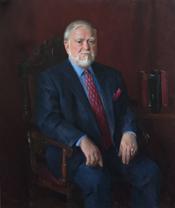
Historical · U.S. House · Massachusetts · District 9
John Moakley
Former U.S. Representative · Massachusetts District 9 · 1973–2001 · Democratic
John Moakley represented Massachusetts's District 9 in the United States House of Representatives (1973–2001) for the Democratic party. The page below collects sourced biographical facts, term history, committee roles, and provenance for Moakley.
Bioguide ID: M000834
Key facts
- Full name
- John Moakley
- State
- Massachusetts
- District
- District 9
- Party
- Democratic
- House service
- 1973–2001
- First House term
- 1973
- Status
- Left office
- Current term ends
- —
- Born
- 1927
- Bioguide ID
- M000834
- Committee assignments
- —
- Dataset version
- 1.20260605
Biographical narrative
955 words · sourced from the Wikipedia REST extract
John Joseph Moakley was an American politician who served as a U.S. Representative for Massachusetts's 9th congressional district from 1973 until his death in 2001. A member of the Democratic Party, Moakley was known for his long tenure in Congress, during which he held significant leadership roles, including serving as the chairman of the House Committee on Rules. His political career was marked by a commitment to various social issues, particularly in relation to Central America, and he was recognized for his efforts in legislative oversight and community service. Moakley's legacy is commemorated through various public spaces and institutions named in his honor.
Early life and career
John Joseph Moakley was born on April 27, 1927, in South Boston, Massachusetts. He grew up in the Old Harbor public housing project, which shaped his understanding of the challenges faced by working-class families. At a young age, he enlisted in the United States Navy during World War II, serving from 1943 to 1946 in the Pacific Theater. Following his military service, Moakley pursued higher education, attending the University of Miami in Florida for a brief period before earning his LL.B. from Suffolk University Law School in Boston in 1956.
After completing his education, Moakley partnered with a fellow law school graduate, Daniel W. Healy, to establish a law practice in South Boston in 1958. This partnership lasted until the late 1970s and allowed Moakley to build a reputation in his community. His political career began in earnest when he was elected to the Massachusetts House of Representatives, where he served from 1953 to 1963. He then moved to the Massachusetts Senate, serving from 1964 to 1970. Moakley was also a delegate to the 1968 Democratic National Convention, further solidifying his involvement in politics.
In 1970, he ran for the U.S. House of Representatives, seeking to succeed longtime Congressman John W. McCormack, who had announced his retirement. However, he lost the Democratic primary to Louise Day Hicks, who had garnered support due to her opposition to school desegregation. Moakley continued his political journey by serving on the Boston City Council from 1971 to 1973. His persistence paid off in 1972 when he ran against Hicks again, this time as an independent candidate, and won by a margin of 3,448 votes. He was sworn into Congress on January 3, 1973, shortly after rejoining the Democratic Party.
House tenure
Throughout his congressional career, Moakley was re-elected 14 times, demonstrating a strong connection with his constituents. He faced significant opposition only a handful of times, with most of his elections resulting in either unopposed runs or minor-party challengers. Moakley’s long tenure in the House of Representatives lasted until May 28, 2001, when he passed away while still in office. His ability to maintain a strong electoral base can be attributed to his commitment to the needs of his constituents and his active engagement in local issues.
During his time in Congress, Moakley held several influential positions, most notably as the chairman of the House Committee on Rules from the 101st to the 103rd Congress. This role placed him at the center of legislative decision-making and allowed him to influence the flow of legislation in the House. Moakley was known for his opposition to the legislative veto, a mechanism that gained traction in the 1970s. He successfully challenged a controversial bill that sought to institutionalize the legislative veto, a position that was later upheld by the Supreme Court in the landmark case INS v. Chadha in 1983.
In addition to his legislative work, Moakley was involved in various investigations and initiatives. Notably, he led a special panel known as the Moakley Commission, which investigated the 1989 murders of six Jesuit priests and two women in El Salvador. The commission's findings played a crucial role in shaping U.S. foreign policy, leading to the cessation of military aid to El Salvador due to the involvement of high-ranking Salvadoran military officials in the killings.
Legislative focus and committees
Moakley's legislative focus encompassed a range of issues, with a particular emphasis on social justice and foreign policy. His commitment to humanitarian causes was evident in his efforts to address the complexities of U.S. involvement in Central America, particularly in El Salvador. He was recognized for his advocacy against the war in El Salvador and for his compassionate approach to serving his constituents in Massachusetts. His dedication to these issues earned him posthumous recognition, including the Peace Abbey Courage of Conscience Award in 2002.
In addition to his work on the Moakley Commission, Moakley was instrumental in securing funding for educational initiatives in his district. His efforts led to a significant grant for Bridgewater State College, which facilitated the construction of a new regional telecommunications facility and enhanced educational resources for local professionals. The John Joseph Moakley Center for Technological Applications at Bridgewater State College was established as a result of these initiatives, providing training in technology for students and educators.
Moakley's contributions to his community and the nation extended beyond his legislative duties. He was honored with several memorials and institutions named after him, including Joe Moakley Park in South Boston and the John Joseph Moakley United States Courthouse in Boston. These tributes reflect his enduring impact on both local and national levels.
In his personal life, Moakley faced health challenges later in his career, ultimately announcing in 2001 that he would not seek re-election due to his battle with myelodysplastic syndrome. He passed away on May 28, 2001, in Bethesda, Maryland, leaving behind a legacy of public service and dedication to the principles of democracy and social justice. His contributions to the U.S. Congress and his community continue to be recognized and remembered through various honors and institutions established in his name.
Notable legislation
Sponsored and co-sponsored legislation for John Moakley is pending operator curation. The biographical narrative above carries the same provenance trail until per-bill rows are written.
Sources
- [1]https://en.wikipedia.org/wiki/Joe_MoakleyWikipedia · retrieved 2026-06-05
Notable quotes
Sourced quotes for John Moakley are pending operator curation. Narrative-scope provenance remains attached below.
Sources
- [1]https://en.wikipedia.org/wiki/Joe_MoakleyWikipedia · retrieved 2026-06-05
Key positions
Curated policy positions for John Moakley are pending operator review. The biographical narrative above carries the same provenance trail until per-topic positions are written.
Sources
- [1]https://en.wikipedia.org/wiki/Joe_MoakleyWikipedia · retrieved 2026-06-05
Terms served
- 1973–1975U.S. House · Term 1 · Ind. Democrat
- 1975–1977U.S. House · Term 2 · Democratic
- 1977–1979U.S. House · Term 3 · Democratic
- 1979–1981U.S. House · Term 4 · Democratic
- 1981–1983U.S. House · Term 5 · Democratic
- 1983–1985U.S. House · Term 6 · Democratic
- 1985–1987U.S. House · Term 7 · Democratic
- 1987–1989U.S. House · Term 8 · Democratic
- 1989–1991U.S. House · Term 9 · Democratic
- 1991–1993U.S. House · Term 10 · Democratic
- 1993–1995U.S. House · Term 11 · Democratic
- 1995–1997U.S. House · Term 12 · Democratic
- 1997–1999U.S. House · Term 13 · Democratic
- 1999–2001U.S. House · Term 14 · Democratic
- 2001–2001U.S. House · Term 15 · Democratic
Sources & provenance
Every attributable claim above carries a per-section [N] marker that resolves to the corresponding URL below. Each entry records the upstream provider, the canonical URL, and the timestamp at which the source was retrieved by the ingest pipeline.
Key facts
- https://bioguide.congress.gov/search/bio/M000834bioguide · retrieved 2026-06-05
- https://www.govtrack.us/congress/members/400600govtrack · retrieved 2026-06-05
Biographical narrative
- https://en.wikipedia.org/wiki/Joe_Moakleywikipedia · retrieved 2026-06-05
Find your representative
Every U.S. state elects representatives by district. Browse Massachusetts’s delegation, the full former-representative roster, or explore the role and term length.
Related on The Candidate
- Preceded by Louise HicksEarlier holder of the Massachusetts District 9 House seat · Democratic.Open
- Abbott LawrenceFormer U.S. Representative · Massachusetts District 1 · WhigOpen
- Allen TreadwayFormer U.S. Representative · Massachusetts District 1 · RepublicanOpen
- Artemas Ward Jr.Former U.S. Representative · Massachusetts District 1 · FederalistOpen
- Ashley WrightFormer U.S. Representative · Massachusetts District 1 · RepublicanOpen
- Democratic PartyFederal candidates and office holders on the Democratic line.Open