
Historical · U.S. House · Massachusetts · District 9
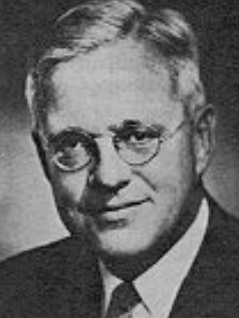
Thomas Eliot
Former U.S. Representative · Massachusetts District 9 · 1941–1943 · Democratic
Thomas Eliot represented Massachusetts's District 9 in the United States House of Representatives (1941–1943) for the Democratic party. The page below collects sourced biographical facts, term history, committee roles, and provenance for Eliot.
Bioguide ID: E000107
Key facts
- Full name
- Thomas Eliot
- State
- Massachusetts
- District
- District 9
- Party
- Democratic
- House service
- 1941–1943
- First House term
- 1941
- Status
- Left office
- Current term ends
- —
- Born
- 1907
- Bioguide ID
- E000107
- Committee assignments
- —
- Dataset version
- 1.20260605
Biographical narrative
902 words · sourced from the Wikipedia REST extract
Thomas Eliot was an American lawyer, politician, and academic who served as a U.S. Representative for Massachusetts's 9th congressional district from 1941 to 1943. A member of the Democratic Party, Eliot's political career was marked by his involvement in various governmental roles before and after his tenure in Congress. He was also known for his academic contributions, particularly in political science, and held significant positions at Washington University in St. Louis, including chancellor.
Early life and career
Thomas Eliot was born on June 14, 1907, in Cambridge, Massachusetts, into a distinguished family with deep roots in American academia and religion. His father, Samuel A. Eliot II, was a prominent Unitarian minister and served as president of the American Unitarian Association at the time of Thomas's birth. His grandfather, Charles W. Eliot, was notable for his long tenure as president of Harvard University, which further established the family's legacy in education.
Eliot's early education took place at Browne & Nichols School in Cambridge, where he laid the foundation for his future academic pursuits. He went on to graduate from Harvard University in 1928 and spent a year studying at Emmanuel College in Cambridge, England. Following his time abroad, Eliot returned to Harvard Law School, earning his law degree in 1932. He was admitted to the bar in 1933, beginning his legal career in Buffalo, New York.
Eliot's early professional life included significant roles in various governmental capacities. From 1933 to 1935, he served as an assistant solicitor in the United States Department of Labor. He then took on the role of general counsel for the Social Security Board from 1935 to 1937. His academic interests led him back to Harvard University, where he lectured on government from 1937 to 1938. Subsequently, he became the regional director of the Wage and Hour Division in the Department of Labor from 1939 to 1940, further solidifying his expertise in labor issues.
House tenure
Eliot's political career in the U.S. House of Representatives began when he ran for election to the Seventy-sixth Congress in 1938. However, he was unsuccessful in this initial attempt, losing to Republican incumbent Robert Luce. Undeterred, Eliot sought a rematch in 1940 and successfully defeated Luce, winning a seat in the Seventy-seventh Congress. His term began on January 3, 1941, and lasted until January 3, 1943.
During his time in Congress, Eliot was involved in various legislative activities, although specific details regarding his voting record or particular bills he supported are not available. His tenure was cut short when he was unsuccessful in his bid for renomination in 1942 for the Seventy-eighth Congress, as well as in 1944 for the Seventy-ninth Congress. His opponent in both instances was James M. Curley, a well-known and colorful figure in Boston politics.
After leaving Congress, Eliot served in various capacities during World War II. He was appointed as director of the British Division for the Office of War Information in London and later became a special assistant to the United States Ambassador. His contributions during the war included serving as chairman of the appeals committee of the National War Labor Board from 1943 to 1944 and working with the Office of Strategic Services in 1944. From November 1944 to November 1945, he held the position of chief counsel of the Division of Power within the U.S. Department of the Interior.
Legislative focus and committees
While specific details about Eliot's legislative focus during his time in the House are limited, it is known that he was a member of the Democratic Party, which at the time was focused on various issues, including labor rights, social welfare, and civil rights. His background in law and government likely influenced his perspectives on these matters, as he had extensive experience in labor relations and social security prior to his congressional service.
After his congressional tenure, Eliot returned to the practice of law in Boston from 1945 to 1950. He then transitioned back into academia, serving as the executive director of the Massachusetts Special Commission on the Structure of the State Government from 1950 to 1952. In 1952, he joined Washington University in St. Louis as a professor of political science, where he contributed to the academic field with publications such as "Governing America: the Politics of a Free People" and "American Government: Problems and Readings in Political Analysis."
Eliot's academic career continued to flourish as he became a professor of constitutional law from 1958 to 1961. He later took on administrative roles at Washington University, serving as dean of the College of Liberal Arts from 1961 to 1962 and as chancellor from 1962 to 1971. His influence extended beyond the university as he served as vice chairman of the United States Commission on Intergovernmental Relations from 1964 to 1966 and as president of the Salzburg Global Seminar from 1971 to 1977.
Eliot's contributions to education and public service continued until his retirement from teaching at Buckingham, Browne & Nichols School in Cambridge, where he had previously attended, from 1977 to 1985. He remained active in various civic and educational initiatives throughout his life.
Eliot married Lois Jameson, and the couple had two children. He spent his later years in Cambridge, Massachusetts, where he passed away on October 14, 1991. He was interred at Mount Auburn Cemetery in Cambridge, marking the end of a life dedicated to public service, education, and the advancement of social and political issues.
Notable legislation
Sponsored and co-sponsored legislation for Thomas Eliot is pending operator curation. The biographical narrative above carries the same provenance trail until per-bill rows are written.
Sources
- [1]https://en.wikipedia.org/wiki/Thomas_H._EliotWikipedia · retrieved 2026-06-05
Notable quotes
Sourced quotes for Thomas Eliot are pending operator curation. Narrative-scope provenance remains attached below.
Sources
- [1]https://en.wikipedia.org/wiki/Thomas_H._EliotWikipedia · retrieved 2026-06-05
Key positions
Curated policy positions for Thomas Eliot are pending operator review. The biographical narrative above carries the same provenance trail until per-topic positions are written.
Sources
- [1]https://en.wikipedia.org/wiki/Thomas_H._EliotWikipedia · retrieved 2026-06-05
Terms served
- 1941–1943U.S. House · Term 1 · Democratic
Sources & provenance
Every attributable claim above carries a per-section [N] marker that resolves to the corresponding URL below. Each entry records the upstream provider, the canonical URL, and the timestamp at which the source was retrieved by the ingest pipeline.
Key facts
- https://bioguide.congress.gov/search/bio/E000107bioguide · retrieved 2026-06-05
- https://www.govtrack.us/congress/members/403798govtrack · retrieved 2026-06-05
Biographical narrative
- https://en.wikipedia.org/wiki/Thomas_H._Eliotwikipedia · retrieved 2026-06-05
Find your representative
Every U.S. state elects representatives by district. Browse Massachusetts’s delegation, the full former-representative roster, or explore the role and term length.
Related on The Candidate
- Preceded by Robert LuceEarlier holder of the Massachusetts District 9 House seat · Republican.Open
- Succeeded by Donald NicholsonLater holder of the Massachusetts District 9 House seat · Republican.Open
- Abbott LawrenceFormer U.S. Representative · Massachusetts District 1 · WhigOpen
- Allen TreadwayFormer U.S. Representative · Massachusetts District 1 · RepublicanOpen
- Artemas Ward Jr.Former U.S. Representative · Massachusetts District 1 · FederalistOpen
- Ashley WrightFormer U.S. Representative · Massachusetts District 1 · RepublicanOpen