
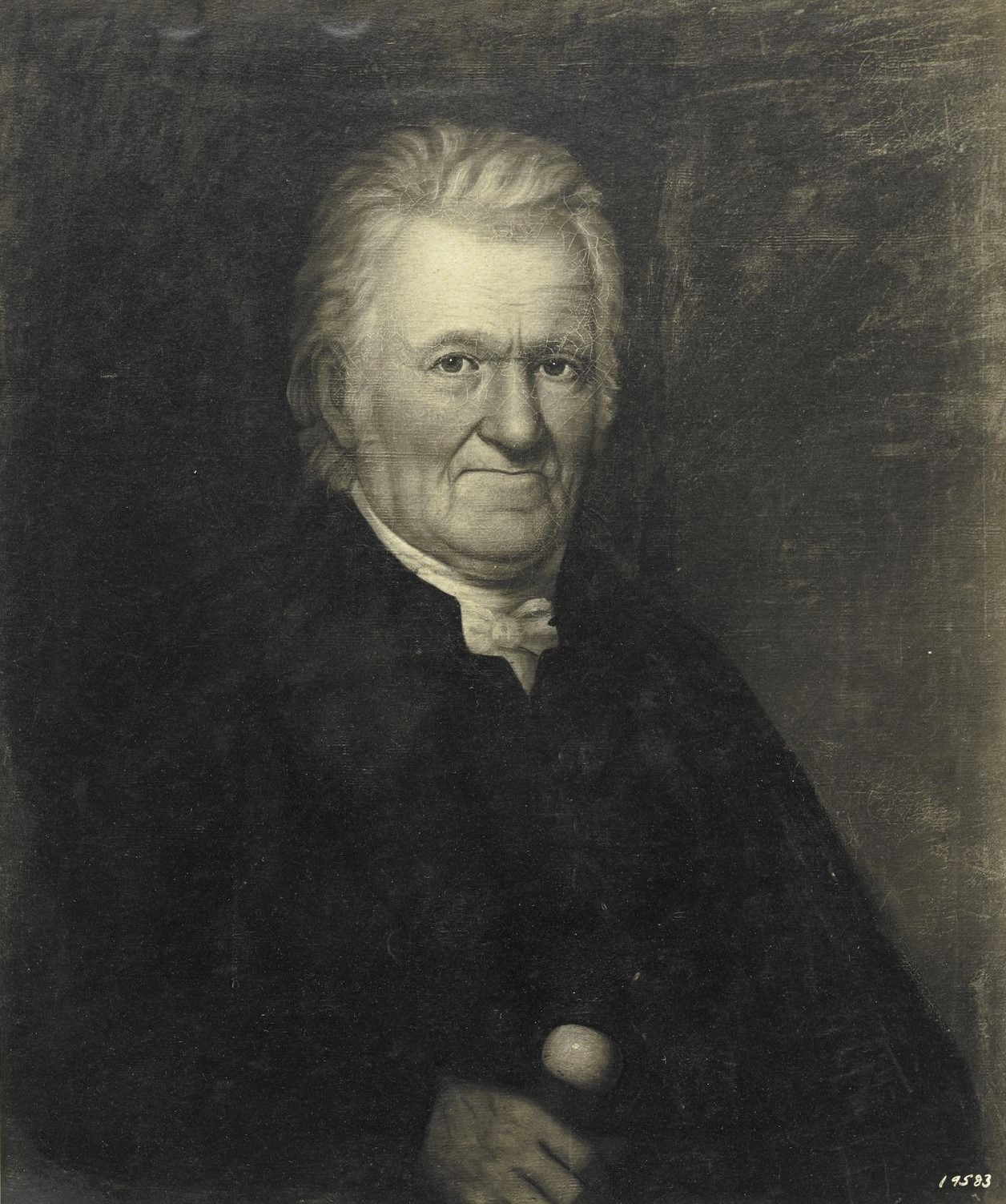
Historical · U.S. House · Massachusetts · District 9
Walter Folger Jr.
Former U.S. Representative · Massachusetts District 9 · 1817–1821 · Republican
Walter Folger Jr. represented Massachusetts's District 9 in the United States House of Representatives (1817–1821) for the Republican party. The page below collects sourced biographical facts, term history, committee roles, and provenance for Jr..
Bioguide ID: F000242
Key facts
- Full name
- Walter Folger Jr.
- State
- Massachusetts
- District
- District 9
- Party
- Republican
- House service
- 1817–1821
- First House term
- 1817
- Status
- Left office
- Current term ends
- —
- Born
- 1765
- Bioguide ID
- F000242
- Committee assignments
- —
- Dataset version
- 1.20260606
Biographical narrative
837 words · sourced from the Wikipedia REST extract
Walter Folger Jr. was a U.S. Representative from Massachusetts, serving in the House of Representatives during the early 19th century. A member of the Republican Party, he represented the 9th congressional district of Massachusetts. His congressional career spanned two terms, beginning in 1817 and concluding in 1821. Folger was born into a prominent family in Nantucket and had a background in law before entering politics. After his time in Congress, he returned to his legal practice until his death in 1849.
Early life and career
Walter Folger Jr. was born on June 12, 1765, in Nantucket, which was then part of the Province of Massachusetts Bay. He was born into a large family, which included notable relatives such as his sister, Phebe Folger Coleman, who was known for her diaries. Folger's ancestry is significant; he was the great-great-great-grandson of Peter Folger and Mary Morrell Folger, and he was also a distant cousin of Benjamin Franklin. This familial connection to Franklin, a prominent figure in American history, highlights Folger's roots in a family with a legacy of public service and intellectual achievement.
Folger's early education took place in public schools, where he developed a foundation in various subjects. Following his schooling, he pursued a career in law, which was a common path for many individuals seeking to enter public service during that era. After completing his legal studies, he was admitted to the bar and began practicing law in his home state. His legal career provided him with valuable experience and insights into the workings of government and society, which would later inform his political career.
Before his election to the U.S. House of Representatives, Folger served in the Massachusetts State Senate. This position allowed him to gain further experience in legislative matters and to establish connections within the political landscape of Massachusetts. His tenure in the state senate likely contributed to his understanding of the needs and concerns of his constituents, preparing him for his subsequent role in the federal government.
House tenure
Walter Folger Jr. was elected to the U.S. House of Representatives as a member of the Democratic-Republican Party, a political group that was prominent in the early years of the United States. He served in the Fifteenth Congress, which convened in 1817, and was subsequently re-elected to the Sixteenth Congress. His time in the House lasted from March 4, 1817, until March 3, 1821. During this period, Folger participated in the legislative process at a time when the nation was experiencing significant growth and change.
His congressional career was marked by the challenges and opportunities that accompanied the post-War of 1812 era. The United States was expanding its territory and grappling with issues related to governance, economic development, and national identity. Folger's role as a representative would have involved addressing these pressing matters, advocating for the interests of his constituents in Massachusetts, and contributing to the broader discussions that shaped the nation during this transformative period.
After completing his second term in the House, Folger chose not to seek re-election. He returned to his legal practice in Nantucket, where he continued to engage with the community and contribute to local affairs. His decision to step away from federal politics marked the end of his formal legislative career, but it did not diminish his involvement in public life.
Legislative focus and committees
While specific details regarding Walter Folger Jr.'s legislative focus and committee assignments during his time in the House of Representatives are not extensively documented, it can be inferred that, as a member of the Democratic-Republican Party, he would have aligned with the party's principles, which emphasized agrarian interests, states' rights, and a limited federal government. The Democratic-Republicans were known for their opposition to the Federalist Party, advocating for policies that favored the common man and rural communities.
Given Folger's background in law and his experience in the Massachusetts State Senate, it is likely that he brought a legal perspective to his legislative work. His contributions may have included discussions on issues related to commerce, land use, and the rights of states versus the federal government. The early 19th century was a time of significant economic development in the United States, and representatives like Folger would have been involved in shaping policies that impacted trade, infrastructure, and the burgeoning industrial economy.
After his congressional service, Folger returned to practicing law, indicating that he continued to apply his legal expertise in a different capacity. His legal background would have allowed him to remain engaged with the evolving legal landscape of the nation, even outside of formal political office.
Walter Folger Jr. passed away on September 8, 1849, in Nantucket, where he was interred in Friends Burying Ground. His life and career reflect the complexities of early American politics and the role of individuals in shaping the legislative framework of the nation. Through his service in the House of Representatives and his legal practice, Folger contributed to the development of Massachusetts and the broader United States during a pivotal era in its history.
Notable legislation
Sponsored and co-sponsored legislation for Walter Folger Jr. is pending operator curation. The biographical narrative above carries the same provenance trail until per-bill rows are written.
Sources
- [1]https://en.wikipedia.org/wiki/Walter_Folger_Jr.Wikipedia · retrieved 2026-06-06
Notable quotes
Sourced quotes for Walter Folger Jr. are pending operator curation. Narrative-scope provenance remains attached below.
Sources
- [1]https://en.wikipedia.org/wiki/Walter_Folger_Jr.Wikipedia · retrieved 2026-06-06
Key positions
Curated policy positions for Walter Folger Jr. are pending operator review. The biographical narrative above carries the same provenance trail until per-topic positions are written.
Sources
- [1]https://en.wikipedia.org/wiki/Walter_Folger_Jr.Wikipedia · retrieved 2026-06-06
Terms served
- 1817–1819U.S. House · Term 1 · Republican
- 1819–1821U.S. House · Term 2 · Republican
Sources & provenance
Every attributable claim above carries a per-section [N] marker that resolves to the corresponding URL below. Each entry records the upstream provider, the canonical URL, and the timestamp at which the source was retrieved by the ingest pipeline.
Key facts
- https://bioguide.congress.gov/search/bio/F000242bioguide · retrieved 2026-06-06
- https://www.govtrack.us/congress/members/404196govtrack · retrieved 2026-06-06
Biographical narrative
- https://en.wikipedia.org/wiki/Walter_Folger_Jr.wikipedia · retrieved 2026-06-06
Find your representative
Every U.S. state elects representatives by district. Browse Massachusetts’s delegation, the full former-representative roster, or explore the role and term length.
Related on The Candidate
- Preceded by Josiah DeanEarlier holder of the Massachusetts District 9 House seat · Republican.Open
- Succeeded by Henry DwightLater holder of the Massachusetts District 9 House seat.Open
- Abbott LawrenceFormer U.S. Representative · Massachusetts District 1 · WhigOpen
- Allen TreadwayFormer U.S. Representative · Massachusetts District 1 · RepublicanOpen
- Artemas Ward Jr.Former U.S. Representative · Massachusetts District 1 · FederalistOpen
- Ashley WrightFormer U.S. Representative · Massachusetts District 1 · RepublicanOpen