
Historical · U.S. House · Maryland · District 4
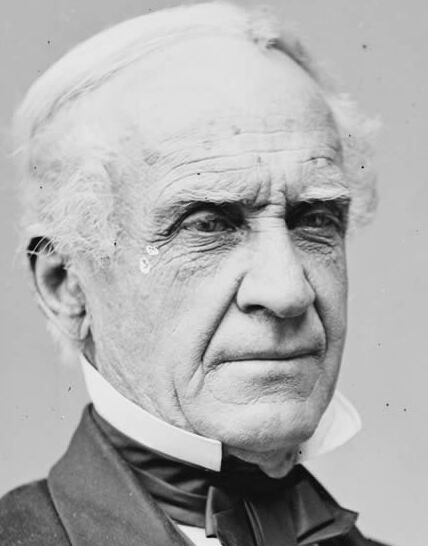
Francis Thomas
Former U.S. Representative · Maryland District 4 · 1831–1869 · Republican
Francis Thomas represented Maryland's District 4 in the United States House of Representatives (1831–1869) for the Republican party. The page below collects sourced biographical facts, term history, committee roles, and provenance for Thomas.
Bioguide ID: T000166
Key facts
- Full name
- Francis Thomas
- State
- Maryland
- District
- District 4
- Party
- Republican
- House service
- 1831–1869
- First House term
- 1831
- Status
- Left office
- Current term ends
- —
- Born
- 1799
- Bioguide ID
- T000166
- Committee assignments
- —
- Dataset version
- 1.20260606
Biographical narrative
850 words · sourced from the Wikipedia REST extract
Francis Thomas was an American politician who served as a U.S. Representative for Maryland's fourth congressional district and held various significant political roles throughout his career, including serving as the 26th governor of Maryland. His political journey spanned several decades, beginning in the early 19th century and concluding with his service as the U.S. Minister to Peru. Thomas's career was marked by his involvement in state and national politics, as well as his contributions to legislative committees and public service.
Early life and career
Francis Thomas was born on February 3, 1799, in Frederick County, Maryland, near the South Mountain area, which was known as the "Merryland tract." His early education included attendance at St. John's College in Annapolis, Maryland, where he laid the groundwork for his future career in law and politics. After completing his studies, Thomas pursued a legal career and was admitted to the bar in 1820. He began practicing law in Frankville, Maryland, where he established his professional reputation.
Thomas's entry into politics began with his election to the Maryland House of Delegates, where he served multiple terms in the early 1820s. His legislative career in the House of Delegates included serving as the 34th Speaker of the House in 1829. His experience in state politics provided him with a strong foundation for his subsequent congressional career.
House tenure
Francis Thomas's congressional career began when he was elected as a Jacksonian to the United States House of Representatives. He served in the Twenty-second through Twenty-fourth Congresses from March 4, 1831, until March 3, 1841. During this time, he transitioned to the Democratic Party and continued his service in the Twenty-fifth and Twenty-sixth Congresses. Throughout his tenure in the House, Thomas was actively involved in various legislative committees. He served as the chairman of the Committee on the Judiciary during the Twenty-fourth and Twenty-fifth Congresses and was also a member of the Committee on Naval Affairs in the Twenty-sixth Congress.
In addition to his legislative responsibilities, Thomas held the position of president of the Chesapeake & Ohio Canal Company in 1839 and 1840, further demonstrating his engagement in public infrastructure and development initiatives. His time in Congress was characterized by a commitment to addressing the issues facing his constituents and the nation.
After his initial congressional service, Thomas was elected as the Governor of Maryland in 1841, defeating his opponent, William Cost Johnson, by a narrow margin. His governorship lasted from 1842 to 1845, during which he faced significant challenges, including a state deficit and public discontent over proposed taxation measures. Following his governorship, Thomas returned to the political arena, participating in the Maryland State Constitutional Convention in 1850.
Thomas's return to the U.S. House of Representatives occurred when he was elected to the Thirty-seventh Congress as a Unionist. He continued to serve in the Thirty-eighth and Thirty-ninth Congresses as an Unconditional Unionist and later as a Republican in the Fortieth Congress. His final term in the House concluded on March 3, 1869, marking a total of nine congressional terms over nearly four decades.
Legislative focus and committees
Throughout his extensive legislative career, Francis Thomas focused on various issues pertinent to his constituents and the broader national context. His role as chairman of the Committee on the Judiciary during the Twenty-fourth and Twenty-fifth Congresses positioned him at the forefront of significant legal and constitutional discussions. This committee was instrumental in shaping legislation related to the judicial system, and Thomas's leadership contributed to the development of legal frameworks during a transformative period in American history.
In addition to his work on the Judiciary Committee, Thomas's involvement with the Committee on Naval Affairs in the Twenty-sixth Congress highlighted his interest in maritime and defense issues. This committee played a crucial role in overseeing naval operations and policies, particularly during a time when the nation was grappling with issues related to the Civil War and national security.
Thomas's political career also included participation as a delegate to the 1866 National Union Convention held in Philadelphia, Pennsylvania. This convention aimed to address the political landscape following the Civil War and sought to unify various factions within the country. His engagement in this convention underscored his commitment to national unity and reconciliation during a challenging period in American history.
After his congressional service, Thomas continued to contribute to public life as the collector of internal revenue for Maryland from 1870 until 1872. His appointment to this position reflected his ongoing involvement in governmental affairs and fiscal management.
In 1872, President Ulysses S. Grant appointed Thomas as the United States Minister to Peru, a role he held until 1875. This diplomatic position marked the culmination of his public service career, as he transitioned from domestic politics to international relations. Following his return from Peru, Thomas retired from public and professional life, focusing on agricultural pursuits until his death on January 22, 1876. He passed away tragically while overseeing improvements on his estate in Maryland, leaving behind a legacy of public service that spanned multiple facets of government and civic engagement. Thomas is interred in Rose Hill Cemetery in Cumberland, Maryland.
Notable legislation
Sponsored and co-sponsored legislation for Francis Thomas is pending operator curation. The biographical narrative above carries the same provenance trail until per-bill rows are written.
Sources
- [1]https://en.wikipedia.org/wiki/Francis_ThomasWikipedia · retrieved 2026-06-06
Notable quotes
Sourced quotes for Francis Thomas are pending operator curation. Narrative-scope provenance remains attached below.
Sources
- [1]https://en.wikipedia.org/wiki/Francis_ThomasWikipedia · retrieved 2026-06-06
Key positions
Curated policy positions for Francis Thomas are pending operator review. The biographical narrative above carries the same provenance trail until per-topic positions are written.
Sources
- [1]https://en.wikipedia.org/wiki/Francis_ThomasWikipedia · retrieved 2026-06-06
Terms served
- 1831–1833U.S. House · Term 1 · Jackson
- 1833–1835U.S. House · Term 2 · Jackson
- 1835–1837U.S. House · Term 3 · Jackson
- 1837–1839U.S. House · Term 4 · Democratic
- 1839–1841U.S. House · Term 5 · Democratic
- 1861–1863U.S. House · Term 6 · Unionist
- 1863–1865U.S. House · Term 7 · Unconditional Unionist
- 1865–1867U.S. House · Term 8 · Unconditional Unionist
- 1867–1869U.S. House · Term 9 · Republican
Sources & provenance
Every attributable claim above carries a per-section [N] marker that resolves to the corresponding URL below. Each entry records the upstream provider, the canonical URL, and the timestamp at which the source was retrieved by the ingest pipeline.
Key facts
- https://bioguide.congress.gov/search/bio/T000166bioguide · retrieved 2026-06-06
- https://www.govtrack.us/congress/members/410747govtrack · retrieved 2026-06-06
Biographical narrative
- https://en.wikipedia.org/wiki/Francis_Thomaswikipedia · retrieved 2026-06-06
Find your representative
Every U.S. state elects representatives by district. Browse Maryland’s delegation, the full former-representative roster, or explore the role and term length.
Related on The Candidate
- Preceded by Michael SpriggEarlier holder of the Maryland District 4 House seat · Jackson.Open
- Succeeded by Patrick HamillLater holder of the Maryland District 4 House seat · Democratic.Open
- Clement DorseyFormer U.S. Representative · Maryland District 1Open
- Daniel HenryFormer U.S. Representative · Maryland District 1 · DemocraticOpen
- David WardFormer U.S. Representative · Maryland District 1 · DemocraticOpen
- Dudley RoeFormer U.S. Representative · Maryland District 1 · DemocraticOpen