
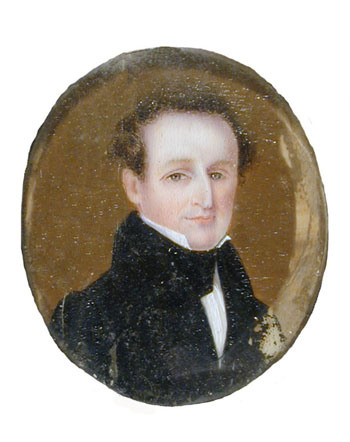
Historical · U.S. House · Maryland · District 4
Michael Sprigg
Former U.S. Representative · Maryland District 4 · 1827–1831 · Jackson
Michael Sprigg represented Maryland's District 4 in the United States House of Representatives (1827–1831) for the Jackson party. The page below collects sourced biographical facts, term history, committee roles, and provenance for Sprigg.
Bioguide ID: S000751
Key facts
- Full name
- Michael Sprigg
- State
- Maryland
- District
- District 4
- Party
- Jackson
- House service
- 1827–1831
- First House term
- 1827
- Status
- Left office
- Current term ends
- —
- Born
- 1791
- Bioguide ID
- S000751
- Committee assignments
- —
- Dataset version
- 1.20260606
Biographical narrative
826 words · sourced from the Wikipedia REST extract
Michael Sprigg was a U.S. Representative from Maryland who served in the House of Representatives during the late 1820s and early 1830s. A member of the Jacksonian party, he represented Maryland's 4th congressional district across two terms. His political career was marked by involvement in local governance and significant contributions to the development of infrastructure in Maryland. Sprigg's tenure in Congress was characterized by his role in overseeing expenditures related to public buildings, reflecting his engagement with issues of public infrastructure and fiscal responsibility.
Early life and career
Michael Sprigg was born on July 1, 1791, in Frostburg, Maryland. His early education included preparatory studies, although specific details regarding his educational background are not extensively documented. Following his formative years, Sprigg entered public service and began to build a career in local governance. He held various local offices, which provided him with the experience and political acumen necessary for a future in higher office.
Sprigg's political involvement expanded when he became a member of the Maryland House of Delegates. His service in this legislative body spanned multiple sessions, including the years 1821, 1823, 1837, 1840, and 1844. This period in the Maryland House allowed him to engage with state-level issues and establish a reputation as a dedicated public servant. His legislative experience at the state level would later inform his work in the U.S. Congress.
In addition to his legislative duties, Sprigg played a significant role in the development of Maryland's infrastructure. He served as president of the Chesapeake and Ohio Canal Company during the years 1841 and 1842. This position underscored his commitment to improving transportation and commerce in the region, as the canal was a crucial project aimed at enhancing trade routes and facilitating economic growth.
House tenure
Michael Sprigg's congressional career began when he was elected as a Jacksonian to the Twentieth Congress, serving from March 4, 1827, to March 3, 1831. His election to the House of Representatives marked a significant step in his political journey, allowing him to represent the interests of his constituents at the national level. During his time in Congress, Sprigg was involved in various legislative discussions and decisions that shaped the direction of federal policies.
Throughout his two terms in the House, Sprigg was appointed as chairman of the Committee on Expenditures on Public Buildings. This role was pivotal, as it placed him at the forefront of discussions regarding the allocation of funds and the management of public building projects. His leadership in this committee reflected his focus on fiscal responsibility and the effective use of government resources, which were critical issues during his tenure.
Sprigg's time in Congress coincided with a period of significant political change in the United States, as the Jacksonian movement sought to expand democratic participation and address the needs of the common citizen. As a member of this movement, Sprigg's legislative actions were likely influenced by the broader goals of promoting accessibility and accountability within the government.
Despite his contributions, Sprigg's congressional career concluded after two terms, with his last day in office on March 3, 1831. His departure from the House marked the end of a chapter in his public service, but it did not signify the end of his involvement in politics, as he continued to engage in local governance and community affairs in Maryland.
Legislative focus and committees
During his time in the U.S. House of Representatives, Michael Sprigg focused on issues related to public infrastructure and fiscal management. As chairman of the Committee on Expenditures on Public Buildings, he was responsible for overseeing the financial aspects of government construction projects. This role required a keen understanding of budgetary constraints and the importance of maintaining accountability in the use of public funds.
Sprigg's legislative priorities reflected the needs of his constituents and the broader goals of the Jacksonian party, which emphasized the importance of government responsiveness to the needs of the populace. His work on the committee involved scrutinizing expenditures and ensuring that public building projects were executed efficiently and effectively. This focus on infrastructure was particularly relevant during a time when the United States was expanding and developing its transportation networks.
In addition to his committee work, Sprigg's experience in the Maryland House of Delegates likely influenced his approach to legislation at the federal level. His background in state politics provided him with insights into the complexities of governance and the necessity of collaboration among various stakeholders. This experience would have been invaluable as he navigated the legislative process in Congress.
After leaving Congress, Sprigg continued to be active in public service, demonstrating a commitment to his community and the state of Maryland. His involvement in local governance and infrastructure projects underscored his dedication to improving the lives of those he represented. Michael Sprigg passed away on December 18, 1845, in Cumberland, Maryland, and was interred in Rose Hill Cemetery, leaving behind a legacy of public service and commitment to the development of his region.
Notable legislation
Sponsored and co-sponsored legislation for Michael Sprigg is pending operator curation. The biographical narrative above carries the same provenance trail until per-bill rows are written.
Sources
- [1]https://en.wikipedia.org/wiki/Michael_SpriggWikipedia · retrieved 2026-06-06
Notable quotes
Sourced quotes for Michael Sprigg are pending operator curation. Narrative-scope provenance remains attached below.
Sources
- [1]https://en.wikipedia.org/wiki/Michael_SpriggWikipedia · retrieved 2026-06-06
Key positions
Curated policy positions for Michael Sprigg are pending operator review. The biographical narrative above carries the same provenance trail until per-topic positions are written.
Sources
- [1]https://en.wikipedia.org/wiki/Michael_SpriggWikipedia · retrieved 2026-06-06
Terms served
- 1827–1829U.S. House · Term 1 · Jackson
- 1829–1831U.S. House · Term 2 · Jackson
Sources & provenance
Every attributable claim above carries a per-section [N] marker that resolves to the corresponding URL below. Each entry records the upstream provider, the canonical URL, and the timestamp at which the source was retrieved by the ingest pipeline.
Key facts
- https://bioguide.congress.gov/search/bio/S000751bioguide · retrieved 2026-06-06
- https://www.govtrack.us/congress/members/410219govtrack · retrieved 2026-06-06
Biographical narrative
- https://en.wikipedia.org/wiki/Michael_Spriggwikipedia · retrieved 2026-06-06
Find your representative
Every U.S. state elects representatives by district. Browse Maryland’s delegation, the full former-representative roster, or explore the role and term length.
Related on The Candidate
- Preceded by Thomas WorthingtonEarlier holder of the Maryland District 4 House seat · Adams.Open
- Succeeded by Francis ThomasLater holder of the Maryland District 4 House seat · Republican.Open
- Clement DorseyFormer U.S. Representative · Maryland District 1Open
- Daniel HenryFormer U.S. Representative · Maryland District 1 · DemocraticOpen
- David WardFormer U.S. Representative · Maryland District 1 · DemocraticOpen
- Dudley RoeFormer U.S. Representative · Maryland District 1 · DemocraticOpen