
Historical · U.S. House · Maryland · District 4
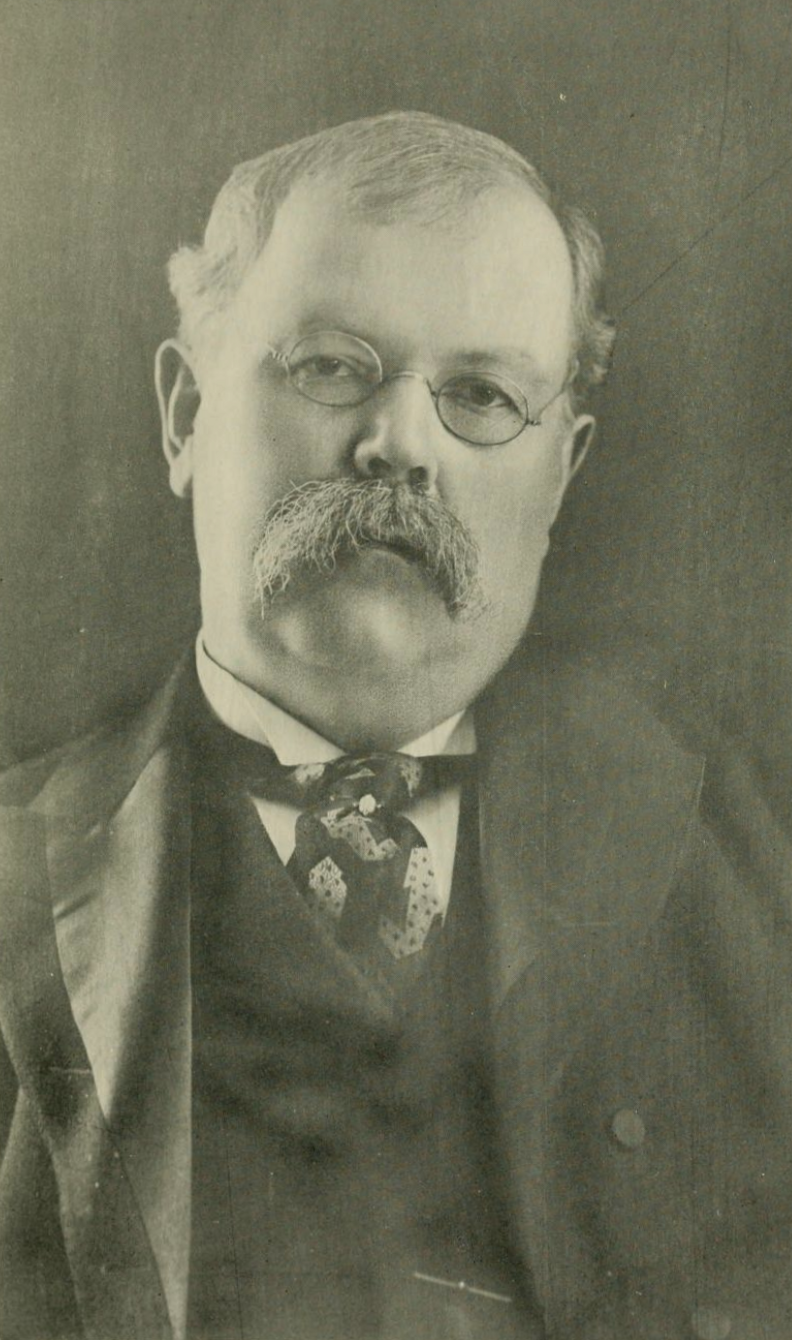
John Cowen
Former U.S. Representative · Maryland District 4 · 1895–1897 · Democratic
John Cowen represented Maryland's District 4 in the United States House of Representatives (1895–1897) for the Democratic party. The page below collects sourced biographical facts, term history, committee roles, and provenance for Cowen.
Bioguide ID: C000822
Key facts
- Full name
- John Cowen
- State
- Maryland
- District
- District 4
- Party
- Democratic
- House service
- 1895–1897
- First House term
- 1895
- Status
- Left office
- Current term ends
- —
- Born
- 1844
- Bioguide ID
- C000822
- Committee assignments
- —
- Dataset version
- 1.20260606
Biographical narrative
889 words · sourced from the Wikipedia REST extract
John Cowen was a prominent figure in late 19th-century American politics and business, serving as a U.S. Representative for Maryland's 4th congressional district from 1895 to 1897. A member of the Democratic Party, Cowen's tenure in Congress was marked by his involvement in banking and currency issues. Following his congressional service, he became the president of the Baltimore and Ohio Railroad, a significant role that underscored his influence in the transportation sector. His life spanned from October 28, 1844, until April 26, 1904, during which he made notable contributions to both public service and the railroad industry.
Early life and career
John Kissig Cowen was born on October 28, 1844, in a rural area near Millersburg, Ohio. His family background was rooted in Pennsylvania, where his parents had originated. His father worked as a blacksmith, having learned the trade in Rising Sun, Maryland. Cowen's early education took place in public schools and local academies, including the Vermillion Institute located in Fredericksburg and Hayesville, Ohio. His formative years included a brief period of teaching school from 1862 to 1863 in Millersburg, which provided him with valuable experience in education and leadership.
In 1863, Cowen enrolled at Jefferson College but had to leave due to health issues. He later graduated from Princeton College in 1866, where he formed a significant friendship with Robert Garrett, a relationship that would play an important role in his future career. After completing his studies at Princeton, Cowen returned to Millersburg, where he taught at a high school. His academic pursuits continued as he attended the University of Michigan Law School for one year, after which he was admitted to the bar in Ohio in 1868.
Following his admission to the bar, Cowen began his legal career in Mansfield, Ohio. He practiced law there and also served as the prosecuting attorney for Holmes County, a position that allowed him to gain practical experience in the legal system. Cowen's legal practice continued until 1872, when he made a significant decision to relocate to Baltimore, Maryland. This move was influenced by a message from his friend Robert Garrett, who had a notable impact on Cowen's professional trajectory.
House tenure
Upon moving to Baltimore in February 1872, Cowen was appointed as counsel for the Baltimore and Ohio Railroad, a position he held until 1876. His legal expertise and dedication to the railroad company led to his promotion to general counsel, a role he maintained until 1896. During his time with the railroad, Cowen became well-acquainted with the complexities of transportation law and the operational challenges faced by the industry.
In 1894, Cowen was elected as a Democrat to the Fifty-fourth Congress, representing Maryland's 4th congressional district. He succeeded Isidor Rayner and took office on March 4, 1895. His congressional service was characterized by his involvement in the committee on banking and currency, where he worked on issues related to financial regulation and the organization of the nation's treasury. Cowen's legislative focus during this period reflected the economic challenges of the time, as the country was navigating the complexities of a rapidly changing financial landscape.
Cowen's term in the House of Representatives lasted until March 3, 1897. However, he did not seek renomination for a subsequent term in 1896. Instead, he chose to resign from Congress to accept a prominent position with the Baltimore and Ohio Railroad. His decision to leave the House was likely influenced by his commitment to the railroad and the opportunities it presented for further professional advancement.
Legislative focus and committees
During his time in Congress, Cowen was a member of the committee on banking and currency, where he engaged in discussions and initiatives aimed at reforming the financial system. His work on this committee was particularly significant as the United States was grappling with economic challenges, including issues related to currency stability and banking practices. Cowen's legal background and experience with the railroad likely informed his approach to these legislative matters, as he understood the importance of a stable financial environment for both businesses and consumers.
Cowen's focus on banking and currency issues was indicative of the broader economic concerns of the era. The late 19th century was marked by significant financial fluctuations, including panics and recessions, which prompted lawmakers to consider reforms that would stabilize the economy. Cowen's contributions to these discussions were part of a larger effort by Congress to address the needs of a growing nation and its evolving economic landscape.
After concluding his congressional service, Cowen returned to the Baltimore and Ohio Railroad, where he was appointed president in January 1896, succeeding Charles F. Mayer. He held this position until June 1901, during which time he played a crucial role in overseeing the operations and strategic direction of one of the nation's major railroads. His leadership in this capacity further solidified his reputation as a key figure in the transportation industry.
Cowen's life came to an end on April 25, 1904, when he passed away at the home of his sister in Chicago, Illinois. He was interred in Oak Hill Cemetery in Millersburg, Ohio, marking the final resting place of a man who had made significant contributions to both the legal profession and the railroad industry. Cowen's legacy is reflected in his roles as a public servant and a business leader during a transformative period in American history.
Notable legislation
Sponsored and co-sponsored legislation for John Cowen is pending operator curation. The biographical narrative above carries the same provenance trail until per-bill rows are written.
Sources
- [1]https://en.wikipedia.org/wiki/John_K._CowenWikipedia · retrieved 2026-06-06
Notable quotes
Sourced quotes for John Cowen are pending operator curation. Narrative-scope provenance remains attached below.
Sources
- [1]https://en.wikipedia.org/wiki/John_K._CowenWikipedia · retrieved 2026-06-06
Key positions
Curated policy positions for John Cowen are pending operator review. The biographical narrative above carries the same provenance trail until per-topic positions are written.
Sources
- [1]https://en.wikipedia.org/wiki/John_K._CowenWikipedia · retrieved 2026-06-06
Terms served
- 1895–1897U.S. House · Term 1 · Democratic
Sources & provenance
Every attributable claim above carries a per-section [N] marker that resolves to the corresponding URL below. Each entry records the upstream provider, the canonical URL, and the timestamp at which the source was retrieved by the ingest pipeline.
Key facts
- https://bioguide.congress.gov/search/bio/C000822bioguide · retrieved 2026-06-06
- https://www.govtrack.us/congress/members/402940govtrack · retrieved 2026-06-06
Biographical narrative
- https://en.wikipedia.org/wiki/John_K._Cowenwikipedia · retrieved 2026-06-06
Find your representative
Every U.S. state elects representatives by district. Browse Maryland’s delegation, the full former-representative roster, or explore the role and term length.
Related on The Candidate
- Preceded by Henry Stockbridge Jr.Earlier holder of the Maryland District 4 House seat · Republican.Open
- Succeeded by William McIntireLater holder of the Maryland District 4 House seat · Republican.Open
- Clement DorseyFormer U.S. Representative · Maryland District 1Open
- Daniel HenryFormer U.S. Representative · Maryland District 1 · DemocraticOpen
- David WardFormer U.S. Representative · Maryland District 1 · DemocraticOpen
- Dudley RoeFormer U.S. Representative · Maryland District 1 · DemocraticOpen