
Historical · U.S. House · Maryland · District 4
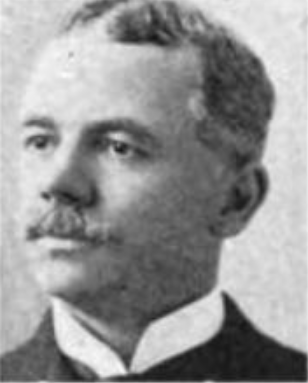
William McIntire
Former U.S. Representative · Maryland District 4 · 1897–1899 · Republican
William McIntire represented Maryland's District 4 in the United States House of Representatives (1897–1899) for the Republican party. The page below collects sourced biographical facts, term history, committee roles, and provenance for McIntire.
Bioguide ID: M000480
Key facts
- Full name
- William McIntire
- State
- Maryland
- District
- District 4
- Party
- Republican
- House service
- 1897–1899
- First House term
- 1897
- Status
- Left office
- Current term ends
- —
- Born
- 1850
- Bioguide ID
- M000480
- Committee assignments
- —
- Dataset version
- 1.20260606
Biographical narrative
809 words · sourced from the Wikipedia REST extract
William McIntire was a U.S. Representative from Maryland's 4th congressional district, serving in the late 19th century as a member of the Republican Party. His political career was marked by his involvement in local governance and his contributions to the U.S. Congress during his single term. Born in Pennsylvania and raised in Maryland, McIntire's early experiences shaped his later pursuits in law and politics. His tenure in the House of Representatives was characterized by significant legislative efforts, particularly in securing funding for infrastructure and opposing key legislative proposals.
Early life and career
William McIntire was born on June 30, 1850, in Chambersburg, Pennsylvania. His family relocated to Washington County, Maryland, during his childhood, where he received his education through a combination of public and private schooling. McIntire developed skills as a machinist, which would later inform his understanding of technical and industrial issues. In 1872, he moved to Baltimore, a significant city in Maryland, where he began to establish his professional career.
In 1874, McIntire joined the United States Railway Mail Service, a position he held for over a decade until his resignation in 1885. His work in this capacity provided him with insights into federal operations and the importance of efficient communication systems. Following his tenure in the Railway Mail Service, McIntire pursued higher education, attending Hagerstown Academy before graduating from the University of Maryland School of Law in Baltimore. After completing his legal studies, he was admitted to the bar in Baltimore, marking the beginning of his legal career.
McIntire's political involvement began in the late 1880s when he was elected to the Baltimore City Council, serving in this role during 1887 and 1888. His engagement in local politics laid the groundwork for his future endeavors at the state and national levels. In 1895, he played a significant role in the Maryland Republican State and city committees as treasurer, further solidifying his standing within the Republican Party.
House tenure
William McIntire's congressional career began when he was elected as a Republican to the Fifty-fifth Congress, representing Maryland's 4th congressional district. His term commenced on March 4, 1897, and concluded on March 3, 1899. During this period, he was part of an all-Republican delegation from Maryland, reflecting the political landscape of the time. His election to the House of Representatives was a culmination of his active participation in local and state politics, and he was recognized as a prominent figure within the Republican Party.
Throughout his time in Congress, McIntire was involved in various legislative activities. He is credited with securing the first appropriation for a new Custom House in Baltimore, a significant development for the city’s infrastructure and economic growth. Additionally, he played a crucial role in defeating a proposed bill that aimed to relocate the United States Naval Academy to a Northern city, a move that would have had substantial implications for the region. Despite his contributions, McIntire was not successful in his bid for reelection in 1898, which marked the end of his formal legislative career in the House of Representatives.
Legislative focus and committees
During his single term in the House, William McIntire's legislative focus was primarily on issues pertinent to his constituents in Maryland, particularly those related to infrastructure and local governance. His successful efforts to secure funding for the Custom House in Baltimore underscored his commitment to enhancing the city’s economic capabilities and facilitating trade. This project was significant not only for its immediate impact but also for its long-term benefits to the region's commercial activities.
In addition to his work on infrastructure, McIntire's opposition to the relocation of the Naval Academy highlighted his dedication to maintaining important national institutions within Maryland. This stance reflected a broader concern for the state's interests and the preservation of its historical significance in U.S. military education.
After leaving Congress, McIntire continued to engage in public service and business. He served as the General Agent of the United States Life Insurance Company from 1905 until his passing in 1912. His involvement in this role demonstrated his ongoing commitment to professional and civic responsibilities beyond his congressional tenure.
In 1911, following the death of General Peter Leary, Jr., McIntire was appointed to the Baltimore Sewerage Commission by Mayor J. Barry Mahool. His appointment was well-received, leading to a unanimous confirmation by the City Council, which indicated his respected status within the community. Tragically, McIntire's life was cut short when he suffered a fatal apoplexy while fishing alone on the Gunpowder River in Baltimore County. He passed away on March 30, 1912, and was buried in Loudon Park Cemetery in Baltimore.
William McIntire's legacy is characterized by his contributions to Maryland's political landscape during a transformative period in American history. His work in the House of Representatives and his subsequent public service reflect a commitment to the welfare of his constituents and the broader community.
Notable legislation
Sponsored and co-sponsored legislation for William McIntire is pending operator curation. The biographical narrative above carries the same provenance trail until per-bill rows are written.
Sources
- [1]https://en.wikipedia.org/wiki/William_W._McIntireWikipedia · retrieved 2026-06-06
Notable quotes
Sourced quotes for William McIntire are pending operator curation. Narrative-scope provenance remains attached below.
Sources
- [1]https://en.wikipedia.org/wiki/William_W._McIntireWikipedia · retrieved 2026-06-06
Key positions
Curated policy positions for William McIntire are pending operator review. The biographical narrative above carries the same provenance trail until per-topic positions are written.
Sources
- [1]https://en.wikipedia.org/wiki/William_W._McIntireWikipedia · retrieved 2026-06-06
Terms served
- 1897–1899U.S. House · Term 1 · Republican
Sources & provenance
Every attributable claim above carries a per-section [N] marker that resolves to the corresponding URL below. Each entry records the upstream provider, the canonical URL, and the timestamp at which the source was retrieved by the ingest pipeline.
Key facts
- https://bioguide.congress.gov/search/bio/M000480bioguide · retrieved 2026-06-06
- https://www.govtrack.us/congress/members/407477govtrack · retrieved 2026-06-06
Biographical narrative
- https://en.wikipedia.org/wiki/William_W._McIntirewikipedia · retrieved 2026-06-06
Find your representative
Every U.S. state elects representatives by district. Browse Maryland’s delegation, the full former-representative roster, or explore the role and term length.
Related on The Candidate
- Preceded by John CowenEarlier holder of the Maryland District 4 House seat · Democratic.Open
- Succeeded by James DennyLater holder of the Maryland District 4 House seat · Democratic.Open
- Clement DorseyFormer U.S. Representative · Maryland District 1Open
- Daniel HenryFormer U.S. Representative · Maryland District 1 · DemocraticOpen
- David WardFormer U.S. Representative · Maryland District 1 · DemocraticOpen
- Dudley RoeFormer U.S. Representative · Maryland District 1 · DemocraticOpen