
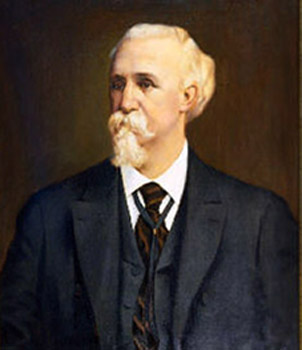
Historical · U.S. House · Maryland · District 5
Barnes Compton
Former U.S. Representative · Maryland District 5 · 1885–1895 · Democratic
Barnes Compton represented Maryland's District 5 in the United States House of Representatives (1885–1895) for the Democratic party. The page below collects sourced biographical facts, term history, committee roles, and provenance for Compton.
Bioguide ID: C000660
Key facts
- Full name
- Barnes Compton
- State
- Maryland
- District
- District 5
- Party
- Democratic
- House service
- 1885–1895
- First House term
- 1885
- Status
- Left office
- Current term ends
- —
- Born
- 1830
- Bioguide ID
- C000660
- Committee assignments
- —
- Dataset version
- 1.20260606
Biographical narrative
1,003 words · sourced from the Wikipedia REST extract
Barnes Compton was a prominent American politician who served as a U.S. Representative for Maryland's fifth congressional district. A member of the Democratic Party, Compton's political career spanned over a decade in the late 19th century, during which he held various significant positions, including Treasurer of Maryland. His life was marked by a series of public service roles, both at the state and federal levels, reflecting his deep involvement in the political landscape of Maryland.
Early life and career
Barnes Compton was born on November 16, 1830, in Port Tobacco, Charles County, Maryland. He was the son of Mary Clarissa Barnes and William Penn Compton. Tragically, both of his parents passed away during his childhood, leaving him to be raised by his grandfather, John Barnes, until he reached the age of thirteen. For his formal education, Compton attended the Charlotte Hall Military Academy located in St. Mary's County, Maryland. He later graduated from Princeton College with a bachelor's degree in June 1851.
Following his education, Compton returned to his roots in Charles County, where he engaged in agricultural activities and became a planter. His early career was marked by political ambitions; he first sought election to the State House of Delegates in 1855 as a member of the Whig Party but was unsuccessful. Undeterred, he ran again in 1859 as a Democrat and was elected to serve in the State House of Delegates during the 1860 and 1861 sessions. His tenure in the legislature was not without controversy; during the 1861 session, he found himself in a precarious situation when several members suspected of Confederate sympathies were arrested. Compton managed to evade arrest by fleeing across the Potomac River.
In 1865, Compton was arrested and briefly imprisoned at the Old Capitol under suspicion of having aided John Wilkes Booth following the assassination of President Abraham Lincoln. However, the allegations were proven false, and he was released after four days. Compton's political career continued to evolve as he served in the Maryland State Senate in 1867, 1868, 1870, and 1872, holding the position of Senate president during the 1868 session. His public service also included roles as State Tobacco Inspector in 1873 and 1874, and he was appointed Treasurer of Maryland, a position he held from 1874 until 1885.
In 1880, Compton relocated to Laurel in Prince George's County, Maryland. His political aspirations led him to run for a seat in the U.S. Congress, where he was elected as a Democrat to the Forty-ninth and Fiftieth United States Congress, serving from March 4, 1885, to March 3, 1889. His subsequent election to the Fifty-first United States Congress was marred by controversy; he presented his credentials as a Member-elect but served only briefly from March 4, 1889, to March 20, 1890, when he was succeeded by Sydney E. Mudd, Sr., who contested the election results. An investigation into voter fraud ultimately ruled in favor of Mudd.
Despite this setback, Compton continued his congressional career by being elected to the Fifty-second and Fifty-third United States Congress, serving from March 4, 1891, until his resignation on May 15, 1894. Following his resignation, he was appointed by President Grover Cleveland as the Naval Officer of the Port of Baltimore, a position he held until his death in 1898.
House tenure
Barnes Compton's tenure in the U.S. House of Representatives was characterized by his alignment with the Democratic Party and his representation of Maryland's fifth congressional district. His congressional career began in 1885, and he served a total of five terms in the House. During his time in Congress, Compton was involved in various legislative matters pertinent to his constituents and the broader national landscape.
His initial terms in the House coincided with a period of significant change in American politics, as the nation was navigating the post-Civil War era and addressing issues related to reconstruction, economic development, and social change. Compton's experience in state politics likely informed his approach to federal legislation, as he brought insights from his earlier roles in the Maryland State House and Senate.
Despite the challenges he faced, including the contested election for the Fifty-first Congress, Compton's ability to secure re-election for subsequent terms demonstrated his resilience and the support he garnered from his constituents. His service in the House concluded in 1894 when he resigned to take on a new role in federal service.
Legislative focus and committees
Throughout his congressional career, Barnes Compton's legislative focus reflected the interests and needs of his constituents in Maryland. While specific details regarding the bills he sponsored or the committees on which he served are not documented, it can be inferred that his background in agriculture and state governance influenced his legislative priorities. Given his experience as a planter and his previous roles in state government, Compton likely advocated for policies that supported agricultural development, economic growth, and infrastructure improvements.
In addition to his legislative duties, Compton's involvement in various civic and educational organizations highlighted his commitment to public service beyond his congressional responsibilities. He taught agriculture at the Maryland Agricultural College and served on the board of trustees for the Charlotte Hall Military Academy, the School Commission of Charles County, and the Maryland Hospital for the Insane. His engagement in these organizations underscored his dedication to education and community welfare.
Compton's later years saw him take on leadership roles in financial institutions, including co-founding the Citizens National Bank of Laurel and serving as president of the Guarantee Building and Loan Association of Baltimore. These positions further exemplified his commitment to the economic development of his community and the state of Maryland.
In summary, Barnes Compton's life and career were marked by a series of significant contributions to Maryland's political landscape. His journey from a young planter to a U.S. Representative and later a federal appointee illustrates the complexities of 19th-century American politics and the evolving role of public service in the nation. Compton passed away on December 2, 1898, in Laurel, Maryland, leaving behind a legacy of public service and civic engagement.
Notable legislation
Sponsored and co-sponsored legislation for Barnes Compton is pending operator curation. The biographical narrative above carries the same provenance trail until per-bill rows are written.
Sources
- [1]https://en.wikipedia.org/wiki/Barnes_ComptonWikipedia · retrieved 2026-06-06
Notable quotes
Sourced quotes for Barnes Compton are pending operator curation. Narrative-scope provenance remains attached below.
Sources
- [1]https://en.wikipedia.org/wiki/Barnes_ComptonWikipedia · retrieved 2026-06-06
Key positions
Curated policy positions for Barnes Compton are pending operator review. The biographical narrative above carries the same provenance trail until per-topic positions are written.
Sources
- [1]https://en.wikipedia.org/wiki/Barnes_ComptonWikipedia · retrieved 2026-06-06
Terms served
- 1885–1887U.S. House · Term 1 · Democratic
- 1887–1889U.S. House · Term 2 · Democratic
- 1889–1891U.S. House · Term 3 · Democratic
- 1891–1893U.S. House · Term 4 · Democratic
- 1893–1895U.S. House · Term 5 · Democratic
Sources & provenance
Every attributable claim above carries a per-section [N] marker that resolves to the corresponding URL below. Each entry records the upstream provider, the canonical URL, and the timestamp at which the source was retrieved by the ingest pipeline.
Key facts
- https://bioguide.congress.gov/search/bio/C000660bioguide · retrieved 2026-06-06
- https://www.govtrack.us/congress/members/402787govtrack · retrieved 2026-06-06
Biographical narrative
- https://en.wikipedia.org/wiki/Barnes_Comptonwikipedia · retrieved 2026-06-06
Find your representative
Every U.S. state elects representatives by district. Browse Maryland’s delegation, the full former-representative roster, or explore the role and term length.
Related on The Candidate
- Preceded by Hart HoltonEarlier holder of the Maryland District 5 House seat · Republican.Open
- Succeeded by Thomas ParranLater holder of the Maryland District 5 House seat · Republican.Open
- Clement DorseyFormer U.S. Representative · Maryland District 1Open
- Daniel HenryFormer U.S. Representative · Maryland District 1 · DemocraticOpen
- David WardFormer U.S. Representative · Maryland District 1 · DemocraticOpen
- Dudley RoeFormer U.S. Representative · Maryland District 1 · DemocraticOpen