
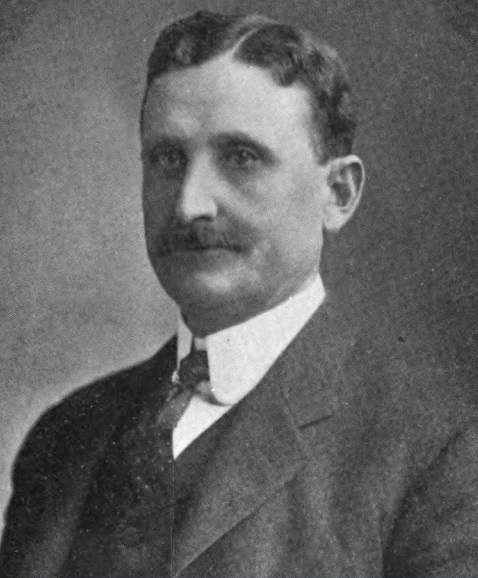
Historical · U.S. House · Maryland · District 5
Thomas Parran
Former U.S. Representative · Maryland District 5 · 1911–1913 · Republican
Thomas Parran represented Maryland's District 5 in the United States House of Representatives (1911–1913) for the Republican party. The page below collects sourced biographical facts, term history, committee roles, and provenance for Parran.
Bioguide ID: P000077
Key facts
- Full name
- Thomas Parran
- State
- Maryland
- District
- District 5
- Party
- Republican
- House service
- 1911–1913
- First House term
- 1911
- Status
- Left office
- Current term ends
- —
- Born
- 1860
- Bioguide ID
- P000077
- Committee assignments
- —
- Dataset version
- 1.20260606
Biographical narrative
957 words · sourced from the Wikipedia REST extract
Thomas Parran was an American politician who served as a U.S. Representative for Maryland's 5th congressional district. A member of the Republican Party, he held office during the Sixty-second Congress from 1911 to 1913. His political career was marked by various roles in state and federal government, and he was involved in local governance and community service throughout his life. Born in 1860, Parran's early experiences and subsequent political engagements reflect a commitment to public service that spanned several decades.
Early life and career
Thomas Parran was born on February 12, 1860, near St. Leonard, Maryland. His formative years were spent in a rural environment, where he received his education in public schools, supplemented by attendance at Charlotte Hall Military Academy. This educational background provided him with foundational skills that would later support his career in public service and politics.
Parran's political involvement began at the state level when he was elected to the Maryland House of Delegates, serving from 1884 to 1888. This early experience in the state legislature allowed him to gain insight into the legislative process and the needs of his constituents. Following his tenure in the House of Delegates, he took on the role of chief deputy collector for the Bureau of Internal Revenue in the Baltimore district from 1889 to 1893. This position furthered his understanding of governmental operations and fiscal matters, which would prove beneficial in his later political endeavors.
In 1890, Parran transitioned to farming in St. Leonard, a decision that connected him to the agricultural community and local economy. His involvement in farming not only reflected his personal interests but also established his ties to the rural constituents he would later represent. Parran's political career continued to evolve as he served in the Maryland State Senate from 1892 to 1894. This role allowed him to further influence state legislation and advocate for the interests of his district.
After his time in the state senate, Parran held several administrative positions that contributed to his political experience. He worked as the assistant enrolling clerk of the House of Representatives from 1895 to 1897, followed by a position as index clerk from 1897 to 1901. These roles provided him with a deep understanding of the legislative process at the federal level. Additionally, he served as the clerk of the Maryland Court of Appeals from 1901 to 1907, further solidifying his legal and administrative expertise.
Throughout his early career, Parran was actively involved in the Republican Party. He participated as a delegate to the Republican National Conventions in 1888, 1904, and 1908, demonstrating his commitment to the party and its principles. These experiences helped him build a network of political connections that would be advantageous in his future campaigns.
House tenure
Thomas Parran's congressional career began when he was elected as a Republican to represent Maryland's 5th congressional district in the Sixty-second Congress. His term commenced on March 4, 1911, and concluded on March 3, 1913. During this period, Parran engaged in the legislative process, contributing to discussions and decisions that affected his constituents and the nation.
As a member of the House of Representatives, Parran participated in various legislative activities, although specific details of his voting record and the bills he supported are not documented in the available records. His tenure coincided with a time of significant change in American politics, as the nation was grappling with issues related to economic reform, labor rights, and social progress. The early 1910s were characterized by a growing movement for progressive reforms, and Parran's role in this context would have involved navigating these complex political dynamics.
Despite his efforts, Parran faced challenges in securing re-election. He was unsuccessful in his bid for a second term in the Sixty-third Congress, which was a common experience for many politicians of the era. Additionally, he attempted to secure a seat in the U.S. Senate during a special election in 1913 but was not successful in that endeavor either. These electoral setbacks marked the end of his formal congressional career, but they did not conclude his involvement in public service.
Legislative focus and committees
While specific details regarding the committees on which Thomas Parran served during his time in Congress are not available, it is reasonable to infer that his background in state governance and fiscal administration would have influenced his legislative priorities. Given his experience in the Maryland House of Delegates and his role in the Bureau of Internal Revenue, Parran may have had a particular interest in issues related to taxation, public finance, and economic development.
After leaving Congress, Parran continued to contribute to public service in various capacities. He served on the Maryland Road Commission from 1913 to 1916, a role that likely involved overseeing infrastructure development and maintenance within the state. Additionally, he was appointed as Immigration Commissioner in 1917 and 1918, a position that would have required him to address issues related to immigration policy and the integration of newcomers into American society.
In the years following his public service, Parran returned to his farming interests and also took on a role as a member of the board of directors of the County Trust Company in Prince Frederick, Maryland. His involvement in local banking and finance reflects a continued commitment to the economic well-being of his community.
Thomas Parran's legacy includes his name being engraved on the Hanover Street Bridge in Baltimore, a testament to his contributions to the state and his community. He passed away on March 29, 1955, in St. Leonard, Maryland, and was interred in Christ Church Cemetery in Port Republic. His life and career exemplify the journey of a public servant dedicated to the needs of his constituents and the broader goals of his community and state.
Notable legislation
Sponsored and co-sponsored legislation for Thomas Parran is pending operator curation. The biographical narrative above carries the same provenance trail until per-bill rows are written.
Sources
- [1]https://en.wikipedia.org/wiki/Thomas_Parran_Sr.Wikipedia · retrieved 2026-06-06
Notable quotes
Sourced quotes for Thomas Parran are pending operator curation. Narrative-scope provenance remains attached below.
Sources
- [1]https://en.wikipedia.org/wiki/Thomas_Parran_Sr.Wikipedia · retrieved 2026-06-06
Key positions
Curated policy positions for Thomas Parran are pending operator review. The biographical narrative above carries the same provenance trail until per-topic positions are written.
Sources
- [1]https://en.wikipedia.org/wiki/Thomas_Parran_Sr.Wikipedia · retrieved 2026-06-06
Terms served
- 1911–1913U.S. House · Term 1 · Republican
Sources & provenance
Every attributable claim above carries a per-section [N] marker that resolves to the corresponding URL below. Each entry records the upstream provider, the canonical URL, and the timestamp at which the source was retrieved by the ingest pipeline.
Key facts
- https://bioguide.congress.gov/search/bio/P000077bioguide · retrieved 2026-06-06
- https://www.govtrack.us/congress/members/408487govtrack · retrieved 2026-06-06
Biographical narrative
- https://en.wikipedia.org/wiki/Thomas_Parran_Sr.wikipedia · retrieved 2026-06-06
Find your representative
Every U.S. state elects representatives by district. Browse Maryland’s delegation, the full former-representative roster, or explore the role and term length.
Related on The Candidate
- Preceded by Sydney MuddEarlier holder of the Maryland District 5 House seat · Republican.Open
- Succeeded by Frank SmithLater holder of the Maryland District 5 House seat · Democratic.Open
- Clement DorseyFormer U.S. Representative · Maryland District 1Open
- Daniel HenryFormer U.S. Representative · Maryland District 1 · DemocraticOpen
- David WardFormer U.S. Representative · Maryland District 1 · DemocraticOpen
- Dudley RoeFormer U.S. Representative · Maryland District 1 · DemocraticOpen