
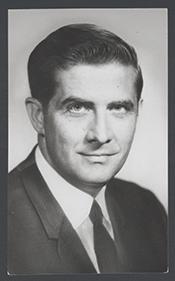
Historical · U.S. House · Maryland · District 5
Lawrence Hogan
Former U.S. Representative · Maryland District 5 · 1969–1975 · Republican
Lawrence Hogan represented Maryland's District 5 in the United States House of Representatives (1969–1975) for the Republican party. The page below collects sourced biographical facts, term history, committee roles, and provenance for Hogan.
Bioguide ID: H000692
Key facts
- Full name
- Lawrence Hogan
- State
- Maryland
- District
- District 5
- Party
- Republican
- House service
- 1969–1975
- First House term
- 1969
- Status
- Left office
- Current term ends
- —
- Born
- 1928
- Bioguide ID
- H000692
- Committee assignments
- —
- Dataset version
- 1.20260605
Biographical narrative
996 words · sourced from the Wikipedia REST extract
Lawrence J. Hogan was an American politician who served as a Republican U.S. Representative for Maryland's 5th congressional district from January 3, 1969, until January 3, 1975. During his tenure, he was known for his significant vote in favor of all three articles of impeachment against President Richard Nixon, making him the only Republican on the House Judiciary Committee to do so. Hogan's political career was marked by his involvement in various capacities, including his later role as the county executive for Prince George's County, Maryland. He was also the father of Larry Hogan, who served as the 62nd governor of Maryland.
Early life and career
Lawrence Joseph Hogan was born on September 30, 1928, in Boston, Massachusetts. He spent his formative years in Washington, D.C., where he attended Gonzaga College High School. Following his high school education, Hogan pursued higher education at Georgetown University, earning a bachelor's degree in 1949. He continued his studies at the same institution, obtaining a Juris Doctor (J.D.) degree in 1954, the same year he was admitted to the Bar.
While studying at Georgetown, Hogan began his professional career by working for the Washington Times-Herald. His early career included a stint with the Federal Bureau of Investigation (FBI), where he joined in 1948 and became a full-time agent while attending law school. Following his time with the FBI, Hogan furthered his education with graduate studies at San Francisco State College from 1956 to 1957 and later earned a master's degree from American University in 1965. He also continued his studies at the University of Maryland from 1966 to 1967.
In addition to his educational pursuits, Hogan engaged in a private career that encompassed practicing law and working in public relations. He founded Larry Hogan Associates, a business that reportedly generated significant revenue before he decided to enter the political arena. His transition into politics came in 1968 when he successfully ran for the U.S. House of Representatives, defeating the incumbent, Hervey Machen, to represent Maryland's 5th congressional district.
House tenure
Hogan's congressional career began with his election to the House of Representatives in 1968, and he was subsequently re-elected in 1970 and 1972. Throughout his time in office, he served on the House Judiciary Committee, where he played a notable role during the impeachment proceedings against President Nixon. In 1974, Hogan became the only Republican member of the committee to vote in favor of all three articles of impeachment against Nixon, a decision that garnered significant attention and marked a pivotal moment in his political career.
Despite his strong stance during the impeachment process, Hogan faced challenges in his political aspirations. In 1974, he sought the Republican nomination for governor of Maryland, where he was considered a strong challenger to the incumbent, Governor Marvin Mandel. However, Hogan's earlier decision to break ranks with Nixon was seen as a contributing factor to his defeat in the primary to Louise Gore. Political analysts noted that Gore's more genteel and low-key approach also played a role in the dynamics of the race. Following his loss in the gubernatorial primary, Hogan's congressional seat was won by Gladys Spellman.
After leaving Congress in 1975, Hogan returned to private practice and co-founded the law firm Hogan and Hogan with his wife, Ilona. The firm operated in both Forestville, Maryland, and Washington, D.C. In 1976, he was elected as a Maryland National Republican Committeeman, and in January 1977, he took on the role of executive vice president of the Associated Builders and Contractors trade association. His salary in this position was substantial, reflecting his experience and expertise in the field.
In 1978, Hogan made a political comeback by winning the election for Prince George's County Executive, defeating the incumbent Win Kelly amid a backdrop of tax reform discussions. His victory was marked by a significant majority, as he garnered approximately 60% of the vote. Under his leadership, the county passed a tax reform measure known as "TRIM" that same year. However, Hogan's subsequent political endeavors faced challenges, including a loss to first-term Democratic Senator Paul Sarbanes in 1982, which marked the end of his active political career.
Legislative focus and committees
During his tenure in the U.S. House of Representatives, Hogan was primarily focused on issues pertinent to his constituents in Maryland's 5th congressional district. His role on the House Judiciary Committee placed him at the center of significant national discussions, particularly during the impeachment proceedings against President Nixon. Hogan's decision to support the articles of impeachment was a defining moment in his legislative career, reflecting his commitment to constitutional principles and accountability in government.
Hogan's legislative actions and committee work were characterized by a focus on governance and public policy, particularly in the context of the political climate of the late 1960s and early 1970s. His involvement in the impeachment process highlighted his willingness to take a stand on controversial issues, even at the risk of political backlash within his party. This decision ultimately shaped his political legacy and influenced his subsequent electoral challenges.
After leaving Congress, Hogan continued to engage in public service and political activities, including his role as county executive and his involvement with the Republican Party at the state level. His later career included teaching and writing, with his work "Legal Aspects of the Fire Service" being utilized in training academies across the United States.
Hogan's personal life included two marriages, with his second wife, Ilona, becoming politically active in her own right. Their family has continued to be involved in Maryland politics, with two of Hogan's children pursuing political careers. His eldest son, Larry Hogan, served as the governor of Maryland from 2015 to 2023, further extending the family's political legacy.
Lawrence J. Hogan passed away on April 20, 2017, following a severe stroke. His contributions to Maryland politics and his role in the U.S. House of Representatives remain part of the historical narrative of the state and the Republican Party during a transformative period in American history.
Notable legislation
Sponsored and co-sponsored legislation for Lawrence Hogan is pending operator curation. The biographical narrative above carries the same provenance trail until per-bill rows are written.
Sources
- [1]https://en.wikipedia.org/wiki/Lawrence_HoganWikipedia · retrieved 2026-06-05
Notable quotes
Sourced quotes for Lawrence Hogan are pending operator curation. Narrative-scope provenance remains attached below.
Sources
- [1]https://en.wikipedia.org/wiki/Lawrence_HoganWikipedia · retrieved 2026-06-05
Key positions
Curated policy positions for Lawrence Hogan are pending operator review. The biographical narrative above carries the same provenance trail until per-topic positions are written.
Sources
- [1]https://en.wikipedia.org/wiki/Lawrence_HoganWikipedia · retrieved 2026-06-05
Terms served
- 1969–1971U.S. House · Term 1 · Republican
- 1971–1973U.S. House · Term 2 · Republican
- 1973–1975U.S. House · Term 3 · Republican
Sources & provenance
Every attributable claim above carries a per-section [N] marker that resolves to the corresponding URL below. Each entry records the upstream provider, the canonical URL, and the timestamp at which the source was retrieved by the ingest pipeline.
Key facts
- https://bioguide.congress.gov/search/bio/H000692bioguide · retrieved 2026-06-05
- https://www.govtrack.us/congress/members/405545govtrack · retrieved 2026-06-05
Biographical narrative
- https://en.wikipedia.org/wiki/Lawrence_Hoganwikipedia · retrieved 2026-06-05
Find your representative
Every U.S. state elects representatives by district. Browse Maryland’s delegation, the full former-representative roster, or explore the role and term length.
Related on The Candidate
- Preceded by Hervey MachenEarlier holder of the Maryland District 5 House seat · Democratic.Open
- Succeeded by Gladys SpellmanLater holder of the Maryland District 5 House seat · Democratic.Open
- Clement DorseyFormer U.S. Representative · Maryland District 1Open
- Daniel HenryFormer U.S. Representative · Maryland District 1 · DemocraticOpen
- David WardFormer U.S. Representative · Maryland District 1 · DemocraticOpen
- Dudley RoeFormer U.S. Representative · Maryland District 1 · DemocraticOpen