
Historical · U.S. House · Maryland · District 5
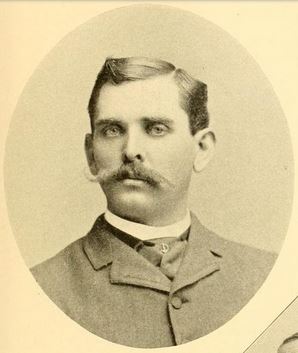
Sydney Mudd
Former U.S. Representative · Maryland District 5 · 1889–1911 · Republican
Sydney Mudd represented Maryland's District 5 in the United States House of Representatives (1889–1911) for the Republican party. The page below collects sourced biographical facts, term history, committee roles, and provenance for Mudd.
Bioguide ID: M001059
Key facts
- Full name
- Sydney Mudd
- State
- Maryland
- District
- District 5
- Party
- Republican
- House service
- 1889–1911
- First House term
- 1889
- Status
- Left office
- Current term ends
- —
- Born
- 1858
- Bioguide ID
- M001059
- Committee assignments
- —
- Dataset version
- 1.20260606
Biographical narrative
955 words · sourced from the Wikipedia REST extract
Sydney Mudd was a prominent American politician who served as a U.S. Representative for Maryland's 5th congressional district. A member of the Republican Party, Mudd's political career spanned over two decades, during which he was elected to the House of Representatives multiple times. He is noted for his role in a contested election that highlighted issues of electoral fraud and intimidation in the late 19th century. Mudd's tenure in Congress coincided with a period of significant political challenges in Maryland, particularly for Republicans, who were often outnumbered by Democrats in the state.
Early life and career
Sydney Emanuel Mudd was born on February 12, 1858, in Charles County, Maryland, into a family of the planter class. His father, Jeremiah T. Mudd, owned the family plantation known as Gallant Green. Raised in a Catholic household, Mudd received his early education in local schools before pursuing higher education. He attended Georgetown University and graduated from St. John's College in Annapolis, Maryland, in 1878. Following his graduation, Mudd began his legal education by "reading the law" as an apprentice with a well-established law firm. He also attended the law department at the University of Virginia in Charlottesville. Mudd was admitted to the bar in 1880 and subsequently returned to Charles County to establish his law practice.
In addition to his legal career, Mudd entered politics early, serving as a member of the Maryland House of Delegates in 1879 and again in 1881. His political involvement laid the groundwork for his future endeavors in the U.S. Congress. Mudd's family background included notable historical connections; he was the nephew of Samuel Mudd, a physician who became infamous for aiding John Wilkes Booth after the assassination of President Abraham Lincoln.
In 1882, Mudd married Ida Griffin, the daughter of Walter Griffin from Surrattsville, Maryland. The couple had four children, including a son, Sydney Emanuel Mudd II, who would later follow in his father's footsteps and serve as a Congressman from the same district. Tragically, Ida Mudd passed away in 1907.
House tenure
Mudd's congressional career began in a contentious political climate. He contested the 1888 election results for Maryland's 5th congressional district, which had been won by Democrat Barnes Compton. Mudd alleged that the election was marred by fraud and intimidation tactics aimed at suppressing votes, particularly among African Americans. His claims were investigated by the House Committee on Elections, which ultimately ruled in his favor. As a result, Mudd was awarded the congressional seat and began his first term on March 20, 1890. However, he faced defeat in his bid for reelection in 1890, losing to Compton.
Despite this setback, Mudd remained active in politics. In 1895, he returned to the Maryland House of Delegates and was elected Speaker of the House, a position that enhanced his political profile. Mudd's fortunes changed in 1896 when he was elected to the U.S. House of Representatives from the 5th district, benefiting from a Republican coalition that successfully gained the governorship that year. He was subsequently re-elected to the House in six consecutive terms, serving from March 4, 1897, until March 3, 1911. His chief Democratic opponent, Barnes Compton, passed away in 1898, which likely contributed to Mudd's sustained electoral success.
During his time in Congress, Mudd was known for his leadership role as the chairman of the Committee on Expenditures in the Department of Justice during the Sixtieth and Sixty-first Congresses. His constituents often referred to him as "Marse Sydney," a term of endearment that reflected his popularity in the district.
Legislative focus and committees
Throughout his congressional tenure, Mudd's legislative focus encompassed a range of issues pertinent to his constituents and the broader political landscape of the time. His role as chairman of the Committee on Expenditures in the Department of Justice positioned him at the intersection of legal and governmental oversight, where he was responsible for scrutinizing expenditures related to the Department of Justice. This role was significant during a period when issues of government accountability and transparency were increasingly coming to the forefront of public discourse.
Mudd's legislative activities were influenced by the political dynamics of Maryland, a state where the Republican Party was often in the minority. His ability to navigate this challenging environment was indicative of his political acumen. He was part of a Republican coalition that sought to address the concerns of a diverse electorate, including African Americans, who faced significant challenges during this era of Jim Crow laws and racial discrimination.
In addition to his committee work, Mudd's legislative contributions likely included advocacy for local interests, infrastructure development, and support for agricultural policies, which were vital to his constituents in rural Maryland. His long tenure in Congress allowed him to build relationships and influence policy decisions that affected his district and the state.
Mudd's political career came to an end with his last term concluding on March 3, 1911. He passed away later that year on October 21, 1911, in Philadelphia, Pennsylvania, due to a stroke. His legacy continued through his son, Sydney Emanuel Mudd II, who would go on to serve as a Congressman from Maryland's 5th district, ensuring that the Mudd family's political influence persisted in the region.
Sydney Mudd's life and career reflect the complexities of American politics during a transformative period in the late 19th and early 20th centuries. His experiences as a politician, lawyer, and community leader illustrate the challenges and opportunities faced by Republican representatives in a predominantly Democratic state. Mudd's contributions to Maryland's political landscape remain a part of the historical narrative of the state and the nation. He was interred at St. Ignatius’ Catholic Church Cemetery at Chapel Point near La Plata, Maryland, marking the end of a significant chapter in Maryland's political history.
Notable legislation
Sponsored and co-sponsored legislation for Sydney Mudd is pending operator curation. The biographical narrative above carries the same provenance trail until per-bill rows are written.
Sources
- [1]https://en.wikipedia.org/wiki/Sydney_E._Mudd_IWikipedia · retrieved 2026-06-06
Notable quotes
Sourced quotes for Sydney Mudd are pending operator curation. Narrative-scope provenance remains attached below.
Sources
- [1]https://en.wikipedia.org/wiki/Sydney_E._Mudd_IWikipedia · retrieved 2026-06-06
Key positions
Curated policy positions for Sydney Mudd are pending operator review. The biographical narrative above carries the same provenance trail until per-topic positions are written.
Sources
- [1]https://en.wikipedia.org/wiki/Sydney_E._Mudd_IWikipedia · retrieved 2026-06-06
Terms served
- 1889–1891U.S. House · Term 1 · Republican
- 1897–1899U.S. House · Term 2 · Republican
- 1899–1901U.S. House · Term 3 · Republican
- 1901–1903U.S. House · Term 4 · Republican
- 1903–1905U.S. House · Term 5 · Republican
- 1905–1907U.S. House · Term 6 · Republican
- 1907–1909U.S. House · Term 7 · Republican
- 1909–1911U.S. House · Term 8 · Republican
Sources & provenance
Every attributable claim above carries a per-section [N] marker that resolves to the corresponding URL below. Each entry records the upstream provider, the canonical URL, and the timestamp at which the source was retrieved by the ingest pipeline.
Key facts
- https://bioguide.congress.gov/search/bio/M001059bioguide · retrieved 2026-06-06
- https://www.govtrack.us/congress/members/408025govtrack · retrieved 2026-06-06
Biographical narrative
- https://en.wikipedia.org/wiki/Sydney_E._Mudd_Iwikipedia · retrieved 2026-06-06
Find your representative
Every U.S. state elects representatives by district. Browse Maryland’s delegation, the full former-representative roster, or explore the role and term length.
Related on The Candidate
- Preceded by Hart HoltonEarlier holder of the Maryland District 5 House seat · Republican.Open
- Succeeded by Thomas ParranLater holder of the Maryland District 5 House seat · Republican.Open
- Clement DorseyFormer U.S. Representative · Maryland District 1Open
- Daniel HenryFormer U.S. Representative · Maryland District 1 · DemocraticOpen
- David WardFormer U.S. Representative · Maryland District 1 · DemocraticOpen
- Dudley RoeFormer U.S. Representative · Maryland District 1 · DemocraticOpen