
Historical · U.S. House · Maryland · District 6
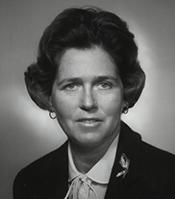
Beverly Byron
Former U.S. Representative · Maryland District 6 · 1979–1993 · Democratic
Beverly Byron represented Maryland's District 6 in the United States House of Representatives (1979–1993) for the Democratic party. The page below collects sourced biographical facts, term history, committee roles, and provenance for Byron.
Bioguide ID: B001220
Key facts
- Full name
- Beverly Byron
- State
- Maryland
- District
- District 6
- Party
- Democratic
- House service
- 1979–1993
- First House term
- 1979
- Status
- Left office
- Current term ends
- —
- Born
- 1932
- Bioguide ID
- B001220
- Committee assignments
- —
- Dataset version
- 1.20260605
Biographical narrative
956 words · sourced from the Wikipedia REST extract
Beverly B. Byron was an American politician and member of the Democratic Party who served as the U.S. Representative for Maryland's 6th congressional district from January 3, 1979, to January 3, 1993. Throughout her tenure, Byron was known for her focus on military and national security issues, as well as her role in various congressional committees. She was a notable figure in Congress, being the first woman to chair a subcommittee of the House Armed Services Committee and the first woman to fly aboard the SR-71 Blackbird.
Early life and career
Beverly Barton Butcher was born on July 27, 1932, in Baltimore, Maryland, to Ruth and Harry C. Butcher. Her father was a CBS radio broadcaster and served as a naval aide to General Dwight D. Eisenhower during World War II. Growing up in a politically connected family, Byron spent part of her childhood living in the Wardman Park Hotel in Washington, D.C. This environment allowed her to meet influential figures, including President Franklin D. Roosevelt and Eleanor Roosevelt, as well as Dwight and Mamie Eisenhower. Her godfather, George E. Allen, was a notable political operative, further embedding her in the political landscape from an early age.
Byron's educational journey began at the National Cathedral School for Girls in Washington, where she graduated in 1950. She later pursued higher education, earning a two-year degree from Hood College in Frederick, Maryland, in 1962. In 1952, she married Goodloe Byron, and together they had three children. During her early years, Byron became actively involved in various nonprofit organizations and engaged in fundraising efforts for the Democratic Party, laying the groundwork for her future political career.
Byron's entry into politics was marked by a significant personal tragedy. In 1978, she was elected to Congress following the death of her husband, who had passed away from a heart attack just a month before the election. Initially, it was believed that she would serve only a single term; however, she went on to serve a total of fourteen years in the House of Representatives, being re-elected six times.
House tenure
Beverly Byron's congressional career began when she took office on January 3, 1979. During her time in the House, she represented Maryland's 6th congressional district, a position she held until January 3, 1993. Byron's tenure was characterized by her commitment to military and national security issues, which became central themes in her legislative work. As a member of the Democratic Party, she identified as a conservative Democrat, which influenced her positions on various issues, including her opposition to abortion and her support for the fiscal policies of the Reagan administration.
Throughout her time in Congress, Byron served on several important committees. She was a member of the House Armed Services Committee, where she played a significant role in shaping military policy. Additionally, she served on the Interior and Insular Affairs Committee and the Select Committee on Aging. Her leadership capabilities were recognized when she chaired the House Special Panel on Arms Control and Disarmament from 1983 to 1986, a role that underscored her commitment to national security.
Byron's influence within the Armed Services Committee grew when she became the chairwoman of the Military Personnel and Compensation Subcommittee in 1987. This achievement was notable as she became the first woman to chair a subcommittee within the Armed Services Committee. Her leadership was further highlighted by her support for the development of the MX Missile, a controversial military program during that period. In November 1985, Byron made history by becoming the first woman to fly aboard the SR-71 Blackbird, a reconnaissance aircraft used by the United States Air Force, marking a significant milestone in her career.
Despite her accomplishments, Byron faced challenges in her political career. In the 1992 Democratic primary, she was defeated by a more liberal challenger, State Delegate Thomas Hattery. Hattery subsequently lost to Republican nominee Roscoe Bartlett in the general election, marking the end of Byron's congressional tenure.
Legislative focus and committees
Throughout her time in the House of Representatives, Beverly Byron maintained a strong focus on military and national security issues. Her work on the House Armed Services Committee allowed her to influence key decisions regarding defense and military personnel. As chair of the Military Personnel and Compensation Subcommittee, she was instrumental in discussions about military pay and benefits, advocating for the needs of service members and their families.
Byron's commitment to arms control and disarmament was evident during her tenure as chair of the House Special Panel on Arms Control and Disarmament. This role allowed her to engage with complex issues related to nuclear arms and international security, reflecting her dedication to promoting peace while ensuring national defense.
In addition to her work on military issues, Byron's involvement in the Interior and Insular Affairs Committee highlighted her interest in environmental and land management policies. This committee addressed a range of issues, including natural resource management and the welfare of U.S. territories.
After leaving Congress in 1993, Byron continued her public service. She served as a commissioner on the Base Realignment and Closure Commission, which was responsible for recommending changes to military installations across the country. In 1995, she was appointed by President Bill Clinton to the United States Naval Academy Board of Visitors, further demonstrating her ongoing commitment to military and educational issues.
Beverly Byron's legacy in Congress is marked by her pioneering role as a woman in a predominantly male institution, her focus on military and national security, and her contributions to various legislative committees. Her career reflects the complexities of American politics during her time in office and the evolving role of women in government. Byron passed away on February 9, 2025, leaving behind a significant legacy in public service and representation.
Notable legislation
Sponsored and co-sponsored legislation for Beverly Byron is pending operator curation. The biographical narrative above carries the same provenance trail until per-bill rows are written.
Sources
- [1]https://en.wikipedia.org/wiki/Beverly_ByronWikipedia · retrieved 2026-06-05
Notable quotes
Sourced quotes for Beverly Byron are pending operator curation. Narrative-scope provenance remains attached below.
Sources
- [1]https://en.wikipedia.org/wiki/Beverly_ByronWikipedia · retrieved 2026-06-05
Key positions
Curated policy positions for Beverly Byron are pending operator review. The biographical narrative above carries the same provenance trail until per-topic positions are written.
Sources
- [1]https://en.wikipedia.org/wiki/Beverly_ByronWikipedia · retrieved 2026-06-05
Terms served
- 1979–1981U.S. House · Term 1 · Democratic
- 1981–1983U.S. House · Term 2 · Democratic
- 1983–1985U.S. House · Term 3 · Democratic
- 1985–1987U.S. House · Term 4 · Democratic
- 1987–1989U.S. House · Term 5 · Democratic
- 1989–1991U.S. House · Term 6 · Democratic
- 1991–1993U.S. House · Term 7 · Democratic
Sources & provenance
Every attributable claim above carries a per-section [N] marker that resolves to the corresponding URL below. Each entry records the upstream provider, the canonical URL, and the timestamp at which the source was retrieved by the ingest pipeline.
Key facts
- https://bioguide.congress.gov/search/bio/B001220bioguide · retrieved 2026-06-05
- https://www.govtrack.us/congress/members/402159govtrack · retrieved 2026-06-05
Biographical narrative
- https://en.wikipedia.org/wiki/Beverly_Byronwikipedia · retrieved 2026-06-05
Find your representative
Every U.S. state elects representatives by district. Browse Maryland’s delegation, the full former-representative roster, or explore the role and term length.
Related on The Candidate
- Preceded by Goodloe ByronEarlier holder of the Maryland District 6 House seat · Democratic.Open
- Succeeded by Roscoe BartlettLater holder of the Maryland District 6 House seat · Republican.Open
- Clement DorseyFormer U.S. Representative · Maryland District 1Open
- Daniel HenryFormer U.S. Representative · Maryland District 1 · DemocraticOpen
- David WardFormer U.S. Representative · Maryland District 1 · DemocraticOpen
- Dudley RoeFormer U.S. Representative · Maryland District 1 · DemocraticOpen