
Historical · U.S. House · Maryland · District 6
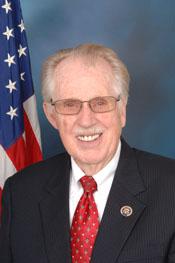
Roscoe Bartlett
Former U.S. Representative · Maryland District 6 · 1993–2013 · Republican
Roscoe Bartlett represented Maryland's District 6 in the United States House of Representatives (1993–2013) for the Republican party. The page below collects sourced biographical facts, term history, committee roles, and provenance for Bartlett.
Bioguide ID: B000208
Key facts
- Full name
- Roscoe Bartlett
- State
- Maryland
- District
- District 6
- Party
- Republican
- House service
- 1993–2013
- First House term
- 1993
- Status
- Left office
- Current term ends
- —
- Born
- 1926
- Bioguide ID
- B000208
- Committee assignments
- —
- Dataset version
- 1.20260605
Biographical narrative
891 words · sourced from the Wikipedia REST extract
Roscoe Bartlett is a former American politician who served as a U.S. Representative for Maryland's 6th congressional district from 1993 until 2013. A member of the Republican Party, he was associated with the Tea Party Caucus during his time in office. Known for his long tenure, Bartlett was among the oldest serving members of the House of Representatives at the end of his career. His legislative work spanned two decades, during which he engaged in various political issues and initiatives.
Early life and career
Roscoe Gardner Bartlett Jr. was born on June 3, 1926, in Moreland, Jefferson County, Kentucky. He was raised by his parents, Martha Minnick and Roscoe Gardner Bartlett. His early education took place in a one-room schoolhouse, which laid the foundation for his academic pursuits. Following high school, Bartlett attended Columbia Union College, now known as Washington Adventist University, located in Takoma Park, Maryland. He graduated in 1947 with a Bachelor of Science degree in theology and biology, along with a minor in chemistry. Initially aspiring to become a Seventh-day Adventist minister, he faced age-related barriers to entering the ministry at just 21 years old.
Encouraged to further his education, Bartlett pursued postgraduate studies at the University of Maryland, College Park. He focused on anatomy, physiology, and zoology, earning a master's degree in physiology in 1948. Subsequently, he joined the university's faculty, where he taught anatomy, physiology, and zoology while working toward his Doctor of Philosophy in physiology, which he completed in 1952. His academic career included positions at Loma Linda University School of Medicine, where he lectured from 1952 to 1954, and at Howard University College of Medicine, where he served as an assistant professor from 1954 to 1956.
House tenure
Bartlett's political career began in earnest in the early 1980s. He first ran for a U.S. Senate seat in 1980 but finished fourth in the Republican primary, garnering only 7% of the vote against incumbent Charles Mathias. In 1982, he sought a seat in the U.S. House of Representatives, challenging incumbent Democratic Congresswoman Beverly Byron in Maryland's 6th congressional district. Bartlett won the Republican primary with 52% of the vote but was defeated in the general election, receiving 26% of the vote compared to Byron's 74%.
After a brief hiatus, Bartlett returned to politics in 1992, running again in the newly redrawn 6th congressional district. He won the Republican primary with 42% of the vote, and in the general election, he defeated Democrat Thomas Hattery with 54% of the vote. This victory marked the beginning of his ten terms in the House of Representatives, where he consistently won re-election with at least 56% of the vote during his tenure.
In 2010, Bartlett, then 84 years old, successfully won re-election, becoming the only Republican in Maryland's congressional delegation. However, his political landscape shifted significantly due to redistricting in 2011, which altered the demographics of his district. The changes introduced more heavily Democratic areas, leading to a challenging re-election campaign in 2012. Bartlett faced Democrat John Delaney and Libertarian candidate Nickolaus Mueller. Despite his efforts, he was defeated in the general election, receiving only 38% of the vote compared to Delaney's 59%.
Throughout his time in Congress, Bartlett was involved in various legislative initiatives and controversies. Notably, in November 1997, he co-sponsored a resolution calling for an impeachment inquiry against President Bill Clinton, an early move that predated the Clinton-Lewinsky scandal. He voted in favor of opening an impeachment inquiry in October 1998 and supported all four articles of impeachment against Clinton in December of that year.
Legislative focus and committees
During his tenure in the House, Bartlett's legislative focus included a range of issues, particularly those aligned with conservative values and the interests of his constituents in Maryland. He was known for his involvement in health and science-related matters, reflecting his academic background in physiology. His expertise in these areas informed his positions on various health policies and initiatives.
Bartlett was a member of several committees during his time in Congress, which allowed him to influence legislation and advocate for his constituents' needs. His work on these committees often intersected with his interests in health, education, and scientific research. He was also known for his commitment to fiscal conservatism and limited government, principles that resonated with many of his supporters.
In addition to his legislative work, Bartlett faced scrutiny over his financial disclosures, particularly in 2008 when it was reported that he had under-reported property sales and made unreported loans related to real estate transactions. He attributed these discrepancies to oversight and maintained that he was a minor participant in the transactions.
Throughout his career, Bartlett's political positions and actions were often shaped by his conservative beliefs and his affiliation with the Tea Party movement. His tenure in Congress was marked by a commitment to traditional Republican values, and he was an active participant in debates surrounding issues such as healthcare, taxation, and government spending.
Bartlett's legacy includes his long service in the House of Representatives and his role in significant legislative events, including the impeachment proceedings against President Clinton. His career reflects the complexities of American politics during a time of significant change and division, particularly within the Republican Party. After his defeat in 2012, Bartlett concluded his two-decade-long congressional career, leaving behind a record of service that was both impactful and contentious.
Notable legislation
Sponsored and co-sponsored legislation for Roscoe Bartlett is pending operator curation. The biographical narrative above carries the same provenance trail until per-bill rows are written.
Sources
- [1]https://en.wikipedia.org/wiki/Roscoe_BartlettWikipedia · retrieved 2026-06-05
Notable quotes
Sourced quotes for Roscoe Bartlett are pending operator curation. Narrative-scope provenance remains attached below.
Sources
- [1]https://en.wikipedia.org/wiki/Roscoe_BartlettWikipedia · retrieved 2026-06-05
Key positions
Curated policy positions for Roscoe Bartlett are pending operator review. The biographical narrative above carries the same provenance trail until per-topic positions are written.
Sources
- [1]https://en.wikipedia.org/wiki/Roscoe_BartlettWikipedia · retrieved 2026-06-05
Terms served
- 1993–1995U.S. House · Term 1 · Republican
- 1995–1997U.S. House · Term 2 · Republican
- 1997–1999U.S. House · Term 3 · Republican
- 1999–2001U.S. House · Term 4 · Republican
- 2001–2003U.S. House · Term 5 · Republican
- 2003–2005U.S. House · Term 6 · Republican
- 2005–2007U.S. House · Term 7 · Republican
- 2007–2009U.S. House · Term 8 · Republican
- 2009–2011U.S. House · Term 9 · Republican
- 2011–2013U.S. House · Term 10 · Republican
Sources & provenance
Every attributable claim above carries a per-section [N] marker that resolves to the corresponding URL below. Each entry records the upstream provider, the canonical URL, and the timestamp at which the source was retrieved by the ingest pipeline.
Key facts
- https://bioguide.congress.gov/search/bio/B000208bioguide · retrieved 2026-06-05
- http://bartlett.house.govhouse.gov · retrieved 2026-06-05
Biographical narrative
- https://en.wikipedia.org/wiki/Roscoe_Bartlettwikipedia · retrieved 2026-06-05
Find your representative
Every U.S. state elects representatives by district. Browse Maryland’s delegation, the full former-representative roster, or explore the role and term length.
Related on The Candidate
- Preceded by Beverly ByronEarlier holder of the Maryland District 6 House seat · Democratic.Open
- Succeeded by John DelaneyLater holder of the Maryland District 6 House seat · Democratic.Open
- Clement DorseyFormer U.S. Representative · Maryland District 1Open
- Daniel HenryFormer U.S. Representative · Maryland District 1 · DemocraticOpen
- David WardFormer U.S. Representative · Maryland District 1 · DemocraticOpen
- Dudley RoeFormer U.S. Representative · Maryland District 1 · DemocraticOpen