
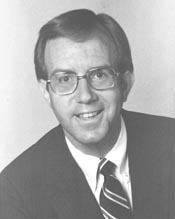
Historical · U.S. House · Maryland · District 8
Michael Barnes
Former U.S. Representative · Maryland District 8 · 1979–1987 · Democratic
Michael Barnes represented Maryland's District 8 in the United States House of Representatives (1979–1987) for the Democratic party. The page below collects sourced biographical facts, term history, committee roles, and provenance for Barnes.
Bioguide ID: B000160
Key facts
- Full name
- Michael Barnes
- State
- Maryland
- District
- District 8
- Party
- Democratic
- House service
- 1979–1987
- First House term
- 1979
- Status
- Left office
- Current term ends
- —
- Born
- 1943
- Bioguide ID
- B000160
- Committee assignments
- —
- Dataset version
- 1.20260605
Biographical narrative
919 words · sourced from the Wikipedia REST extract
Michael D. Barnes is a former American politician and lawyer who served as a U.S. Representative for Maryland's 8th congressional district from 1979 until 1987. A member of the Democratic Party, Barnes was known for his active engagement in legislative matters, particularly concerning foreign affairs and public service. His career in public office followed a background in law and military service, and he has continued to be involved in various civic and advocacy organizations after leaving Congress.
Early life and career
Michael D. Barnes was born on September 3, 1943, in Washington, D.C. He is the son of John P. Barnes, who served as the general counsel for C&P Telephone Company, and Vernon S. Barnes. His familial background included a notable legal legacy, as his grandfather, also named John P. Barnes, held a judgeship on the U.S. District Court for the Northern District of Illinois. At the age of 13, Barnes relocated to Chevy Chase, a suburb in Montgomery County, Maryland, where he spent his formative years.
Barnes's educational journey began at the Landon School in Bethesda, Maryland, and continued at Principia High School in St. Louis, Missouri, from which he graduated in 1962. He pursued higher education at the University of North Carolina at Chapel Hill, earning a Bachelor of Arts degree in 1965. During his time at university, he was a member of the Delta Upsilon fraternity. Following his undergraduate studies, Barnes attended the Geneva Graduate Institute in Switzerland for a year before returning to the United States to pursue a legal career. He obtained his Juris Doctor degree from George Washington University in 1972.
Before entering politics, Barnes served in the United States Marine Corps from 1967 to 1969, achieving the rank of corporal upon his discharge. His legal career began with roles in both private practice and public service. He was appointed as a Commissioner of the Maryland Public Service Commission, where he served from 1975 to 1979. Additionally, he held the position of executive director for the 1976 Democratic Party platform committee, which further solidified his involvement in political processes.
House tenure
Barnes's political career in the U.S. House of Representatives began when he was elected as a Democrat to represent Maryland's 8th congressional district in 1978. He officially took office in January 1979 and served four consecutive terms until his departure from Congress in January 1987. During his tenure, Barnes was recognized for his leadership role as the chairman of the Western Hemisphere Subcommittee of the House Foreign Affairs Committee during the first session of the 99th Congress. This position allowed him to influence U.S. foreign policy, particularly regarding Central America.
Throughout his time in Congress, Barnes was known for his outspoken criticism of the foreign policy initiatives of President Ronald Reagan, particularly in relation to Central America. His views often diverged from the administration's stance, reflecting a commitment to a more cautious approach to U.S. involvement in the region. Notably, he did express support for the U.S. invasion of Grenada in 1983 after visiting the island, indicating a nuanced perspective on military intervention.
In 1986, Barnes sought to advance his political career by running for the U.S. Senate seat from Maryland. However, he faced a competitive primary election and ultimately lost the Democratic nomination to Barbara Mikulski. Following this defeat, he chose to retire from public office and returned to private legal practice.
Legislative focus and committees
During his time in the House of Representatives, Barnes's legislative focus included a range of issues, with a particular emphasis on foreign affairs and public service. As chairman of the Western Hemisphere Subcommittee, he played a significant role in shaping discussions and policies related to U.S. relations with Latin American countries. His critical stance on Reagan's policies in Central America highlighted his commitment to a more diplomatic approach to international relations.
In addition to his work on foreign affairs, Barnes was involved in various committees and initiatives that addressed domestic issues. His background in law and public service informed his legislative priorities, which included advocating for policies that promoted social justice and public welfare.
After leaving Congress, Barnes continued to engage in public service and advocacy. He became the President of the Brady Center to Prevent Gun Violence, an organization dedicated to reducing gun violence and promoting gun safety legislation. He also served as Chair of the Center for National Policy and the Governor's Commission on Growth in the Chesapeake Bay Region. His involvement in these organizations reflected his ongoing commitment to public service and civic engagement.
Barnes's legal career continued as he became Senior Of Counsel at the law firm Covington & Burling, where he worked until his retirement in December 2010. His expertise in legal matters and public policy allowed him to contribute to various boards and organizations, including the Metropolitan Washington Airports Authority and the University of Maryland Foundation.
In recent years, Barnes has remained active in civic affairs. He served on the Board of Directors of the Washington Metropolitan Area Transit Authority and was appointed as an alternate member of the Office of Congressional Ethics in 2013. His ongoing involvement in public policy discussions and advocacy work underscores his enduring commitment to the issues he championed during his time in Congress.
Overall, Michael D. Barnes's career reflects a dedication to public service, law, and advocacy, with a significant impact on both local and national levels. His legislative work, particularly in foreign affairs, and his post-congressional activities demonstrate a lifelong commitment to civic engagement and the betterment of society.
Notable legislation
Sponsored and co-sponsored legislation for Michael Barnes is pending operator curation. The biographical narrative above carries the same provenance trail until per-bill rows are written.
Sources
- [1]https://en.wikipedia.org/wiki/Michael_D._BarnesWikipedia · retrieved 2026-06-05
Notable quotes
Sourced quotes for Michael Barnes are pending operator curation. Narrative-scope provenance remains attached below.
Sources
- [1]https://en.wikipedia.org/wiki/Michael_D._BarnesWikipedia · retrieved 2026-06-05
Key positions
Curated policy positions for Michael Barnes are pending operator review. The biographical narrative above carries the same provenance trail until per-topic positions are written.
Sources
- [1]https://en.wikipedia.org/wiki/Michael_D._BarnesWikipedia · retrieved 2026-06-05
Terms served
- 1979–1981U.S. House · Term 1 · Democratic
- 1981–1983U.S. House · Term 2 · Democratic
- 1983–1985U.S. House · Term 3 · Democratic
- 1985–1987U.S. House · Term 4 · Democratic
Sources & provenance
Every attributable claim above carries a per-section [N] marker that resolves to the corresponding URL below. Each entry records the upstream provider, the canonical URL, and the timestamp at which the source was retrieved by the ingest pipeline.
Key facts
- https://bioguide.congress.gov/search/bio/B000160bioguide · retrieved 2026-06-05
- https://www.govtrack.us/congress/members/401162govtrack · retrieved 2026-06-05
Biographical narrative
- https://en.wikipedia.org/wiki/Michael_D._Barneswikipedia · retrieved 2026-06-05
Find your representative
Every U.S. state elects representatives by district. Browse Maryland’s delegation, the full former-representative roster, or explore the role and term length.
Related on The Candidate
- Preceded by Newton Steers Jr.Earlier holder of the Maryland District 8 House seat · Republican.Open
- Succeeded by Constance MorellaLater holder of the Maryland District 8 House seat · Republican.Open
- Clement DorseyFormer U.S. Representative · Maryland District 1Open
- Daniel HenryFormer U.S. Representative · Maryland District 1 · DemocraticOpen
- David WardFormer U.S. Representative · Maryland District 1 · DemocraticOpen
- Dudley RoeFormer U.S. Representative · Maryland District 1 · DemocraticOpen