
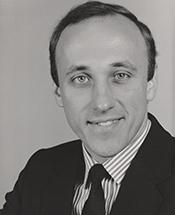
Historical · U.S. House · Maine · District 1
Thomas Andrews
Former U.S. Representative · Maine District 1 · 1991–1995 · Democratic
Thomas Andrews represented Maine's District 1 in the United States House of Representatives (1991–1995) for the Democratic party. The page below collects sourced biographical facts, term history, committee roles, and provenance for Andrews.
Bioguide ID: A000211
Key facts
- Full name
- Thomas Andrews
- State
- Maine
- District
- District 1
- Party
- Democratic
- House service
- 1991–1995
- First House term
- 1991
- Status
- Left office
- Current term ends
- —
- Born
- 1953
- Bioguide ID
- A000211
- Committee assignments
- —
- Dataset version
- 1.20260605
Biographical narrative
924 words · sourced from the Wikipedia REST extract
Thomas H. Andrews is a former U.S. Representative who served Maine's 1st congressional district as a member of the Democratic Party. His congressional career spanned from 1991 until 1995, during which he was elected to two terms in the House of Representatives. Following his time in Congress, Andrews transitioned into various roles in non-profit organizations and international human rights advocacy, including a significant appointment as the United Nations Special Rapporteur on Human Rights in Myanmar.
Early life and career
Born on March 22, 1953, Thomas H. Andrews grew up in a political environment that would later influence his career. He pursued higher education at Bowdoin College, where he graduated in 1976. During his time at Bowdoin, he was a member of the Alpha Rho Upsilon fraternity, which provided him with early experiences in leadership and community engagement. After completing his education, Andrews entered public service, beginning his political career in the Maine House of Representatives. He served in this capacity from 1983 to 1985, where he began to establish his reputation as a dedicated public servant.
Following his tenure in the Maine House, Andrews was elected to the Maine State Senate, serving from 1985 until 1990. His time in the state legislature allowed him to gain valuable experience in governance and policy-making, as well as to build a network of political connections within the state. Throughout his legislative career at the state level, he focused on various issues pertinent to Maine residents, laying the groundwork for his future endeavors in Congress.
House tenure
In 1990, Thomas H. Andrews successfully ran for the U.S. House of Representatives, marking the beginning of his federal political career. He won his first congressional election by defeating former Congressman Dave Emery, who had previously held the seat. This election was significant as it allowed Andrews to succeed Democrat Joe Brennan, who had previously represented the district. His victory was indicative of the political climate in Maine at the time and demonstrated his ability to connect with voters on key issues.
Andrews served two terms in the House, with his first term beginning in 1991. During his time in Congress, he was known for his active engagement with constituents and his commitment to addressing the needs of the people in his district. In his only re-election campaign, he faced Linda Bean, a notable figure and descendant of the founder of L. L. Bean, a well-known retail company. Andrews won this election decisively, further solidifying his position as a prominent Democratic voice in Maine.
Despite his successes in the House, Andrews chose not to seek re-election in 1994. Instead, he announced his candidacy for the U.S. Senate seat being vacated by the retiring George J. Mitchell, who had served as the Senate Majority Leader. This decision marked a significant shift in his political trajectory, as he sought to elevate his influence on a national level. However, Andrews faced a challenging race against Republican candidate Olympia Snowe, who ultimately won the election by a substantial margin. This defeat ended his immediate political career in Congress.
Legislative focus and committees
During his time in the U.S. House of Representatives, Thomas H. Andrews was involved in various legislative efforts that reflected his commitment to the interests of his constituents and the broader Democratic agenda. His work in Congress included a focus on issues such as healthcare, education, and environmental protection, which were particularly relevant to the people of Maine. Andrews was known for his ability to collaborate with colleagues across party lines, which enabled him to advocate effectively for policies that benefited his district.
Andrews served on several committees during his tenure, which allowed him to influence legislation in key areas. His committee assignments provided him with the opportunity to engage deeply with issues that were critical to his constituents and to the nation as a whole. Through these roles, he contributed to discussions and initiatives that aimed to improve the quality of life for Americans, particularly those in his home state.
After leaving Congress, Andrews continued to be active in public service and advocacy. He took on leadership roles in various non-profit organizations, including serving as the National Director of Win Without War, an organization focused on promoting peaceful solutions to international conflicts. His commitment to peace and humanitarian efforts extended to his work with the Council for a Livable World's PeacePAC, where he served as Chairman, and with Just Foreign Policy, a group dedicated to reforming U.S. foreign policy.
In 2016, Andrews became the CEO of the Unitarian Universalist Service Committee, further demonstrating his dedication to social justice and humanitarian causes. His leadership in these organizations has allowed him to continue advocating for policies that align with his values and the needs of vulnerable populations.
In a notable development in his later career, Andrews was appointed as the United Nations Special Rapporteur on Human Rights in Myanmar in 2020. This role placed him at the forefront of international human rights advocacy, where he worked to address and report on human rights violations occurring in Myanmar. His appointment underscored his ongoing commitment to global issues and his desire to contribute to meaningful change on an international scale.
Throughout his career, Thomas H. Andrews has demonstrated a consistent dedication to public service, both in elected office and in various leadership roles within non-profit organizations. His experiences in the Maine legislature and the U.S. House of Representatives have shaped his approach to advocacy and policy-making, allowing him to remain engaged in important social and political issues long after his time in Congress.
Notable legislation
Sponsored and co-sponsored legislation for Thomas Andrews is pending operator curation. The biographical narrative above carries the same provenance trail until per-bill rows are written.
Sources
- [1]https://en.wikipedia.org/wiki/Tom_Andrews_(American_politician)Wikipedia · retrieved 2026-06-05
Notable quotes
Sourced quotes for Thomas Andrews are pending operator curation. Narrative-scope provenance remains attached below.
Sources
- [1]https://en.wikipedia.org/wiki/Tom_Andrews_(American_politician)Wikipedia · retrieved 2026-06-05
Key positions
Curated policy positions for Thomas Andrews are pending operator review. The biographical narrative above carries the same provenance trail until per-topic positions are written.
Sources
- [1]https://en.wikipedia.org/wiki/Tom_Andrews_(American_politician)Wikipedia · retrieved 2026-06-05
Terms served
- 1991–1993U.S. House · Term 1 · Democratic
- 1993–1995U.S. House · Term 2 · Democratic
Sources & provenance
Every attributable claim above carries a per-section [N] marker that resolves to the corresponding URL below. Each entry records the upstream provider, the canonical URL, and the timestamp at which the source was retrieved by the ingest pipeline.
Key facts
- https://bioguide.congress.gov/search/bio/A000211bioguide · retrieved 2026-06-05
- https://www.govtrack.us/congress/members/400885govtrack · retrieved 2026-06-05
Biographical narrative
- https://en.wikipedia.org/wiki/Tom_Andrews_(American_politician)wikipedia · retrieved 2026-06-05
Find your representative
Every U.S. state elects representatives by district. Browse Maine’s delegation, the full former-representative roster, or explore the role and term length.
Related on The Candidate
- Preceded by Joseph BrennanEarlier holder of the Maine District 1 House seat · Democratic.Open
- Succeeded by James LongleyLater holder of the Maine District 1 House seat · Republican.Open
- Amos AllenFormer U.S. Representative · Maine District 1 · RepublicanOpen
- Asher HindsFormer U.S. Representative · Maine District 1 · RepublicanOpen
- Carroll BeedyFormer U.S. Representative · Maine District 1 · RepublicanOpen
- Daniel SomesFormer U.S. Representative · Maine District 1 · RepublicanOpen