
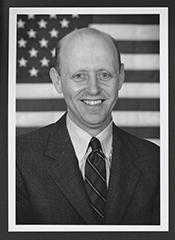
Historical · U.S. House · Maine · District 1
James Longley
Former U.S. Representative · Maine District 1 · 1995–1997 · Republican
James Longley represented Maine's District 1 in the United States House of Representatives (1995–1997) for the Republican party. The page below collects sourced biographical facts, term history, committee roles, and provenance for Longley.
Bioguide ID: L000431
Key facts
- Full name
- James Longley
- State
- Maine
- District
- District 1
- Party
- Republican
- House service
- 1995–1997
- First House term
- 1995
- Status
- Left office
- Current term ends
- —
- Born
- 1951
- Bioguide ID
- L000431
- Committee assignments
- —
- Dataset version
- 1.20260605
Biographical narrative
922 words · sourced from the Wikipedia REST extract
James B. Longley Jr. is a former American politician who served as a Republican U.S. Representative for Maine's 1st congressional district from 1995 to 1997. He is the son of former Independent Governor Jim Longley Sr. and has a background in law and small business management. After his congressional tenure, Longley sought the governorship of Maine in 1998 but was unsuccessful. His political career is marked by a focus on tax policy and small business issues, as well as a notable electoral challenge from the Democratic Party.
Early life and career
James Bernard Longley Jr. was born on July 7, 1951, in Lewiston, Maine. He is the son of Jim Longley Sr., who served as an Independent Governor of Maine, and his wife, Helen. Growing up in a politically active family, Longley was exposed to the world of politics from an early age. He attended Phillips Andover Academy, a prestigious preparatory school, before pursuing higher education at the College of the Holy Cross, where he earned a Bachelor of Arts degree. Following his undergraduate studies, he returned to Maine to study law at the University of Maine.
In addition to his academic pursuits, Longley served in the United States Marine Corps, where he gained valuable experience and discipline that would later inform his professional life. After completing his military service, he transitioned into a career as a trial lawyer, where he honed his skills in legal advocacy. Alongside his legal practice, Longley also managed several small businesses in the Portland area, which provided him with firsthand experience of the challenges faced by entrepreneurs and small business owners.
Longley's entry into politics came in the mid-1990s when he decided to run for the U.S. House of Representatives. In 1994, Democratic Congressman Thomas Andrews announced he would not seek re-election, opting instead to run for a Senate seat. This opened the door for Longley to enter the race for Maine's 1st congressional district. He faced off against Dennis L. Dutremble, the Democratic nominee and then-President of the State Senate. Despite the district's historical lean towards Democratic candidates, Longley managed to secure a narrow victory, benefiting from the broader political climate known as the "Republican Revolution" that swept across the country during that election cycle.
House tenure
Longley was sworn into the U.S. House of Representatives in January 1995, marking the beginning of his congressional career. During his time in office, he quickly became known for his advocacy on issues related to taxation and small business. One of his early actions in Congress involved testifying before a committee that was considering a minimum wage increase. Longley argued for an alternative approach that would involve reducing payroll taxes for minimum wage workers, suggesting that this would result in a greater increase in their take-home pay compared to a direct increase in the minimum wage. He contended that raising the minimum wage could lead to adverse effects for small businesses, such as job cuts and increased financial strain.
Longley's testimony sparked a contentious debate, particularly with Democratic members of the committee, who accused him of undermining the interests of his constituents. This early confrontation set the tone for his subsequent tenure, as he became a target for Democratic opposition. In the 1996 election cycle, Longley faced a significant challenge from Tom Allen, a former Mayor of Portland. The campaign saw substantial financial backing from labor unions and left-leaning organizations, which coordinated efforts to unseat him. This was characterized as one of the most extensive campaigns against a Republican incumbent in the nation during that election cycle.
Despite the efforts of his supporters, Longley lost the election to Allen by a considerable margin. His defeat marked a significant shift in the political landscape of Maine's 1st congressional district, as he became the last Republican to hold that seat. Following his loss, Longley concluded his term in the House on January 3, 1997.
Legislative focus and committees
Throughout his time in Congress, Longley focused on issues that were particularly relevant to small businesses and tax policy. His approach to legislation often emphasized the need for tax relief for workers and businesses, reflecting his background as a trial lawyer and small business manager. He advocated for policies that he believed would promote economic growth and job creation, particularly in the context of Maine's economy.
Longley's testimony regarding minimum wage and tax policy illustrated his belief that legislative measures should consider the broader implications for small businesses. He argued that increasing the minimum wage without addressing the tax burden on businesses could lead to negative outcomes, including job losses and reduced economic activity. His perspective was shaped by his experiences in the private sector, where he witnessed the challenges faced by small business owners.
Despite his efforts to influence policy, Longley's legislative initiatives did not gain the traction he had hoped for during his time in office. His tenure was marked by significant partisan divisions, particularly as he faced a well-organized opposition from the Democratic Party. The political landscape in Maine shifted during this period, and Longley's defeat in the 1996 election underscored the challenges faced by Republican candidates in the state.
After leaving Congress, Longley continued to engage in political activities, including running for Governor of Maine in 1998. Although he won the Republican primary, he ultimately finished second in the general election, receiving a minority of the vote. His political career, while relatively brief, was characterized by a focus on small business issues and tax policy, reflecting his background and experiences prior to entering public office.
Notable legislation
Sponsored and co-sponsored legislation for James Longley is pending operator curation. The biographical narrative above carries the same provenance trail until per-bill rows are written.
Sources
- [1]https://en.wikipedia.org/wiki/James_B._Longley_Jr.Wikipedia · retrieved 2026-06-05
Notable quotes
Sourced quotes for James Longley are pending operator curation. Narrative-scope provenance remains attached below.
Sources
- [1]https://en.wikipedia.org/wiki/James_B._Longley_Jr.Wikipedia · retrieved 2026-06-05
Key positions
Curated policy positions for James Longley are pending operator review. The biographical narrative above carries the same provenance trail until per-topic positions are written.
Sources
- [1]https://en.wikipedia.org/wiki/James_B._Longley_Jr.Wikipedia · retrieved 2026-06-05
Terms served
- 1995–1997U.S. House · Term 1 · Republican
Sources & provenance
Every attributable claim above carries a per-section [N] marker that resolves to the corresponding URL below. Each entry records the upstream provider, the canonical URL, and the timestamp at which the source was retrieved by the ingest pipeline.
Key facts
- https://bioguide.congress.gov/search/bio/L000431bioguide · retrieved 2026-06-05
- https://www.govtrack.us/congress/members/406922govtrack · retrieved 2026-06-05
Biographical narrative
- https://en.wikipedia.org/wiki/James_B._Longley_Jr.wikipedia · retrieved 2026-06-05
Find your representative
Every U.S. state elects representatives by district. Browse Maine’s delegation, the full former-representative roster, or explore the role and term length.
Related on The Candidate
- Preceded by Thomas AndrewsEarlier holder of the Maine District 1 House seat · Democratic.Open
- Succeeded by Tom AllenLater holder of the Maine District 1 House seat · Democratic.Open
- Amos AllenFormer U.S. Representative · Maine District 1 · RepublicanOpen
- Asher HindsFormer U.S. Representative · Maine District 1 · RepublicanOpen
- Carroll BeedyFormer U.S. Representative · Maine District 1 · RepublicanOpen
- Daniel SomesFormer U.S. Representative · Maine District 1 · RepublicanOpen